The Stone RosesBand Guide
Formed 1983 · Manchester, England · Indie Rock / Madchester / Psychedelic Rock
The Stone Roses made one of the greatest British albums ever recorded in 1989 and then largely disappeared — into legal disputes, into silence, into a five-year absence that ended with a second album that arrived too late and too different to match the expectation that had built in the interim. Their story is one of squandered momentum and perfect timing in equal measure: the debut arrived at exactly the moment the cultural conditions could receive it and detonated accordingly. Ian Brown's voice, John Squire's guitar, Mani's bass, and Reni's drumming: four elements that together produced a sound nobody else has quite replicated before or since. This is the complete guide.
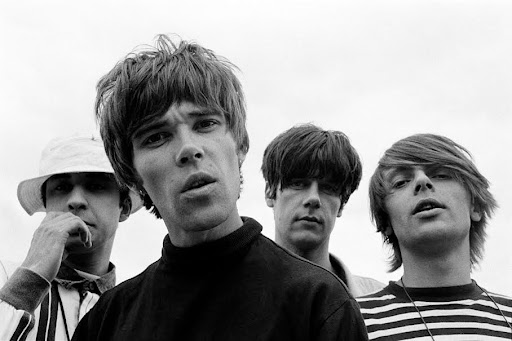
Who Are The Stone Roses?
The Stone Roses are a British rock band formed in Manchester in 1983. The classic lineup — Ian Brown on vocals, John Squire on guitar, Gary "Mani" Mounfield on bass, and Alan "Reni" Wren on drums — met in their teens and spent several years developing their sound through Manchester's independent music circuit before signing to Silvertone Records and releasing their self-titled debut in 1989. The album combined the guitar pop of The Byrds and early psychedelic rock with funk-influenced bass lines, Squire's shimmering, arpeggiated guitar style, Brown's laconic vocal delivery, and Reni's extraordinarily musical drumming — a combination that felt simultaneously classic and entirely contemporary.
The self-titled debut album reached number 19 in the UK on release but grew steadily through word of mouth and critical acclaim into one of the most celebrated British albums of its era. Their Spike Island concert in May 1990 — attended by approximately 27,000 people on a chemical wasteland in Widnes — became one of the defining live events of the Madchester moment. The band were signed to Geffen Records for a reported £1 million, sued by Silvertone Records to prevent the move, and spent two years in litigation that effectively prevented them from recording. The five-year gap between albums that followed defined the second half of their story.
After signing to Geffen Records in 1991, Silvertone Records sought an injunction to prevent the band from recording for the new label. The legal dispute was settled in 1993, but the years of inactivity had allowed the band's momentum to dissipate and allowed the cultural moment they had helped create to move on without them. When The Second Coming arrived in December 1994, the Britpop era that had partly emerged from their influence was in full swing — and their blues-rock influenced second record felt deliberately contrary to the prevailing mood.
Reni departed in April 1995 and John Squire left in March 1996 to form The Seahorses. Ian Brown and Mani attempted to continue with replacement members before the band formally disbanded in October 1996. The Roses had produced two albums, a handful of non-album singles, and a live reputation that had defined a cultural moment — and then they were gone.
Start with "I Wanna Be Adored" — the album opener that announces the debut's intentions immediately. Then the self-titled album in full — one of the greatest British debut albums ever made and the only necessary first listen. Non-album singles "Fool's Gold" and "What the World Is Waiting For" are the essential follow-ups.
The Classic Lineup
Band History
Discography
The Stone Roses Trivia Quiz
Five questions — how many can you get right?
Best Songs by Mood
Not sure where to begin? Use this as your entry point.