← Back to Bands
Band Guide · The Verve · Alternative Rock / Britpop · Wigan, England

The VerveBand Guide

Formed 1990 · Wigan, England · Alternative Rock / Psychedelic / Britpop

The Verve are one of the most compelling and most tragic stories in British rock. A band from Wigan who began as a sprawling, psychedelic space rock act in the early 1990s, fractured twice through internal tensions, and produced one of the decade's most celebrated albums — Urban Hymns — only to dissolve again within a year of its release. Richard Ashcroft's voice, Nick McCabe's guitar, and a collective gift for the kind of melody that sounds like it has always existed gave them a claim on greatness that the brevity of their productive periods does nothing to diminish. "Bitter Sweet Symphony" is one of the most famous British rock songs ever recorded, despite its creator having received none of the royalties from it for two decades. This is the complete guide.
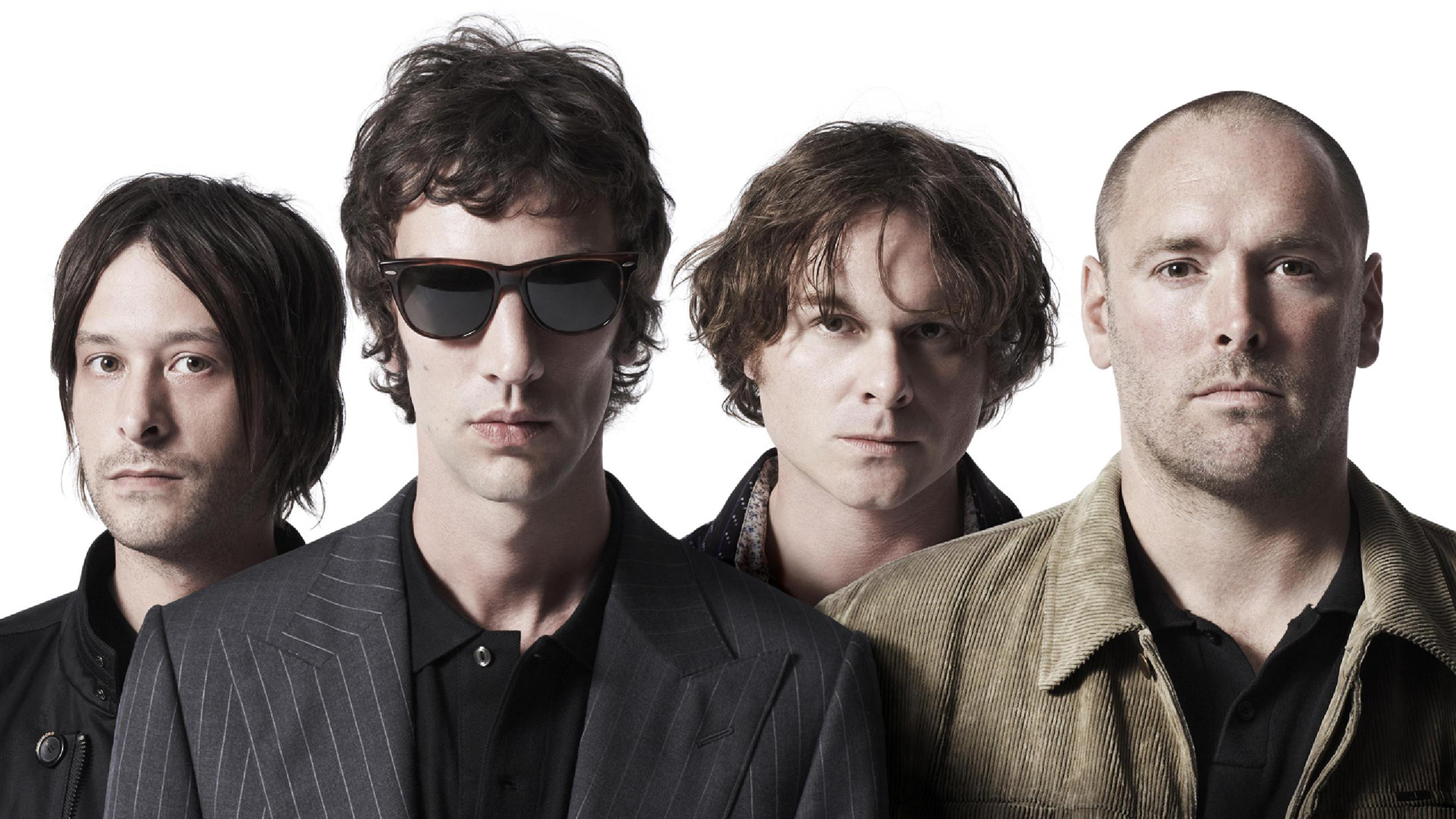
The Verve band photo
Formed1990Wigan, England
Studio Albums4
Active1990–19992007–2009
Best AlbumUrban Hymns1997
Start WithBitter Sweet Symphony

Who Are The Verve?

The Verve are a British rock band formed in Wigan, Lancashire in 1990. The core lineup — vocalist and guitarist Richard Ashcroft, guitarist Nick McCabe, bassist Simon Jones, and drummer Peter Salisbury — met at school in Wigan and signed to Hut Records in 1991. Their early sound was expansive and psychedelic, indebted to The Stone Roses and My Bloody Valentine but with a cinematic ambition that set them apart — long, drone-heavy instrumentals, Ashcroft's charismatic, preacher-like delivery, and McCabe's guitar work, which could shift from delicate arpeggios to walls of noise within a single track.

They disbanded for the first time in 1995 amid tensions, most significantly between Ashcroft and McCabe, before reuniting in 1996 and recording Urban Hymns — their third album and commercial breakthrough. Released in September 1997, it spent 10 weeks at number one in the UK, produced three top-five singles, and has sold over 10 million copies worldwide. "Bitter Sweet Symphony," "The Drugs Don't Work," and "Lucky Man" gave them a claim on the era's soundtrack that only Radiohead's OK Computer, released the same year, could rival.

Bitter Sweet Symphony & the Rolling Stones Dispute

"Bitter Sweet Symphony" samples an orchestral version of the Rolling Stones' "The Last Time," arranged by Andrew Loog Oldham. The band had negotiated a sample clearance with ABKCO, the US publisher of the Stones' catalogue. However, after the single's release and commercial success, ABKCO sued, claiming the sample used more of the original than had been agreed. The Verve were required to surrender all royalties from the song to ABKCO, and Mick Jagger and Keith Richards were added as songwriting credits.

The dispute left Ashcroft without any share of royalties from the band's biggest hit for over two decades — a situation widely cited as one of the most egregious outcomes in the history of music publishing law. In 2019, Jagger and Richards returned the songwriting credit to Ashcroft, describing the original legal outcome as unfair. The financial arrangements were not publicly detailed.

New to The Verve?

Start with "Bitter Sweet Symphony" — the most famous and immediately accessible track. Then Urban Hymns (1997) as a full album — one of the best British rock albums of the 1990s and the correct first full-album listen. A Storm in Heaven (1993) is the essential second listen for the earlier, more psychedelic sound.

Band Members

RA
Richard Ashcroft
Vocals · Guitar · 1990–1999, 2007–2009
The band's frontman, primary vocalist, and the songwriter most associated with The Verve's identity. Ashcroft's preacher-like vocal delivery, physical stage presence — which earned him the nickname "Mad Richard" during the early years — and gift for writing melody that sounds simultaneously vast and intimate made him one of the most compelling British rock frontmen of his generation. His solo career continued after the band's disbandment and produced several commercially successful albums.
NM
Nick McCabe
Guitar · 1990–1995, 1996–1999, 2007–2009
The band's guitarist and one of the most distinctive and influential guitar players of the 1990s British rock scene. McCabe's approach to the instrument is textural rather than technical — he uses feedback, sustain, and layering to create something closer to an atmospheric environment than a guitar part. His departure in 1995 effectively ended the first incarnation of the band, and his return was essential to the recording of Urban Hymns.
SJ
Simon Jones
Bass · 1990–1999, 2007–2009
The band's bassist throughout their original and reunion periods, Jones provided the low-end foundation for the band's expansive, drone-informed sound. His playing is understated in the context of the band's more prominent elements — Ashcroft's vocal and McCabe's guitar — but anchors the arrangements with consistent solidity across all four studio albums.
PS
Peter Salisbury
Drums · 1990–1999, 2007–2009
The band's drummer across the full original run and the 2007 reunion. Salisbury's playing adapts across the significant stylistic distance between the sprawling space rock of A Storm in Heaven and the more contained anthemic rock of Urban Hymns, providing a consistent rhythmic intelligence across material that demands very different things from the kit.
ST
Simon Tong
Guitar · 1995–1997 (replacing McCabe)
Joined as McCabe's replacement following the 1995 dissolution and contributed to the recording of Northern Soul (1995). When McCabe rejoined for Urban Hymns, Tong remained as a second guitarist. Later joined The Good, the Bad and the Queen alongside Damon Albarn, Paul Simonon, and Tony Allen.

Band History

1990
Richard Ashcroft, Nick McCabe, Simon Jones and Peter Salisbury form the band in Wigan, Lancashire while still at school. The band initially performs under the name Verve before a US jazz label of the same name requires a name change.
1991
The band signs to Hut Records and begins releasing singles. Their early recordings establish a reputation for long, expansive live performances and a psychedelic sound indebted to the shoegaze and Madchester scenes without being reducible to either.
1993
A Storm in Heaven released — a debut of genuine ambition and distinctiveness, drawing from drone rock, psychedelia, and shoegaze while beginning to locate Ashcroft's melodic gift within the band's expansive sound.
1995
A Northern Soul released. The album shows the band moving toward a more song-based approach while retaining the psychedelic ambition of the debut. The band disbands shortly after amid tensions, primarily between Ashcroft and McCabe. Simon Tong had briefly replaced McCabe during this period.
1996
The band reunites with McCabe returning. Recording begins on what will become Urban Hymns. The creative conditions that produced the album are remarkable given the tensions that had previously fractured the band.
1997
Urban Hymns released in September — one of the best British rock albums of the decade. "Bitter Sweet Symphony" reaches number two in the UK (kept from number one by Puff Daddy's "I'll Be Missing You"). "The Drugs Don't Work" hits number one. The album spends 10 weeks at the top of the UK charts and sells over 10 million copies worldwide.
1998
McCabe departs again during the band's touring schedule. The band continues briefly as a four-piece before Ashcroft announces the dissolution of The Verve in April 1999. The split is attributed to unspecified internal tensions.
1999–2006
Richard Ashcroft pursues a successful solo career, releasing three studio albums and maintaining a significant commercial profile in the UK. The other members pursue various projects.
2007
The Verve reunite — the full classic lineup, including McCabe — and announce a return. Headline slots at UK festivals and an internationally touring schedule re-establish their live presence.
2008
Forth released — the fourth and final studio album. The record is received warmly if not ecstatically, with the creative heights of Urban Hymns acknowledged as a difficult standard to match.
2009
The band disbands for a second and final time. McCabe and Ashcroft's relationship is again cited as the central tension. The Verve have not performed or recorded since.
2019
Mick Jagger and Keith Richards return the songwriting credit for "Bitter Sweet Symphony" to Richard Ashcroft, acknowledging the original legal outcome as unfair. Ashcroft describes the decision as "life-affirming."

Discography

1997
Urban Hymns
Bitter Sweet Symphony, The Drugs Don't Work, Lucky Man, The Rolling People. 10 weeks UK #1. One of the great British rock albums. Start here.
Essential
1993
A Storm in Heaven
Slide Away, Already There, The Sun the Sea. The psychedelic debut — sprawling, beautiful, and unlike anything else in British rock at the time.
Essential
1995
A Northern Soul
History, On Your Own, This Is Music. The transitional second album — more song-based, still ambitious, and containing some of their most underrated material.
Great
2008
Forth
Love Is Noise, Rather Be. The reunion album — a creditable return that demonstrated the band's chemistry remained intact.
Good

The Verve Trivia Quiz

Five questions — how many can you get right?

Best Songs by Mood

Not sure where to begin? Use this as your entry point.

First song ever
Bitter Sweet Symphony
Most emotionally devastating
The Drugs Don't Work
Most euphoric
Lucky Man
Most psychedelic
Slide Away
Best early track
She's a Superstar
Most underrated
The Rolling People
Best reunion track
Love Is Noise
Best deep cut
History

The Verve FAQ

When did The Verve form?
The Verve formed in Wigan, Lancashire in 1990, with members meeting at school. They signed to Hut Records in 1991 and became one of the most important British rock bands of the 1990s, known initially for their psychedelic and space rock sound and later for the commercial breakthrough of Urban Hymns (1997).
What is the story behind Bitter Sweet Symphony and the Rolling Stones?
"Bitter Sweet Symphony" samples an orchestral arrangement of the Rolling Stones' "The Last Time," recorded by the Andrew Loog Oldham Orchestra. The band had negotiated a sample clearance with ABKCO, the US publisher of the Stones' catalogue, before the single's release. After its commercial success, ABKCO sued, claiming the sample used exceeded what had been agreed. The Verve were required to surrender all royalties and Jagger and Richards were added as songwriting credits. In 2019, Jagger and Richards returned the credit to Ashcroft, acknowledging the outcome as unfair.
Why did The Verve break up?
The Verve disbanded twice — in 1995 and 1999. Both dissolutions are widely attributed to the difficult creative relationship between Richard Ashcroft and guitarist Nick McCabe. McCabe departed mid-tour in 1998, and Ashcroft announced the band's end in April 1999. The specific details of the tensions have never been fully disclosed publicly. The band reunited in 2007 and disbanded again in 2009, with the same underlying dynamic cited as the reason for the second split.
What is the best Verve album to start with?
Urban Hymns (1997) is the essential starting point — one of the best British rock albums of the 1990s, containing "Bitter Sweet Symphony," "The Drugs Don't Work," and "Lucky Man." A Storm in Heaven (1993) is the best entry point for the earlier, more psychedelic and expansive sound that the band developed before the commercial breakthrough.
Did Bitter Sweet Symphony reach number one?
"Bitter Sweet Symphony" reached number two on the UK Singles Chart in July 1997 — it was kept from number one by Puff Daddy's "I'll Be Missing You," a tribute to the recently murdered Notorious B.I.G. "The Drugs Don't Work," the album's second single, did reach number one. The song remains one of the most famous British rock singles never to have topped the chart.
Is The Drugs Don't Work about drugs?
Richard Ashcroft has said that "The Drugs Don't Work" was written about his father's terminal illness — the "drugs" referring to the ineffectiveness of medical treatment rather than recreational substances. The song addresses mortality, helplessness in the face of loss, and the inadequacy of any available comfort. The lyric operates on both levels simultaneously, but Ashcroft has been clear about the personal origin of the song's emotional content.

See Also