← Back to Bands
Band Guide · Pulp · Britpop / Art Pop / Indie · Sheffield, England

PulpBand Guide

Formed 1978 · Sheffield, England · Britpop / Art Pop / Alternative Rock

Pulp are the most literary, the most witty, and in many ways the most genuinely subversive band of the Britpop era. Jarvis Cocker formed them in Sheffield in 1978, spent fifteen years in obscurity that most bands would never survive, and emerged in the mid-1990s with a run of records that combined disco grooves, kitchen-sink realism, camp theatrics, and social commentary sharp enough to draw blood. Different Class (1995) is one of the greatest British pop albums ever made, and "Common People" — its centrepiece — is one of the greatest British pop songs ever written. This is the complete guide.
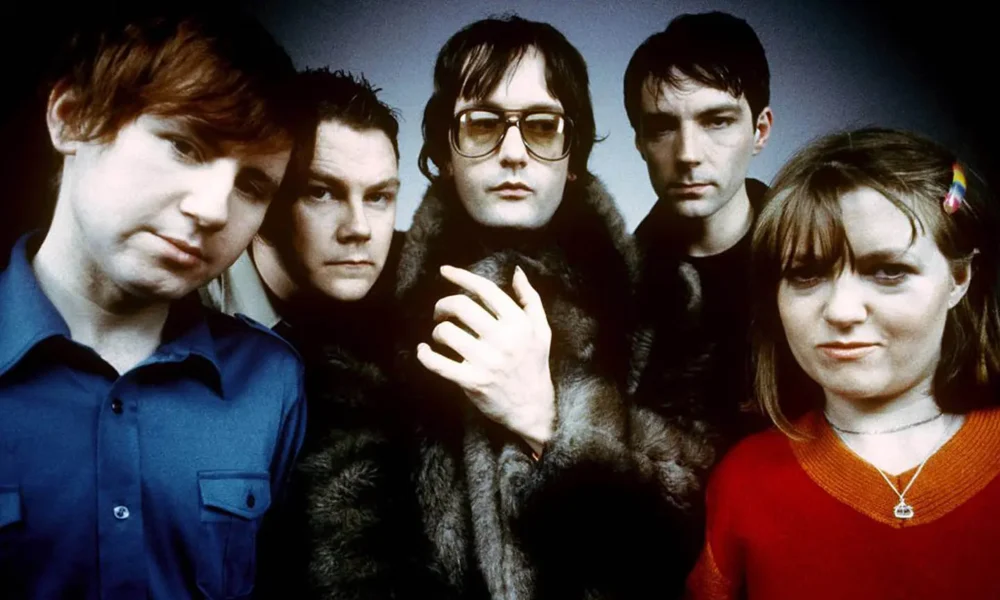
Pulp band photo
Formed1978Sheffield, England
Studio Albums7
Active1978–20022011–2013, 2023–
Best AlbumDifferent Class1995
Start WithCommon People

Who Are Pulp?

Pulp are a British rock band formed in Sheffield, England in 1978 by Jarvis Cocker, then fifteen years old. The band spent over a decade in the margins of the UK independent music scene — releasing records, losing members, changing labels, and failing to break through commercially — before the arrival of their fifth album His 'n' Hers (1994) finally brought them to wider attention. Their sixth album, Different Class (1995), reached number one in the UK and produced three of the most celebrated singles of the Britpop era.

Cocker's songwriting draws from an unusually wide range of sources — the kitchen-sink realism of British social drama, the camp theatricality of glam rock, the disco and funk production of the late 1970s, and a literary wit that sits alongside the best pop lyricists of any era. His observations of working-class Sheffield life, of desire and disappointment, of class and aspiration, are rendered with a specificity and economy that makes them both deeply local and widely resonant. "Common People" is the most famous single example, but the quality extends across a catalogue that rewards sustained attention.

Jarvis at Glastonbury 1995 & the Michael Jackson Incident

On 18 February 1996, during the Brit Awards at Earls Court, Jarvis Cocker walked onto the stage during Michael Jackson's performance of "Earth Song" — a spectacle involving a Christ-like Jackson surrounded by children and wheelchairs — and performed what he later described as a protest against the grandiosity of the staging. Cocker waggled his bottom and raised his arms in mockery. He was briefly detained by police and subsequently investigated (the case was dropped). The incident made him briefly the most discussed person in British popular culture and cemented his status as a singular, willfully eccentric presence in mainstream music.

That same year, Pulp's Glastonbury 1995 headline performance — when they were drafted in to replace the Stone Roses following an injury to John Squire — became one of the most celebrated festival sets in the festival's history, introducing "Common People" to an enormous live audience and demonstrating that the band were a genuinely thrilling live proposition.

New to Pulp?

Start with "Common People" — the most famous and immediately accessible track and still the best single entry point. Then Different Class (1995) as a full album — one of the greatest British pop records of the 1990s and the correct first full listen. His 'n' Hers (1994) is the essential companion.

Members

JC
Jarvis Cocker
Vocals · Guitar · Songwriter · 1978–2002, 2011–
The band's frontman, primary lyricist, and the defining creative voice of Pulp. Cocker's gangly, bespectacled stage presence — all angular limbs and studied awkwardness — is as distinctive as his songwriting, which combines social observation, sexual candour, and literary wit in a way that is immediately recognisable and entirely without precedent in British pop. His Sheffield working-class background and his years of obscurity inform every aspect of the persona and the work.
CD
Candida Doyle
Keyboards · 1984–2002, 2011–
Pulp's keyboardist and one of the band's most important sonic contributors. Doyle's keyboard parts are central to the band's characteristic blend of disco-influenced production and art pop atmospherics — the synthesiser lines on tracks like "Common People" and "Babies" are as essential to those songs' identities as Cocker's vocals.
NB
Nick Banks
Drums · 1986–2002, 2011–
The band's drummer from 1986, Banks provides the rhythmic foundation for the band's disco and funk influences, giving the production on their commercial peak records a dancefloor-adjacent energy that distinguishes Pulp from most of their Britpop contemporaries.
SM
Steve Mackey
Bass · 1989–2002, 2011–2023
Pulp's bassist from 1989, Mackey's melodic bass playing contributed significantly to the band's commercial sound on His 'n' Hers and Different Class. Mackey died on 2 March 2023 at the age of 56. His death was announced as Pulp were preparing to return to live performance, and the band have continued with his memory as part of their story.
MW
Mark Webber
Guitar · 1995–2002, 2011–
Joined in 1995 in time to contribute to Different Class and has been a member across the band's subsequent albums and reunions. Webber's guitar work complemented the keyboard-forward production of the classic records, providing additional harmonic texture without competing with Cocker's vocal and Doyle's synthesisers for prominence.

Band History

1978
Jarvis Cocker forms Pulp in Sheffield at the age of fifteen. The band begin performing locally and develop through a series of lineup changes over the following decade.
1983
Debut album It released on Red Rhino Records. The record passes largely unnoticed, establishing the pattern of critical indifference and commercial invisibility that the band will navigate for the next decade.
1987
Freaks released on Fire Records. Again, limited commercial impact. Cocker continues developing the lyrical and musical approach that will eventually break through, apparently indifferent to the lack of external recognition.
1992
Separations released — recorded in 1989 but held by the label for three years. The album's disco influences and more developed production represent a significant step toward the sound of the commercial breakthrough.
1994
His 'n' Hers released on Island Records. The album reaches number nine in the UK and marks the band's first genuine commercial breakthrough after sixteen years. "Babies," "Lipgloss," and "Do You Remember the First Time?" are the key singles.
1995
Different Class released in October, reaching number one in the UK. "Common People" had been released as a single in May and reached number two. The album contains "Mis-Shapes," "Disco 2000," and "Sorted for E's & Wizz." Pulp headline Glastonbury after the Stone Roses pull out due to John Squire's broken arm — the performance is a landmark moment in British festival culture.
1996
Jarvis Cocker invades the stage during Michael Jackson's Brit Awards performance of "Earth Song." He is briefly detained and investigated; the case is later dropped. The incident generates enormous press attention and becomes one of the defining moments of 1990s British pop culture.
1998
This Is Hardcore released — a deliberate and jarring departure from Different Class. The album is darker, more claustrophobic, and more explicitly self-aware about the anxieties of fame. Critical response is divided; subsequent reappraisal has been significantly more generous.
2001
We Love Life released, produced by Scott Walker. The final album of the original run — quieter, more melancholy, and one of the most distinctive records in the catalogue. The band disband in 2002.
2011
Pulp reunite for a run of festival performances, including headline slots at Glastonbury and Coachella. The reunion is widely celebrated.
2023
Steve Mackey dies on 2 March at the age of 56. Pulp announce they will continue, dedicating their planned live activity to his memory. The band return to touring later in the year.

Discography

1995
Different Class
Common People, Disco 2000, Mis-Shapes, Sorted for E's & Wizz. UK #1. One of the greatest British pop albums ever made. Start here.
Essential
1994
His 'n' Hers
Babies, Do You Remember the First Time?, Lipgloss. The breakthrough — rawer, more claustrophobic, equally brilliant.
Essential
1998
This Is Hardcore
This Is Hardcore, Help the Aged, A Little Soul. The dark, self-lacerating follow-up. Divisive at release, essential in retrospect.
Essential
2001
We Love Life
Wickerman, Bad Cover Version. Produced by Scott Walker. Quieter and more melancholy — the overlooked final album.
Great
1992
Separations
My Legendary Girlfriend, She's a Lady. Recorded 1989, released 1992. The disco-influenced transitional record.
Good

Pulp Trivia Quiz

Five questions — how many can you get right?

Best Songs by Mood

Not sure where to begin? Use this as your entry point.

First song ever
Common People
Most nostalgic
Disco 2000
Most danceable
Mis-Shapes
Most voyeuristic
Babies
Most self-lacerating
This Is Hardcore
Most tender
Help the Aged
Best class anthem
Mis-Shapes
Best deep cut
I Spy

Pulp FAQ

When did Pulp form?
Pulp formed in Sheffield, England in 1978, when Jarvis Cocker was fifteen years old. After over a decade of near-obscurity across two independent record labels, they broke through commercially with His 'n' Hers (1994) and reached their commercial and critical peak with Different Class (1995).
What is Common People about?
"Common People" is Jarvis Cocker's account of a real encounter with a Greek art student at Central Saint Martins who told him she wanted to live like common people. The song is a sustained and furious attack on class tourism — the appropriation of working-class experience as an aesthetic choice or lifestyle experiment by people who can leave it at will. The narrator's anger — and ultimate impotence, since "you'll never live like common people, you'll never do whatever common people do" — gives the song its devastating force. Cocker has confirmed the encounter with the art student was real.
Why did Jarvis Cocker invade the Michael Jackson Brit Awards stage?
At the 1996 Brit Awards, Michael Jackson performed "Earth Song" in a staging that Cocker found offensively grandiose — Jackson positioned as a Christ-like figure surrounded by children and people in wheelchairs. Cocker walked on stage and performed what he described as a protest, waggling his bottom and raising his arms in mockery. He was briefly detained and later investigated; the investigation was dropped. Cocker subsequently said he felt the performance was presenting Jackson as "some kind of Christ-like figure" and that it deserved to be disrupted.
What is the best Pulp album to start with?
Different Class (1995) is the essential starting point — one of the greatest British pop albums ever made, containing "Common People," "Disco 2000," and "Mis-Shapes." His 'n' Hers (1994) is the essential companion, containing "Babies" and the rawer, more claustrophobic sound that immediately preceded the breakthrough. This Is Hardcore (1998) is the necessary third listen — darker, more difficult, and on reflection arguably their most ambitious record.
Is This Is Hardcore worth listening to?
This Is Hardcore (1998) is absolutely worth listening to, and it is now widely regarded as one of the most important and formally ambitious British pop records of the 1990s. It was divisive on release — the contrast with Different Class was jarring, and the subject matter (the anxiety of fame, pornography, creative crisis) was more confrontational than the Britpop audience expected. The title track is one of the greatest songs in the catalogue. The album deserves to be heard on its own terms rather than as a disappointing follow-up.
Did Steve Mackey die?
Yes. Steve Mackey, Pulp's bassist from 1989 and a member through both the original run and the 2011 reunion, died on 2 March 2023 at the age of 56. The cause of death was not publicly disclosed. Pulp announced their intention to continue performing in tribute to his memory, and the band returned to live activity later in 2023.

See Also