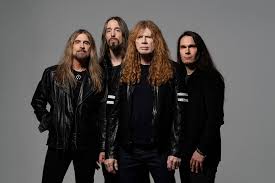
What Makes a Great Megadeth Song?
A great Megadeth song is built on an apparent contradiction: music
of extraordinary technical complexity that is also immediately
emotionally impactful. Dave Mustaine's guitar playing — the
precision of his right-hand picking at high tempos, the
sophistication of his chord voicings, the melodic intelligence of
his lead work — operates at a technical level that most thrash
metal guitarists cannot approach. But the best Megadeth songs are
not exercises in virtuosity: they use that technical capability in
service of songs that hit as hard emotionally as they do
physically.
Megadeth formed in Los Angeles in 1983, founded by Dave Mustaine
following his firing from Metallica in April of that year — an
event that has shaped Mustaine's creative output and public
identity for over forty years. The band's early albums were
characterised by extreme speed and aggression; the
Peace Sells (1986) and Rust in Peace (1990) eras
represented the commercial and critical peak;
Countdown to Extinction (1992) brought mainstream
success; and subsequent decades of lineup changes, dissolution,
reformation and Grammy recognition have made the Megadeth story
one of the most dramatic in metal.
This ranking is overwhelmingly focused on the 1986–1994 creative
peak while including the finest later tracks.
Rust in Peace accounts for three of the top five
placements, which reflects the honest assessment that it is one of
the greatest metal albums ever made.
Top 10 Megadeth Songs Ranked
Holy Wars... The Punishment Due is Megadeth's
greatest song and one of the finest pieces of music in the
thrash metal canon — an eight-minute epic that opens with one
of the most immediately devastating riffs in the genre's
history and develops through multiple sections of
extraordinary technical and compositional complexity without
ever losing the emotional thread. The combination of the Marty
Friedman/Dave Mustaine guitar chemistry, Nick Menza's
drumming, David Ellefson's locked-in bass work and Mustaine's
most focused and most furious vocal performance produces
something that the sum of its parts cannot fully account for.
The song splits into two conceptually distinct sections —
"Holy Wars" (the first part, about religious violence) and
"The Punishment Due" (the second, referencing the Punisher
comic) — but the transition between them is so musically
integrated that the division feels structural rather than
disruptive. The middle section's guitar interplay between
Mustaine and Friedman is among the finest in thrash metal, and
the return of the main riff after the extended development
section arrives with proportional force.
Song Meaning
Holy Wars... The Punishment Due is about religious
violence — specifically the IRA-British conflict that
Mustaine encountered while on tour in Belfast, and the
broader human tendency to commit atrocities in the name of
religion. Mustaine has described being approached backstage
in Belfast by someone encouraging him to say something
supportive of the IRA from the stage, which he refused. The
experience crystallised his thinking about the way religion
is used to justify violence. The second section references
the Punisher — a Marvel character whose approach to justice
by violent punishment the song treats with ambivalence.
Why #1: the greatest Megadeth song and one of
the finest thrash metal recordings — the riff, the
development, the Friedman/Mustaine interplay and the political
urgency all operating simultaneously at their highest.
Tornado of Souls contains what is generally
considered the greatest guitar solo in thrash metal history —
Marty Friedman's extended lead section, recorded in a single
take, that combines melodic invention, emotional expression
and technical control at a level that the surrounding genre
rarely approaches. The solo is so widely celebrated that it
has become the primary reason many people cite the song, but
the track itself — the riff, the verse, the chorus, the vocal
— is exceptional independent of the solo's reputation.
Friedman's approach to lead guitar is distinguished from most
thrash metal by his melodic sensibility: where many genre
solos prioritise speed and technical display, Friedman's
playing tells a story, develops melodically and arrives at an
emotional destination. The Tornado of Souls solo is
the finest demonstration of that capability and the thing most
likely to convert listeners who think they do not like metal
guitar solos.
Song Meaning
Tornado of Souls is about the devastation of a
relationship ending — specifically the experience of being
left by someone who has become so integrated into your
identity that their departure feels like destruction rather
than simply loss. Dave Mustaine has described writing from
personal experience of such a loss. The "tornado of souls"
is the specific quality of that devastation: not grief
moving through you cleanly but something that tears
everything apart as it passes.
Why #2: the song with the greatest guitar
solo in thrash metal — Marty Friedman's single-take extended
lead that converts non-believers and remains the benchmark for
melodic expression within the genre.
Symphony of Destruction is Megadeth's most
commercially successful song and the track that introduced the
band to the largest mainstream audience — a mid-tempo,
groove-driven piece that uses the vocabulary of political
critique in the most immediately accessible format the band
had produced to that point. The main riff — a descending
figure with a guitar tone precisely calibrated for radio
without sacrificing heaviness — is one of the most
recognisable in 1990s hard rock, and the song's placement on
Countdown to Extinction (the band's most commercially
polished album) made it the centrepiece of their breakthrough.
The production deliberately moves away from the sonic density
of Rust in Peace toward something more accessible,
and the song's effectiveness demonstrates that Mustaine's
compositional abilities were not dependent on extreme speed or
technical complexity — he could write at this slower, more
groove-oriented tempo with equal conviction.
Song Meaning
Symphony of Destruction is about political
manipulation — the way that politicians and power structures
use the language of leadership to control populations. The
"puppet" that dances on a string is both the governed
population and, in Mustaine's telling, the politicians
themselves, who are in turn controlled by more powerful
interests. The "symphony of destruction" is what results
from this chain of control and manipulation. It is
Mustaine's most accessible political statement and his most
broadly resonant.
Why #3: the most commercially successful and
most broadly accessible Megadeth track — political critique
delivered in the most immediate and most groove-driven format
the band produced.
Peace Sells is Megadeth's most culturally iconic song
— the track whose bass riff became one of the most
recognisable in metal, used as the theme for MTV News
throughout the late 1980s and early 1990s, giving the song an
extraordinary cultural reach beyond the metal audience. The
opening Ellefson bass figure is immediately distinctive — a
slow, heavy, mid-paced line with a specific melodic character
that establishes the song's character before the guitars
arrive — and the full arrangement builds from it with the
natural authority of music that knows exactly what it is.
The lyric is Mustaine's most direct and most cynical political
statement — the repeated question "peace sells... but who's
buying?" is one of metal's great rhetorical constructions,
simultaneously a critique of hollow political promises and a
genuine expression of fury at the gap between rhetoric and
reality.
Song Meaning
Peace Sells is about the commodification of
political ideals — the way that "peace" is offered as a
product by the same political institutions that profit from
conflict. The repeated question "peace sells... but who's
buying?" captures a specific cynicism: peace is available,
peace is marketed, but the systems that market it are the
same systems that depend on war and division for their
power. The song's question has aged well precisely because
the dynamic it describes is structural rather than merely
partisan.
Why #4: the most culturally iconic Megadeth
track — the bass riff that soundtracked MTV News, the
political question that aged perfectly, the essential Megadeth
statement before Rust in Peace.
Hangar 18 is the most technically demanding showcase
track on Rust in Peace — a piece built explicitly
around the guitar interplay between Mustaine and Friedman,
with a structure that creates space for multiple extended lead
sections rather than a single central solo. The song contains
more lead guitar per minute than almost any other Megadeth
recording, and the variety of approaches across those sections
— the contrast between Mustaine's aggressive, angular lines
and Friedman's more melodic, fluid passages — creates a
musical conversation that rewards close listening.
The song is about the US government's alleged concealment of
extraterrestrial evidence at Hangar 18 at Wright-Patterson Air
Force Base — a subject that Mustaine's interest in conspiracy
theory and government secrecy has made a recurring theme. The
lyric is less important than the guitar work here, which is by
design: the song exists primarily as a showcase for the
Mustaine-Friedman chemistry at its most elaborate.
Why #5: the technical showcase of the Rust in
Peace era — Mustaine and Friedman in extended dialogue, more
lead guitar per minute than anywhere else in the catalogue.
A Tout le Monde is Megadeth's most emotionally
affecting song and the one that most dramatically demonstrates
the breadth of Mustaine's songwriting ability beyond the
thrash metal context. The song is a melodic, measured piece —
no extreme tempo, no technical display for its own sake —
built around a melody of genuine beauty and a lyric of unusual
directness. It is the Megadeth song most likely to surprise
listeners who encountered the band through the heavier
material.
The song was controversial on release because some listeners
interpreted it as glorifying or endorsing suicide — a reading
that Mustaine has consistently and forcefully rejected. The
song is written from the perspective of someone who has died
and is addressing a farewell to the people they loved. It is
about mortality and farewell, not about the choice to die.
Mustaine has described this misreading as one of the most
frustrating experiences of his career.
Song Meaning
A Tout le Monde (French: "to all the world") is
written from the perspective of someone who has died — a
farewell addressed to everyone they loved. Mustaine has
described writing it as a reflection on mortality and the
things that matter when you reach the end of life. The song
is about death as an inevitable conclusion, not as a choice.
It was initially misread by some as a song endorsing suicide
— a reading Mustaine has consistently and clearly rejected.
The song affirms the value of love and connection in the
face of death, not the desirability of death itself.
Why #6: Megadeth's most emotionally affecting
song and the clearest demonstration that Mustaine's range
extends far beyond thrash — a genuinely beautiful melody with
a lyric about love and mortality.
Trust is the finest track on
Cryptic Writings and the song that most successfully
demonstrates the more accessible hard rock direction the band
pursued in the mid-to-late 1990s. Where some of the
surrounding album material felt like a retreat from the
creative ambitions of the earlier records,
Trust succeeds on its own terms — the melody is one
of Mustaine's finest, the guitar work maintains the quality of
the better classic-era material, and the lyric's exploration
of the difficulty of genuine trust in human relationships is
the most emotionally mature writing in the late-period
catalogue.
The song was a significant commercial success and received
substantial radio play — the most mainstream-friendly Megadeth
material of the era — without compromising the band's sonic
identity to the degree that some surrounding tracks did. It
demonstrated that the band could operate in a more accessible
register without becoming unrecognisable.
Why #7: the finest late-period Megadeth track
and the best argument for Cryptic Writings as a serious album
— Mustaine's most emotionally mature lyric in a hard rock
setting that works on its own terms.
She-Wolf is the most purely fun and most immediately
energetic track on Countdown to Extinction — the song
that demonstrates the band's ability to write hard rock with
genuine swagger and momentum without sacrificing the technical
quality of the guitar work. The main riff has a groove and an
attitude that the more aggressive surrounding material
occasionally trades for sheer speed, and the combination of
that groove with Mustaine's sneering vocal delivery creates
one of the most satisfying listening experiences in the
Megadeth catalogue.
It is the track most likely to appeal to listeners who
approach Megadeth through a hard rock rather than thrash metal
background, and its placement on
Countdown to Extinction — the most commercially
oriented Megadeth album — reflects the deliberate broadening
of the band's appeal during this period.
Why #8: the most groove-driven and most
purely enjoyable Countdown to Extinction track — where the
commercial instincts of the era produced something genuinely
excellent rather than merely accessible.
In My Darkest Hour is Megadeth's most emotionally raw
and most personally revealing song from the early era — a
piece written in the immediate aftermath of learning of Cliff
Burton's death in a tour bus accident in September 1986.
Mustaine has described writing it in a state of genuine grief,
and the emotional content of the song — the vulnerability, the
despair, the isolation — is more directly personal than almost
anything in the surrounding catalogue.
The guitar work — slower, more melodic than the surrounding
thrash material, with a lead section of unusual emotional
directness — creates a space for the lyric that the faster
material does not permit. It is the earliest evidence that
Mustaine's emotional range as a songwriter extended well
beyond the political fury and technical display of the
material that made his name.
Why #9: the most emotionally raw early
Megadeth track — written in grief for Cliff Burton,
demonstrating the emotional range that the thrash material
occasionally obscures.
Sweating Bullets closes this ranking as the most
unusual and most distinctly characterful track in the Megadeth
catalogue — a song that presents a dialogue between two
versions of the narrator, one rational and one unhinged, with
Mustaine alternating between them in a vocal performance of
genuine theatrical commitment. The lyric is a portrait of
psychological fragmentation — a mind talking to itself, the
sane part addressing the unstable part, the unstable part
responding — that stands apart from the political and
technical content of the surrounding material.
The song's mid-tempo groove and the specific quality of the
main riff give it a swagger that suits the darkly comedic tone
of the lyric, and the interaction between the two "voices" in
the performance is one of the most entertaining and most
memorable moments in the Megadeth discography. It demonstrates
that Mustaine's sense of dark humour — present in many of his
interviews and public statements — could produce genuinely
compelling art when applied to songwriting.
Why #10: the most theatrically distinctive
and most darkly humorous Megadeth track — psychological
fragmentation as character study, Mustaine as his own foil.
Best Megadeth Songs for Beginners
New to Megadeth? These six tracks introduce the different
dimensions of the band — the thrash metal peak, the political
urgency, the melodic ballad and the commercial hard rock.
Symphony of DestructionStart here — the most immediately accessible Megadeth track,
the groove-driven political anthem that broke them
mainstream.
Peace SellsThe iconic bass riff and the essential political statement —
MTV News music that introduced millions to the band.
Tornado of SoulsFor the greatest guitar solo in thrash metal — Marty Friedman
in a single take that converts non-believers.
A Tout le MondeThe most beautiful and most emotionally accessible Megadeth
song — showing the full range beyond the aggression.
Holy Wars... The Punishment DueThe summit — approached once the other material has prepared
the listener for eight minutes of the greatest thrash
metal.
Sweating BulletsThe most distinctive and most entertaining track — dark
humour and psychological fragmentation, unlike anything else
in the catalogue.
Dave Mustaine: The Driven Man
David Scott Mustaine was born on 13 September 1961 in La Mesa,
California. He grew up in California through an unstable childhood
and became a guitarist of remarkable ability in his teenage years,
developing a right-hand picking technique and a chord vocabulary
that would make him one of the most influential players in thrash
metal history.
He was a founding member of Metallica — contributing to the early
material that appeared on Kill 'Em All — before being
fired from the band in April 1983, primarily due to alcohol and
drug-related behaviour. The firing is documented in the Metallica
biography Enter Night by Mick Wall and in the band's own
documentary Some Kind of Monster, and it has been one of
the defining events of Mustaine's professional and personal life.
He founded Megadeth almost immediately as a competitive response,
and the relationship with Metallica — the desire to prove he was
the superior musician — has driven his output for over four
decades.
His guitar playing is distinguished by a combination of aggressive
downstroke rhythm playing (one of the finest examples of the
technique in heavy metal) and melodic lead work that draws on his
blues and classic rock influences beneath the metal surface. He is
also one of the most distinctive rock vocalists — his nasal,
slightly sneering delivery is immediately recognisable and
polarising, and it is entirely suited to the political and
personal content of his best lyrical writing.
Mustaine has spoken publicly about his struggles with alcohol and
drug addiction over the years, and his Christian faith, which he
adopted in 2002, is an important part of his public identity. He
was diagnosed with throat cancer in 2019, received treatment and
was declared cancer-free in 2020. He continues to record and tour.
Best Megadeth Albums to Hear Next
1990
Rust in Peace
The best starting album and widely regarded as one of the
greatest thrash metal albums ever made. Contains
Holy Wars, Tornado of Souls,
Hangar 18, Five Magics and
Dawn Patrol. The Mustaine-Friedman-Ellefson-Menza
lineup at its absolute peak.
1986
Peace Sells... but Who's Buying?
The essential early album and the creative breakthrough.
Contains Peace Sells, Wake Up Dead,
The Conjuring and Devil's Island. More raw
and more aggressive than Rust in Peace, with the political
fury of the band at its most undiluted.
1992
Countdown to Extinction
The mainstream breakthrough. Contains
Symphony of Destruction, She-Wolf,
Sweating Bullets,
Foreclosure of a Dream and
Architecture of Aggression. More polished and more
accessible than the earlier records — the best entry point
for listeners coming from hard rock rather than thrash.
1994
Youthanasia
The underrated mid-period album. Contains
A Tout le Monde, Train of Consequences,
Reckoning Day and Addicted to Chaos.
Smoother and more melodic than Countdown — important for
A Tout le Monde alone.
1988
So Far, So Good... So What!
The transitional album. Contains
In My Darkest Hour,
Set the World Afire and a cover of the Sex Pistols'
Anarchy in the U.K.. Less consistent than the peak
records but containing one of the most emotionally
significant early Megadeth tracks.
Honourable Mentions
The Megadeth catalogue — particularly across the 1986–1994 peak —
contains many strong tracks below this top 10. Strong honourable
mentions include:
-
Five Magics (Rust in Peace, 1990) —
the most compositionally adventurous Rust in Peace track and the
one that most demands close listening to appreciate its full
complexity
-
Wake Up Dead (Peace Sells, 1986) — the
most ferocious early Megadeth track and the opening statement of
the Peace Sells album at its most aggressive
-
The Conjuring (Peace Sells, 1986) —
controversially removed from live setlists by Mustaine after his
conversion to Christianity; a piece of occult-themed thrash of
the first order
-
Dawn Patrol (Rust in Peace, 1990) — an
atmospheric, bass-driven interlude that provides the most
distinctive moment on the album before Rust in Peace the title
track
-
Train of Consequences (Youthanasia,
1994) — one of the most melodically accomplished Megadeth tracks
and the best Youthanasia track after A Tout le Monde
-
Dystopia (Dystopia, 2016) — the title
track from the Grammy-winning late career album, demonstrating
Mustaine's continued creative capabilities
Megadeth Band History
Megadeth was founded by Dave Mustaine in Los Angeles in 1983 —
almost immediately after his dismissal from Metallica. The early
lineup was volatile, cycling through multiple members as Mustaine
worked to establish the sound and the band's identity.
Killing Is My Business... and Business Is Good! (1985)
was the debut — raw, fast, underpowered in production but
establishing the Megadeth aggressive identity.
Peace Sells... but Who's Buying? (1986) was the
commercial and critical breakthrough.
The peak creative period — Rust in Peace (1990) with the
Mustaine-Friedman-Ellefson-Menza lineup — is universally regarded
as the band's finest. Countdown to Extinction (1992)
brought mainstream success and two Grammy nominations.
Youthanasia (1994) continued the commercial direction.
The band went on hiatus in 2002 after Mustaine suffered a nerve
injury to his left arm, but returned with the full classic-era
lineup for The System Has Failed (2004).
Subsequent years involved lineup changes, Grammy wins (Dystopia
won Best Metal Performance in 2017), Mustaine's throat cancer
diagnosis and recovery (2019–2020), and the eventual departure of
David Ellefson (2021 following a personal controversy). The band
released The Sick, the Dying... and the Dead! (2022) and
continues to tour.
Megadeth Songs: FAQ
What is Megadeth's best song?
Holy Wars... The Punishment Due is widely considered
Megadeth's finest song — the riff, the development, the
Friedman/Mustaine interplay and the political urgency all at
their peak. Tornado of Souls contains the greatest
guitar solo in thrash metal. Both tracks are on
Rust in Peace.
What does Holy Wars mean?
About religious violence — specifically the IRA-British conflict
Mustaine encountered in Belfast and the broader human tendency
to commit atrocities in the name of faith. Mustaine was
approached backstage to endorse the IRA from the stage and
refused; that experience shaped the lyric. The second section
references the Punisher comic's approach to justice through
violent punishment.
What does A Tout le Monde mean?
"To all the world" in French. Written from the perspective of
someone who has died — a farewell to the people they loved. It
is about death as an inevitable conclusion of life, not as a
choice. Mustaine has clearly and consistently denied that the
song endorses suicide; it affirms the value of love and
connection in the face of mortality.
What does Peace Sells mean?
About the commodification of political ideals — "peace" offered
as a product by the same systems that profit from conflict. The
repeated question "peace sells... but who's buying?" captures
the cynicism: peace is available and marketed but the systems
marketing it depend on war and division for their power.
Was Dave Mustaine in Metallica?
Yes. Mustaine was a founding Metallica member, contributing to
the early material that appeared on Kill 'Em All,
before being fired in April 1983 primarily due to alcohol and
drug-related behaviour. He founded Megadeth almost immediately
as a competitive response. He received writing credits on the
Metallica debut despite his dismissal.
Who is Dave Mustaine?
Dave Mustaine (born 1961, La Mesa, California) is Megadeth's
founder, lead vocalist, lead guitarist and primary songwriter.
Fired from Metallica in 1983, he founded Megadeth as a direct
competitive response and built one of the greatest thrash metal
catalogues. He is also a Christian convert (2002), a cancer
survivor (2019–2020) and one of the most technically
accomplished rhythm guitarists in metal history.
What is the best Megadeth album to start with?
Rust in Peace (1990) is the best starting album —
widely regarded as one of the greatest thrash metal records ever
made, containing Holy Wars,
Tornado of Souls and Hangar 18.
Countdown to Extinction (1992) is the best second step
for listeners who want a more accessible sound.
What is Rust in Peace?
Rust in Peace (1990) is Megadeth's fourth studio album and their
creative peak — widely regarded as one of the greatest thrash
metal albums ever recorded. Recorded with the lineup of Dave
Mustaine, Marty Friedman, David Ellefson and Nick Menza, it
contains Holy Wars, Tornado of Souls,
Hangar 18, Five Magics and
Dawn Patrol.
Is Megadeth still active?
Yes. Megadeth released
The Sick, the Dying... and the Dead! in 2022 and
continue to tour. Dave Mustaine was treated for throat cancer in
2019–2020 and declared cancer-free. The current lineup continues
to record and perform.
Who has the best guitar solo — Marty Friedman in Tornado of
Souls or Kirk Hammett in any Metallica song?
Marty Friedman's solo in Tornado of Souls is widely
regarded as the greatest in thrash metal — recorded in a single
take, it combines melodic invention, emotional expression and
technical control at a level the genre rarely approaches. Both
guitarists have produced exceptional work; this particular
Friedman solo is the most consistently cited when the question
of thrash metal's greatest guitar solo is discussed.
Explore More Metal Guides