▲ Back to Bands
▲ Ranked Songs · Anthrax · Thrash Metal · New York

Anthrax Best Songs Ranked — The Definitive Guide

Anthrax are the New York contingent of thrash metal's Big Four — heavier than most, faster than everything, and with a humour and cultural breadth that set them apart from their Bay Area contemporaries. From the pulverising Among the Living to the hip-hop crossover with Public Enemy, the Judge Dredd tribute, the Native American anthem and the John Bush era deep cuts, this guide ranks the 10 best Anthrax songs and maps exactly where to start.

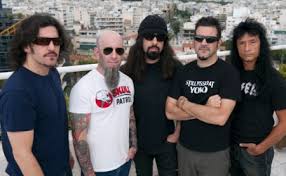
Anthrax performing live — Scott Ian and Joey Belladonna on stage
Vocalist Eras
Joey Belladonna1984 – 1992 / 2010 – present John Bush1992 – 2005
▲ Big Four of Thrash Metal:
Metallica· Slayer· Megadeth· Anthrax
▲ Jump to Song

What Makes a Great Anthrax Song?

A great Anthrax song is built on the specific energy that comes from New York City filtered through the velocity and precision of thrash metal. Where Metallica brought a Midwest heaviness and Slayer brought pure terror and Megadeth brought technical neuroticism, Anthrax brought something different: a street-level aggression shaped by the concrete and crossover culture of New York in the early 1980s, combined with a genuine love of comics, horror fiction and humour that made them the most culturally omnivorous of the Big Four.

The band formed in Queens, New York in 1981, the creation of guitarist Scott Ian and bassist Dan Lilker. The classic lineup — Ian on rhythm guitar, guitarist Dan Spitz, bassist Frank Bello, drummer Charlie Benante and vocalist Joey Belladonna — recorded the three albums (Spreading the Disease, Among the Living, State of Euphoria) that established their reputation in the mid-to-late 1980s. Ian's rhythm guitar — dense, percussive and locked in with Benante's drumming — is the defining sonic element of those records, and it remains unmistakable across four decades of heavy metal production.

Their hip-hop crossover connection — particularly the friendship with Public Enemy and the landmark Bring the Noise collaboration — also gave them a cultural significance beyond the thrash metal world, and the short-and-fast approach of their mid-career tracks drew on hardcore punk as explicitly as on metal. This ranking covers the songs that best represent all of that: the classic thrash peaks, the crossover moments and the overlooked later material.

Top 10 Anthrax Songs Ranked

01

Among the Living

Album: Among the Living · 1987 · Joey Belladonna
Among the Living

Among the Living is the definitive Anthrax track — the title track of their greatest album and the song that most completely captures what made the band exceptional at their peak. The opening riff is one of the great thrash metal constructions: a syncopated, grinding figure that arrives at full force and does not relent for the song's entire six-and-a-half-minute runtime. Scott Ian's rhythm guitar work here is as dense and percussive as anything in the genre.

Joey Belladonna's vocal performance matches the music's intensity with a clean-toned power that distinguished Anthrax from every other major thrash band. Most thrash vocalists of the era favoured aggression over melody; Belladonna could deliver both simultaneously, giving the song a range that made it accessible to listeners who found the more extreme approaches of the genre's contemporaries alienating. The combination of Ian's riffing and Belladonna's vocal on the chorus is the most immediately identifiable moment in the full Anthrax catalogue.

The song also sets the cultural tone for the album: literary references (Stephen King's The Stand), a sense of epic narrative, and the particular kind of serious engagement with genre fiction that defines Anthrax's lyrical world at its best. Metal that knows what it is inspired by and is not embarrassed about it.

Song Meaning

Among the Living is built around Randall Flagg — the primary villain of Stephen King's apocalyptic novel The Stand — a figure of supernatural evil who walks among ordinary people as an agent of destruction and chaos. King's novel was enormously influential in the mid-1980s and Scott Ian was a devoted reader; the song uses Flagg as a vehicle for exploring the nature of evil as something immanent and social rather than supernatural and remote. The "walking among the living" conceit makes the threat feel uncomfortably close.

Why #1: the definitive Anthrax riff, the definitive Belladonna vocal performance, and the most complete expression of what made the band exceptional at their peak.
02

I Am the Law

Album: Among the Living · 1987 · Joey Belladonna
Among the Living

I Am the Law sits alongside the title track as the co-peak of the Among the Living album and demonstrates a different dimension of the band's capability: where Among the Living sustains a relentless single mood, I Am the Law moves through multiple sections, tempos and dynamics, creating something closer to a metal epic than a thrash exercise. The song is over five minutes long and earns every second through genuine compositional intelligence.

The subject matter — Judge Dredd, the British comic book law-enforcement character — gave the song an instantly identifiable personality and reflected the band's genuine enthusiasm for the source material. This was not a marketing decision but a sincere creative choice, and the song's understanding of Dredd's character — his implacability, his complete identification with the law he embodies — is accurate and detailed enough to function as both a metal track and a character study.

Song Meaning

I Am the Law is a direct portrait of Judge Dredd, the lawman of Mega-City One from the British comic 2000 AD. The song quotes and paraphrases Dredd's characteristic dialogue — "I am the law" is his defining phrase — and explores his role as judge, jury and executioner in a totalitarian dystopia. Scott Ian and Charlie Benante were devoted readers of 2000 AD, and the song represents one of the first major metal tracks to take a comic book character as its primary subject with genuine depth and accuracy rather than superficial appropriation.

Why #2: among the most compositionally sophisticated tracks in the thrash metal genre — a genuine metal epic built around one of fiction's most distinctive characters.
03

Caught in a Mosh

Album: Among the Living · 1987 · Joey Belladonna
Among the Living

Caught in a Mosh is the most purely aggressive track on Among the Living and the best evidence of Anthrax's hardcore punk roots shaping the thrash metal framework. The tempo is relentless, the riff shows Ian at his most rhythm-locked, and the lyric addresses the mosh pit itself — the physical space of extreme music — with the directness of someone who understands the culture from inside rather than as an observer.

The song functions as both a piece of music about the live experience of heavy music and as a demonstration of that experience in recorded form — the listener is, in effect, caught in a mosh while listening. It has been a setlist anchor since its release and remains one of the most viscerally effective live Anthrax moments.

Why #3: the most physically immediate Anthrax track and the clearest expression of the hardcore-thrash crossover that made the band unique within the Big Four.
04

Indians

Album: Among the Living · 1987 · Joey Belladonna
Among the Living

Indians is the most emotionally complex and lyrically ambitious track on Among the Living — a song about the treatment of Native Americans by the United States government, written with genuine anger and historical specificity rather than the vague gestures toward social consciousness that characterise weaker protest metal. The song names specific historical events, specific acts of violence and dispossession, and refuses to soften its conclusions.

Belladonna's vocal performance here has a quality of contained fury that distinguishes it from the more physically aggressive deliveries on Caught in a Mosh — this is anger that has passed through knowledge and arrived at something more considered. The music supports that mood: the riff has a different character from the rest of the album, slightly more measured, which gives the song a weight that the faster material does not carry in the same way.

Song Meaning

Indians is a direct engagement with the history of colonisation, genocide and cultural destruction visited upon Native American peoples by the United States government and European settlers. Scott Ian has described it as the most politically direct song on the album — the most consciously engaged with a real historical and ongoing injustice. The song was written in a period of renewed awareness of Native American rights and remained relevant through subsequent decades of continued struggle over land, sovereignty and representation.

Why #4: Anthrax's most politically committed and historically specific song — the track that shows the band's engagement with the world beyond genre convention.
05

Got the Time

Album: Persistence of Time · 1990 · Joey Belladonna
Persistence of Time

Got the Time is a cover of a Joe Jackson song transformed into something that sounds completely native to the thrash metal vocabulary — one of the most successful genre translations in metal history. The original is a rapid-fire new wave track; Anthrax took the tempo, the urgency and the energy and channelled them through the Persistence of Time sound to create a track that simultaneously sounds nothing like the original and captures everything that made it effective.

It demonstrates something important about the band: they are not a genre-pure band but cultural omnivores who consume music across styles and bring unexpected sources into their work. The song also shows Benante's drumming at its most technically demanding — the tempo and the fills required to sustain it at full velocity across the song's runtime are among the most impressive performances on any Anthrax record.

Why #5: the most successful cover version in the Anthrax catalogue and the clearest demonstration of the band's ability to bring unexpected cultural sources into the thrash metal framework.
06

Be All, End All

Album: Among the Living · 1987 · Joey Belladonna
Among the Living

Be All, End All is the deepest cut on Among the Living that should be in any top 10 Anthrax list and frequently is not. It closes the album with a slower, more measured tempo than most of what precedes it, and uses that space to build something more atmospheric and sonically varied than the album's more high-velocity moments. The riff has a grooving quality — almost reminiscent of the Black Sabbath influence that runs beneath the thrash surface — and the song develops over its runtime with the patience of a band who know they have established enough momentum to take their time.

It is the track that most clearly shows the compositional range within Among the Living and demonstrates that the album's greatness is not simply a function of its speed and aggression but of its ability to modulate those qualities.

Why #6: the most underrated track on the best Anthrax album — where the compositional patience shows the full extent of the band's range.
07

In My World

Album: Persistence of Time · 1990 · Joey Belladonna
Persistence of Time

In My World is the most accessible and melodically direct track on Persistence of Time — the album where Anthrax moved toward a heavier, slower and more serious sound that divided some fans who preferred the more energetic early material. The song represents the best of that transition: the heaviness is genuine and earned, and Belladonna's vocal melody has a clarity and directness that gives the song a staying power the album's more grinding material occasionally lacks.

It demonstrates what Persistence of Time was trying to accomplish — a more considered, adult Anthrax sound — while keeping one foot in the melodic accessibility of the earlier records. It is an important album track for understanding the band's evolution in the 1990 period.

Why #7: the most melodically direct Persistence of Time track and the best evidence that the heavier 1990 sound could still produce accessible metal.
08

Only

Album: Sound of White Noise · 1993 · John Bush
Sound of White Noise

Only is the definitive John Bush-era Anthrax track and the song that most justifies the argument for the Sound of White Noise period as genuine creative achievement rather than compromise. Bush's voice is harder and grittier than Belladonna's, with less of the classical metal clarity and more of the grunge-era alternative rock aggression — and Only shows that quality at its most effective, matched to a riff that suits it perfectly.

The song is heavier and more sonically dense than the Among the Living material, with a production style that reflected the early 1990s hard rock landscape while retaining the band's fundamental thrash DNA. It was the closest the band came to a mainstream rock radio hit in the Bush era and demonstrated that the new lineup could produce commercially viable material without abandoning their identity.

Why #8: the definitive John Bush-era Anthrax track — the song that makes the strongest case for the Sound of White Noise period as essential listening.
09

Blood Eagle Wings

Album: For All Kings · 2016 · Joey Belladonna
For All Kings

Blood Eagle Wings is the strongest argument for For All Kings (2016) as a genuinely important late-career Anthrax album and for the reunited Belladonna lineup as capable of producing essential material decades after the classic period. The riff has the density and drive of the Among the Living era without sounding like a pastiche — it is a contemporary thrash metal track that knows its history and builds on it rather than merely repeating it.

Belladonna's vocal performance at this point in his career has a different quality — more contained, with the authority of experience — and it suits the song's slightly darker atmosphere. The track demonstrates that the band's creative engine, fundamentally Scott Ian's riff writing and Charlie Benante's drumming, had not diminished in the thirty years since their peak.

Why #9: the best late-career Anthrax track — proof that the reunited Belladonna lineup could still produce essential material in 2016.
10

Madhouse

Album: Spreading the Disease · 1985 · Joey Belladonna
Spreading the Disease

Madhouse rounds out this ranking as the essential track from Spreading the Disease — the debut album with Belladonna that established the Anthrax sound before it reached the peak of Among the Living. The song shows the band in the process of becoming what they would be: the riff is not yet at the compositional level of the 1987 material, but the energy, the vocal confidence and the sonic ambition are all fully present.

It is the best entry point for the pre-Among the Living period and for understanding how quickly the band developed between their debut and their classic album. The two-year gap between Spreading the Disease and Among the Living represents one of the most dramatic single-album leaps in thrash metal history.

Why #10: the essential early Anthrax track — the best introduction to the band before the Among the Living peak and a measure of how far they developed in two years.

Best Anthrax Songs for Beginners

New to Anthrax? These six tracks introduce the different dimensions of the band — the classic thrash peaks, the crossover moments, the comic book tributes and the later material.

Among the Living Start here — the definitive Anthrax song and the best entry point into the entire Big Four thrash metal tradition.
I Am the Law The Judge Dredd epic — shows the compositional range and the band's genuine love of the source material.
Caught in a Mosh The most visceral track — the hardcore-thrash crossover at maximum velocity and impact.
Got the Time The Joe Jackson cover — the best showcase for the band's cultural range and Benante's drumming at its most impressive.
Indians The most politically direct song — shows the band engaging seriously with history and social justice within the thrash framework.
Only The John Bush era at its best — the alternative if you prefer a grittier, harder sound to the Belladonna melodic approach.

Anthrax and the Big Four of Thrash Metal

The Big Four of thrash metal — Metallica, Slayer, Megadeth and Anthrax — are the four bands most responsible for creating and defining thrash metal in the 1980s. Understanding where Anthrax sit within this group is the most useful context for new listeners.

Metallica San Francisco, CA

The biggest and most commercially successful. The standard against which all thrash is measured. Master of Puppets as the genre's defining statement.

Slayer Los Angeles, CA

The most extreme. Speed, aggression and Satanic/war imagery at maximum intensity. Reign in Blood as the most uncompromising Big Four album.

Megadeth Los Angeles, CA

The most technically demanding. Dave Mustaine's political anger and guitar virtuosity. Peace Sells and Rust in Peace as the technical peaks.

Anthrax New York City, NY

The most culturally diverse. Hip-hop crossover, comic books, hardcore punk influence. Among the Living as the New York Big Four peak.

The four bands performed together for the first time at the Sonisphere Festival in Sofia, Bulgaria in June 2010 — a concert that became one of the most celebrated events in thrash metal history. They have performed together on subsequent occasions including US festival dates in 2011.

Joey Belladonna vs John Bush

The Anthrax vocalist debate is one of heavy metal's most enduring discussions, and both positions are genuinely defensible rather than one being obviously correct.

Joey Belladonna
1984–1992 / 2010–present

Belladonna's voice is cleaner, higher and more distinctly melodic than Bush's — a classical metal approach that gave Anthrax a character within the Big Four that was genuinely their own. His performances on Spreading the Disease, Among the Living, State of Euphoria and Persistence of Time are the foundation of the band's reputation. His return for Worship Music (2011) and For All Kings (2016) proved the original chemistry remained intact after nearly two decades.

John Bush
1992–2005

Bush, formerly of Armored Saint, brought a grittier, more alternative-metal approach that suited the heavier 1990s sound but divided the fanbase that had loved the Belladonna era. Sound of White Noise (1993), Volume 8 (1998) and We've Come for You All (2003) are all genuinely good records that have been somewhat unfairly overshadowed by the reunited Belladonna era's retroactive dominance of the narrative. The Bush period is worth exploring on its own terms.

Anthrax, Public Enemy and Bring the Noise

One of the most significant moments in Anthrax's history — and in the history of heavy music more broadly — was their friendship with Public Enemy and their 1991 collaboration on Bring the Noise: a metal version of Public Enemy's 1988 hip-hop classic, performed by Anthrax with Chuck D and Flavor Flav.

The collaboration came from a genuine mutual respect and cultural overlap. Scott Ian was a devoted hip-hop fan who saw the aggression and directness of early Public Enemy as directly analogous to what thrash metal was doing — both genres built on velocity, anger and the refusal to accommodate mainstream expectation. Chuck D has described his own enthusiasm for metal in similar terms, and the friendship between the two camps was authentic rather than a marketing exercise.

The Bring the Noise track pre-dated the mid-1990s rap-rock crossover by several years and established a different kind of template — one built on genuine mutual respect and musical understanding rather than the more superficial genre-blending that followed. It remains one of the most important cross-genre collaborations in rock and hip-hop history, and Anthrax's willingness to engage with it says something significant about the cultural breadth that distinguishes them from their Big Four contemporaries.

Scott Ian: The Rhythm Guitar That Built Thrash

Scott Ian is the creative constant of Anthrax across their entire history — the only member to have played on every studio album, the primary riff writer, and the person most responsible for the specific character of the band's sound. His rhythm guitar work is the defining element of Anthrax's music: percussive, syncopated, dense and locked into a groove with Charlie Benante's drumming that creates a physical impact most metal bands cannot replicate.

Ian is often discussed primarily as a personality — he is one of the most visible and articulate figures in heavy metal culture, known for his media presence, his public advocacy for the genre and his willingness to engage in the debates around it. But the core of his significance is musical: the riffs on Among the Living, I Am the Law, Caught in a Mosh and Indians are among the great rhythm guitar compositions in rock, and they remain as effective forty years after they were written.

His influence on subsequent generations of rhythm guitarists — particularly in the crossover and hardcore scenes that drew on Anthrax's approach in the 1990s — is substantial and acknowledged. The specific combination of downpicking precision and syncopated groove that Ian developed became a template that dozens of bands have worked from without necessarily knowing the original source.

Best Anthrax Albums to Hear Next

1987
Among the Living

The definitive Anthrax album and the best starting point for new listeners. Contains Among the Living, I Am the Law, Caught in a Mosh, Indians and Be All, End All. One of the most fully realised albums in the thrash metal canon and the high-water mark of the classic Belladonna lineup.

1985
Spreading the Disease

The debut album with Belladonna and the best entry point for the earlier sound before the Among the Living refinement. Contains Madhouse, Gung-Ho and A.I.R. Rawer and more straightforwardly aggressive than the later work, it is essential for understanding the band's development.

1990
Persistence of Time

The heaviest and most serious Anthrax album — a deliberate move toward slower tempos and greater sonic density. Contains Got the Time, In My World and the eight-minute title track. Essential for fans who want the most uncompromising version of the classic lineup's sound.

1993
Sound of White Noise

The first John Bush album and the most commercially successful of the Bush era. Contains Only, Room for One More and Black Lodge. The best entry point for listeners who want the heavier, grungier post-Belladonna sound on its own terms.

2016
For All Kings

The strongest late-career album with the reunited Belladonna lineup. Contains Blood Eagle Wings, Evil Twin and Breathing Lightning. The most convincing demonstration that the band could produce essential material in the 2010s rather than simply touring on legacy.

Honourable Mentions

Anthrax have a deeper catalogue than the obvious tracks suggest, particularly across the early albums and the underappreciated Bush era. Strong honourable mentions include:

  • Gung-Ho (Spreading the Disease, 1985) — the debut's most aggressive track and a first statement of the riff style Ian would refine on the following album
  • A.I.R. (Spreading the Disease, 1985) — one of the earliest and clearest expressions of the New York hardcore crossover influence
  • Efilnikufesin (N.F.L.) (State of Euphoria, 1988) — the most deliberately absurd Anthrax track title hiding one of their most effective late-decade riffs
  • In the End (Persistence of Time, 1990) — the most atmospheric track on the heaviest album, a genuine slow-burner
  • Black Lodge (Sound of White Noise, 1993) — the most musically adventurous Bush-era track, drawing on the atmosphere of Twin Peaks
  • Safe Home (We've Come for You All, 2003) — an unexpectedly emotional track that showed a different dimension of the Bush-era writing
  • Evil Twin (For All Kings, 2016) — a strong recent-era track that sits alongside Blood Eagle Wings as evidence of the band's late-career vitality
  • Bring the Noise (with Public Enemy, 1991) — the most culturally significant recording in the Anthrax catalogue, essential for understanding their place in music history

Anthrax Band History

Anthrax formed in New York City in 1981, initially by Scott Ian and bassist Dan Lilker. The early lineup went through several changes before settling into the classic configuration — Ian and Dan Spitz on guitars, Frank Bello on bass, Charlie Benante on drums and Joey Belladonna on vocals — that recorded the defining mid-1980s albums. Belladonna joined in 1984, replacing Neil Turbin, and his arrival coincided with the band's signing to Island/Megaforce Records and the beginning of their breakthrough period.

Spreading the Disease (1985) established the lineup and the sound; Among the Living (1987) represented the creative peak; State of Euphoria (1988) and Persistence of Time (1990) maintained the momentum while moving toward heavier, slower territory. The I'm the Man EP (1987) and the subsequent friendship with Public Enemy established the hip-hop connection that would culminate in the Bring the Noise collaboration.

Joey Belladonna was fired in 1992 — a decision that Ian has subsequently acknowledged was a mistake — and replaced by John Bush. The Bush era produced commercially respectable but critically divided albums: Sound of White Noise (1993), Stomp 442 (1995), Volume 8: The Threat Is Real (1998) and We've Come for You All (2003). Bush departed in 2005 amid band difficulties, and the subsequent period was troubled by illness and lineup instability before Belladonna's return.

The reunited Belladonna lineup released Worship Music in 2011 after years of delays caused by Charlie Benante's tendinitis and other personal difficulties, followed by For All Kings (2016). Both albums were received warmly by the fanbase and demonstrated that the classic lineup could produce vital new material rather than simply touring on nostalgia. Anthrax remain active and continue to be one of the most consistently celebrated live acts in thrash metal.

Are Anthrax Still Active?

Anthrax remain active with the Belladonna-era reunion lineup and continue to tour internationally as both a headline act and as part of Big Four celebrations. For current touring dates and festival appearances, visit the RockHeardle Tours page.

▲ Want More After This Ranking?

Read the full Anthrax band guide, explore the Big Four with our Metallica guide, Slayer guide or Megadeth guide, then test your knowledge in Rock Heardle.

Anthrax Songs: Frequently Asked Questions

What is Anthrax's best song?
Among the Living is widely considered Anthrax's best song. The title track of their 1987 album, it combines the band's most powerful riff construction with Joey Belladonna's most commanding vocal performance and an intensity that established the high-water mark for New York thrash metal. It is the definitive starting point for new listeners.
What is the Big Four of thrash metal?
The Big Four of thrash metal are Metallica, Slayer, Megadeth and Anthrax — the four bands most responsible for defining thrash metal in the 1980s. All four performed together publicly for the first time at the Sonisphere Festival in Sofia, Bulgaria in June 2010. Anthrax are the New York contingent, distinct from the West Coast bands through their hardcore influences, humour and hip-hop crossover connections.
What does Among the Living mean?
Among the Living takes its title and central character from Stephen King's The Stand — the villain Randall Flagg, who walks among ordinary people as an agent of chaos and destruction. Scott Ian was a devoted Stephen King reader and the song uses Flagg as a vehicle for exploring how evil exists within society rather than outside it.
What does I Am the Law mean?
I Am the Law is a portrait of Judge Dredd, the law enforcement officer of Mega-City One from the British comic 2000 AD. The song is built around Dredd's defining phrase and character — judge, jury and executioner in a totalitarian dystopia — and reflects the genuine enthusiasm Scott Ian and Charlie Benante had for the source material.
Joey Belladonna or John Bush — who is better?
Both vocalists are considered essential to different periods of Anthrax's catalogue. Belladonna's clean, melodic voice defined the classic 1980s albums and gave the band a distinctive character within the Big Four. Bush's grittier approach suited the heavier 1990s material. Most fans consider the Belladonna-era albums the creative peak while acknowledging that the Bush-era records stand on their own considerable merits.
Where are Anthrax from?
Anthrax are from New York City — specifically from Queens and the wider New York metropolitan area. The New York hardcore and metal scenes of the early 1980s shaped the band's sound, giving them a harder, more urban edge than the Bay Area thrash bands and a natural connection to the hip-hop culture developing in the same city at the same time.
Did Anthrax collaborate with Public Enemy?
Yes. Anthrax and Public Enemy collaborated on Bring the Noise in 1991 — a metal version of Public Enemy's 1988 hip-hop classic, recorded and released on the Attack of the Killer B's compilation. The collaboration came from genuine mutual respect and cultural connection between the two bands, and predated the mid-1990s rap-metal crossover by several years. It remains one of the most important cross-genre collaborations in rock and hip-hop history.
What is the best Anthrax album to start with?
Among the Living (1987) is the best starting album for most new listeners — it contains the band's most celebrated songs and represents the classic Belladonna lineup at their absolute peak. Spreading the Disease (1985) is the best entry point for the rawer early sound, and Sound of White Noise (1993) is the starting point for the John Bush era.
Is Anthrax still active?
Yes. Anthrax remain active with the Belladonna-era reunion lineup — Scott Ian, Joey Belladonna, Frank Bello, Charlie Benante and Jon Donais — and continue to tour internationally. Their most recent studio albums are Worship Music (2011) and For All Kings (2016).
What does Got the Time by Anthrax mean?
Got the Time is a cover of a 1979 song by Joe Jackson, transformed by Anthrax into a thrash metal track. The original is a rapid-fire new wave track about urban anxiety and the feeling of perpetual busyness. Anthrax took the energy and tempo of Jackson's original and channelled them through the thrash framework, creating one of the most successful genre translations in metal history.

Explore More Thrash & Metal Guides