▲ Back to Bands
▲ Ranked Songs · Motörhead · Heavy Metal · London

Motörhead Best Songs Ranked — The Definitive Guide

Motörhead were faster, louder and more honest than anyone — Lemmy Kilmister's bass-as-lead-instrument roar, four decades of absolute refusal to compromise, and a catalogue of songs about gambling, the road, excess and the simple fact that rock and roll is the only answer to every question life asks. This guide ranks the 10 best Motörhead songs, explains their meanings, and maps everything you need to know about the greatest rock band that ever lived.

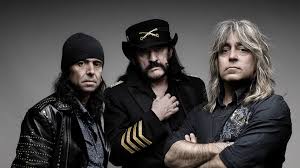
Motörhead performing live — Lemmy Kilmister on stage

▲ In Memory of Lemmy Kilmister (1945–2015)

Ian Fraser Kilmister — Lemmy — died on 28 December 2015, four days after being diagnosed with an aggressive cancer. He was 70 years old and had played a show two weeks earlier. Motörhead ended with him. Everything on this page is dedicated to one of the most irreplaceable figures in the history of rock music: a man who lived exactly as he sang, and never once pretended to be anything other than what he was.

▲ Jump to Song

What Makes a Great Motörhead Song?

A great Motörhead song does one thing that most rock music only approximates: it tells the complete truth. Lemmy Kilmister's lyrical world — the gambling dens and the highways, the women and the whiskey, the road crews and the all-night drives, the simple existential fact that you will die and you might as well be moving fast when it happens — is a world described with total honesty and zero sentimentality. The best Motörhead songs have no gap between the life being described and the life being lived. That integrity is the foundation of everything.

Motörhead formed in London in 1975 — Lemmy Kilmister founding the band after his departure from Hawkwind, where he had been sacked (according to band legend) for taking the wrong drugs at the wrong border crossing. The various lineup configurations that followed eventually stabilised in their finest form with the classic trio of Lemmy, guitarist "Fast" Eddie Clarke and drummer Phil "Philthy Animal" Taylor — the lineup that recorded the albums widely considered the finest of the catalogue. Later lineups with Brian Robertson, Pete Gill, Würzel, Phil Campbell and Mikkey Dee sustained the band for four decades without ever fully replacing the specific chemistry of the classic era.

This ranking places Ace of Spades first — where virtually every list places it — while including the finest deeper catalogue material that demonstrates the breadth of what Lemmy was doing across forty years.

Top 10 Motörhead Songs Ranked

01

Ace of Spades

Album: Ace of Spades · 1980
Ace of Spades

Ace of Spades is Motörhead's most famous song and the track that most completely encapsulates the entire Motörhead proposition in two minutes and forty-nine seconds — the speed, the bass tone, the gambling imagery, Lemmy's voice and the attitude of a man who has made his peace with the worst possible outcome and is playing his hand anyway. Every element of the track is exactly as it should be: the opening riff establishes the character immediately, the verse drives without interruption and the chorus is as close to a Motörhead mission statement as two words can constitute.

The song's specific combination of folk imagery (the ace of spades as the death card) with rock speed and Lemmy's deadpan delivery of lines about accepting total loss creates a tone that is simultaneously threatening and liberating — if you accept that you are going to lose everything eventually, you are free to bet everything right now. That is the Motörhead philosophy in two minutes and forty-nine seconds, and no other song in the catalogue states it more directly.

Song Meaning

Ace of Spades uses gambling as a metaphor for the live-fast, accept-all-consequences philosophy that Motörhead embodied. The ace of spades is the death card in folk tradition — the highest risk, the card that ends the game. Lemmy's lyric treats that card not as a threat but as a fact to be accepted and then ignored: if you know you are going to lose everything eventually, the only rational response is to play every hand at maximum stakes. The song is both a description of how Lemmy actually lived and an invitation to the listener to consider doing the same.

Why #1: the most famous Motörhead song and the one that most completely states the Motörhead proposition — two minutes and forty-nine seconds of everything the band stood for.
02

Overkill

Album: Overkill · 1979
Overkill

Overkill opens with Phil "Philthy Animal" Taylor's double bass drum pattern — one of the most influential drum performances in heavy metal history, the specific technique that announced a new possibility for what rhythm could do in a rock context and that was subsequently adopted and developed by drummers across the genre. The song never lets that intensity drop: four minutes and six seconds of sustained attack that serves the lyric's central theme — that the application of force beyond what is necessary is, in the Motörhead worldview, not a flaw but a virtue.

The track was released as a single in 1979, reaching number thirty-nine in the UK charts — significant for a band playing music of this speed and aggression in the pre-NWOBHM landscape. The album of the same name is widely considered Motörhead's second-finest record after Ace of Spades, and this title track is the centrepiece of that case.

Song Meaning

Overkill is about excess and the refusal to stop — applying more force than the situation requires, continuing beyond the point of victory because stopping is against the Motörhead nature. The double bass drum pattern that opens the song and drives it throughout is not incidental to the meaning: the overkill of the title is physically present in the drumming, the aggression of the bass, the relentlessness of the whole. It is a song that embodies its own subject.

Why #2: the greatest Motörhead album opener and home to one of the most influential drum performances in heavy metal — the double bass drum pattern that changed what rhythm was possible in the genre.
03

Killed by Death

Album: No Remorse (compilation) · 1984
Another Perfect Day era

Killed by Death is Motörhead's finest mid-tempo track — a song that demonstrates the band did not need maximum velocity to deliver maximum impact, and that Lemmy's lyrical wit was fully operational even in the more accessible hard rock register. The title's tautological construction ("killed by death" — as opposed to what other cause?) is characteristic of Lemmy's approach to rock and roll language: the statement that sounds redundant on first encounter and reveals more on each subsequent one.

The song was recorded in 1984 and appeared on the No Remorse compilation as new material — a relatively unusual release strategy that ensured it reached a large audience without the context of a specific album. It remains one of the most frequently cited Motörhead deep-cut favourites and the track most likely to be cited by fans who want to introduce new listeners to the catalogue beyond Ace of Spades.

Why #3: the finest Motörhead mid-tempo track and the best deep-cut entry point — proving the band at a slightly slower speed was just as devastating as at full velocity.
04

Born to Raise Hell

Airheads soundtrack · 1994 / Sacrifice · 1995
1994

Born to Raise Hell is the finest track from the mid-1990s era and the most purely fun Motörhead song — recorded with Ice-T and Whitfield Crane for the Airheads soundtrack, it delivers the Motörhead proposition with a directness and an energy that belies the collaborative context. The guest appearances add rather than dilute, and the combination of Lemmy's bass-forward rock and Ice-T's verse creates one of the more unexpected but more successful genre crossings of the era.

The song is also useful as a demonstration that Motörhead's energy and appeal were not dependent on any particular lineup configuration or production era: the same qualities that made the 1979–1982 material essential were fully present in 1994, decades into a career that had every reason to have become formulaic.

Why #4: the most purely fun Motörhead track and the finest mid-period collaboration — proving the band's energy was fully intact two decades in.
05

The Hammer

Album: Overkill · 1979
Overkill

The Hammer is the Overkill deep cut that demonstrates the full range of what the classic Motörhead trio could do when operating at maximum intensity. Less famous than the title track but equally accomplished, the song has the specific quality of the finest album tracks: complete in itself, absolutely committed, and revealing something about the band that the better-known material does not fully cover. The guitar work from "Fast" Eddie Clarke is the finest on the album, and the rhythm section's locked-in precision at high tempo is the best demonstration of what made the Taylor-Lemmy partnership so devastatingly effective.

Why #5: the essential Overkill deep cut — Eddie Clarke at his finest and the Lemmy-Taylor rhythm partnership at its most precisely devastating.
06

Bomber

Album: Bomber · 1979
Bomber

Bomber is one of Motörhead's most celebrated tracks and the song most associated with the band's extraordinary live production — the Bomber lighting rig that descended over the stage during performances of the song became one of rock's most memorable theatrical gestures, a physical manifestation of the track's imagery. The song itself is among the finest examples of Lemmy's ability to write rock and roll about war without glorifying it: the imagery is specific, the narrator's perspective is that of the crew rather than the command, and the song's energy communicates the experience of being in the machine rather than endorsing what the machine does.

Why #6: one of the great Motörhead live tracks and the song that produced one of rock's most celebrated stage production moments — the Bomber rig descending from the ceiling.
07

Orgasmatron

Album: Orgasmatron · 1986
Orgasmatron

Orgasmatron is Motörhead's most compositionally unusual and most genuinely disturbing track — a slow, heavy piece that operates at the opposite end of the tempo spectrum from most of the catalogue and uses that slower pace to create an atmosphere of genuine menace. The narrator is a figure of political manipulation and mass destruction — war, famine, pestilence, speaking in the first person with a cold satisfaction. It is the most literary Motörhead song and the furthest from the straightforward rock and roll of the surrounding material, and its six-minute runtime at a grinding mid-tempo is unlike anything else in the catalogue.

Lemmy described Orgasmatron as the song he was most proud of writing — which tells you something about the breadth of what he was capable of beneath the image of the straightforward hard-living rock icon.

Why #7: Lemmy's own favourite Motörhead song — the most literary and most genuinely disturbing track, demonstrating that the straightforward rock image was the tip of a much larger creative iceberg.
08

(We Are) The Road Crew

Album: Ace of Spades · 1980
Ace of Spades

(We Are) The Road Crew is one of the most distinctive and most genuinely touching songs in the Motörhead catalogue — a tribute to the touring crew, the people who carry the equipment and drive the trucks and make the shows happen, written and delivered with a sincerity and a warmth that sits apart from the more aggressive surrounding material. Lemmy wrote it as a direct thank-you to the people behind the scenes, and the specific affection in his delivery — the respect and the solidarity — is unmistakeable.

It is also one of the finest Motörhead rock tracks on a purely musical level, the groove and the momentum of the arrangement matching the subject matter — the song moves like a convoy, relentlessly forward, everyone in position, no stopping until the destination. For fans who know only the heavier material, this track reveals a dimension of warmth and loyalty in Lemmy's character that the more aggressive songs do not always show.

Why #8: the most genuinely touching Motörhead song — a tribute to touring crew that reveals the warmth and loyalty beneath the hard-living rock icon image.
09

Motörhead

Album: Motörhead (self-titled debut) · 1977
Self-titled 1977

The self-titled Motörhead track is the band in their earliest and most raw form — a song that Lemmy had originally written and recorded with Hawkwind (as "Motörhead" for that band), reclaimed as the new band's opening statement and eventually as the track most fully associated with the live experience of Motörhead at their most ferocious. The song was written about amphetamine use — directly, honestly, in the first person — which is characteristic of the approach to lyrical honesty that Lemmy maintained throughout his career.

Including the self-titled track here acknowledges the importance of the very beginning — the specific moment when the Motörhead sound, attitude and lyrical honesty were first put on tape, and the song that remained a live staple across four decades.

Why #9: the founding document — the track Lemmy reclaimed from Hawkwind and made the opening statement of everything Motörhead would become.
10

Lemmy

Album: Motörizer · 2008
Motörizer

Lemmy closes this ranking as the most self-referential and most deliberately mythological Motörhead track — a song in which Lemmy Kilmister sings about himself in the third person, presenting the Lemmy character as a force of nature, an archetype, something beyond a specific individual. It is simultaneously funny, completely committed and — in the context of knowing that Lemmy died in 2015 — genuinely moving in a way that it was not when first released.

The track represents Motörhead in their final productive era: the Phil Campbell and Mikkey Dee lineup that sustained the band's creative quality longer than the revolving-door personnel history of the 1980s and early 1990s might have suggested was possible. And it is the right final track for this ranking — a song that acknowledges the mythology, celebrates it without embarrassment and leaves the listener with the clearest possible image of what the band was and who made it.

Why #10: the most deliberately mythological Motörhead track and the right closing statement — Lemmy singing about Lemmy, the archetype fully formed and entirely comfortable with what it is.

Best Motörhead Songs for Beginners

New to Motörhead? These six tracks cover the full range — the speed, the groove, the warmth, the menace and the mythology.

Ace of SpadesStart here — the most famous Motörhead song and the most complete two-minute-forty-nine-second statement of everything the band stood for.
Killed by DeathThe most accessible deep cut — Motörhead at a slightly slower pace, proving speed was never the only point.
OverkillThe double bass drum performance that changed heavy metal — the title track from what many consider the second-finest Motörhead album.
BomberThe great live track with the descending Bomber rig — experiencing it on video gives you an idea of what the shows were like.
(We Are) The Road CrewThe most genuinely warm track — once you know the aggressive material, this reveals another dimension of what Lemmy was.
OrgasmatronLemmy's own favourite — the most literary and most unusual Motörhead song, showing the depth beneath the rock icon surface.

Lemmy Kilmister: The One and Only

Ian Fraser Kilmister was born on 24 December 1945 in Stoke-on-Trent, Staffordshire, and grew up in North Wales. He learned guitar as a teenager, moved to London and worked as a roadie for Jimi Hendrix before joining the band Hawkwind as bassist and occasional vocalist in 1971. His sacking from Hawkwind in 1975 — reportedly for taking amphetamines at a Canadian border crossing when the band preferred LSD — led directly to the founding of Motörhead.

His bass playing was unlike any other in rock — using the instrument as a lead voice rather than a rhythm support, playing through a Marshall stack with a distortion that gave the bass a presence in the mix that most rock bands reserve for guitar. The specific tone of his bass — recognised immediately by anyone who has heard it — was as much a part of Motörhead's identity as the speed of the music or the content of the lyrics.

Lemmy lived in West Hollywood from the 1990s, spending most evenings at the Rainbow Bar and Grill on the Sunset Strip, playing the slot machines and drinking Jack Daniel's and Coke. He gave interviews freely, spoke with honesty about his life and opinions, and maintained a warmth and a generosity with fans that his hard-man image did not always suggest. He was, by consistent account of everyone who knew him, exactly what he appeared to be — which is the rarest possible quality in rock music.

He was diagnosed with an aggressive cancer on 26 December 2015 and died two days later, on 28 December, at his apartment in West Hollywood. He was 70 years old. The last Motörhead concert was in Berlin on 11 December 2015, seventeen days before his death. He played that show fully, as he always did.

Best Motörhead Albums to Hear Next

1980
Ace of Spades

The best starting album. Contains Ace of Spades, (We Are) The Road Crew, Fast and Loose, Love Me Like a Reptile and Jailbait. The classic trio at their most commercially accomplished and their most broadly accessible.

1981
No Sleep 'til Hammersmith (live)

One of the greatest live albums in rock history — the classic trio captured at full force. The definitive argument for what Motörhead were as a live band, which was even more overwhelming than the studio recordings. Essential.

1979
Overkill

Contains Overkill, The Hammer, Stay Clean, Damage Case and Metropolis. The most consistently strong Motörhead album track-for-track and the finest example of what the classic trio could sustain across a full record.

1979
Bomber

Contains Bomber, Dead Men Tell No Tales, Stone Dead Forever and All the Aces. The third essential classic-era album and the one that most demonstrates the band's ability to vary tempo and register without sacrificing identity.

1986
Orgasmatron

The finest later-era Motörhead album. Contains Orgasmatron, Deaf Forever, Nothing Up My Sleeve and Claw. Heavier and more atmospheric than the peak-era records, and the album Lemmy considered his best work.

Honourable Mentions

The Motörhead catalogue is vast — twenty-two studio albums across forty years — and many excellent tracks fall below this top 10. Strong honourable mentions include:

  • Stay Clean (Overkill, 1979) — the most melodically immediate Overkill track and the song that most demonstrates the pop sensibility beneath the speed metal surface
  • Iron Fist (Iron Fist, 1982) — the final Eddie Clarke album's opening track and one of the finest pure speed Motörhead moments
  • Deaf Forever (Orgasmatron, 1986) — the companion piece to the title track and the second essential track on the finest later-era album
  • Metropolis (Overkill, 1979) — the most atmospheric early Motörhead track and the one that most clearly anticipates the slower, heavier approach of Orgasmatron
  • We Are Motörhead (We Are Motörhead, 2000) — the title track from the album that revitalised the band's creative standing in the 2000s
  • R.A.M.O.N.E.S. (March ör Die, 1992) — a tribute to the Ramones recorded with guest vocals from Ozzy Osbourne, demonstrating Lemmy's affection for punk as much as metal

Motörhead Band History

Motörhead formed in London in June 1975, founded by Lemmy Kilmister after his dismissal from Hawkwind. The original lineup included guitarist Larry Wallis and drummer Lucas Fox before settling on guitarist "Fast" Eddie Clarke and drummer Phil "Philthy Animal" Taylor — the classic trio that recorded the finest material. The self-titled debut (Chiswick Records, 1977) established the sound; Overkill and Bomber (both 1979) built the audience; Ace of Spades (1980) and the live album No Sleep 'til Hammersmith (1981) broke the band into the mainstream UK charts and cemented their status.

Eddie Clarke left in 1982, replaced eventually by Brian Robertson (briefly) and then Würzel and Phil Campbell as a two-guitarist configuration. The lineup continued to evolve — Pete Gill replaced Philthy Taylor on drums before Mikkey Dee arrived in 1992, providing the most sustained and most accomplished drumming in the band's post-classic era. The Phil Campbell and Mikkey Dee configuration was the stable Motörhead lineup from the mid-1990s until the end.

Lemmy's health declined noticeably from around 2013, requiring multiple show cancellations and raising concerns about the band's ability to continue. He continued recording and touring with determination until the final Berlin show on 11 December 2015. He was diagnosed with cancer on 26 December and died two days later. Motörhead announced the band's dissolution immediately following his death. Phil Campbell and Mikkey Dee have continued performing, Campbell with his own band Phil Campbell and the Bastard Sons, but there is no Motörhead without Lemmy.

Motörhead Songs: FAQ

What is Motörhead's best song?
Ace of Spades is Motörhead's most famous and most celebrated song — the complete Motörhead proposition in two and a half minutes. Overkill is placed second and contains one of the most influential drum performances in heavy metal. Orgasmatron was Lemmy's own favourite.
What does Ace of Spades mean?
Uses gambling as a metaphor for the live-fast, accept-all-consequences philosophy Motörhead embodied. The ace of spades is the death card in folk tradition — the highest risk. Lemmy's lyric treats it as a fact to accept and then ignore: knowing you will lose everything eventually means you are free to bet everything right now. Both a philosophy and an autobiography.
Who was Lemmy Kilmister?
Ian Fraser Kilmister (1945–2015) was Motörhead's founder, vocalist, bassist and creative centre — one of the most irreplaceable figures in rock history. Previously a member of Hawkwind, he played through Marshall stacks with a distorted bass tone that was immediately recognisable and unique. He lived in West Hollywood from the 1990s, spending most evenings at the Rainbow Bar and Grill, and gave interviews freely until the end. He died on 28 December 2015, four days after his cancer diagnosis.
When did Lemmy die?
Lemmy Kilmister died on 28 December 2015 in West Hollywood, California. He was 70 years old. He had been diagnosed with an aggressive cancer two days earlier, on 26 December. His last concert was in Berlin on 11 December 2015, seventeen days before his death. Motörhead announced the band's dissolution immediately.
Is Motörhead still active?
No. Motörhead disbanded following Lemmy's death on 28 December 2015. Without Lemmy — the band's founder, sole constant member, vocalist, bassist and creative centre — Motörhead does not and cannot continue. Phil Campbell and Mikkey Dee continue performing with other projects.
What does Overkill mean?
About excess and the refusal to stop — applying more force than necessary, continuing beyond the point of victory. In the Motörhead worldview this is a virtue rather than a flaw. The double bass drum pattern that drives the track physically embodies the concept: the drumming is itself overkill, exactly as the title describes.
What does Orgasmatron mean?
A slow, heavy six-minute piece narrated by a figure of political manipulation and mass destruction — war, famine and pestilence speaking in the first person with cold satisfaction. Lemmy described it as his favourite Motörhead song. The most literary and most unusual track in the catalogue, operating at the opposite end of the tempo spectrum from most of the band's material.
What is the best Motörhead album to start with?
Ace of Spades (1980) is the best starting album — contains the title track and (We Are) The Road Crew. No Sleep 'til Hammersmith (1981) is one of the greatest live albums in rock history and an essential second step. Overkill (1979) is essential for the title track.
Where are Motörhead from?
Motörhead formed in London, England in 1975. Lemmy Kilmister was from Stoke-on-Trent, originally, and grew up in North Wales before moving to London. The band is fundamentally a London rock band of the late 1970s NWOBHM era, though their sound transcends any specific geographic context.
Was Motörhead metal or punk?
Both, and neither — which is exactly where Lemmy wanted the band to be. Motörhead emerged simultaneously with punk and the New Wave of British Heavy Metal, claimed allegiance to neither camp while being embraced by both, and were deliberately positioned as the band that existed in the space between genres. Lemmy described their music simply as "rock and roll," which is probably the most accurate classification.

Explore More Rock Guides