Marilyn MansonBand Guide
Founded 1989 · Fort Lauderdale, Florida · Industrial Rock / Shock Rock
Marilyn Manson built one of the most consistently provocative and most commercially successful industrial rock catalogues of the 1990s and 2000s — three concept albums in a row that engaged seriously with religion, media, celebrity and American identity, packaged in theatrical confrontation that made the band the most controversially debated act in mainstream rock. This is the complete guide to the music.
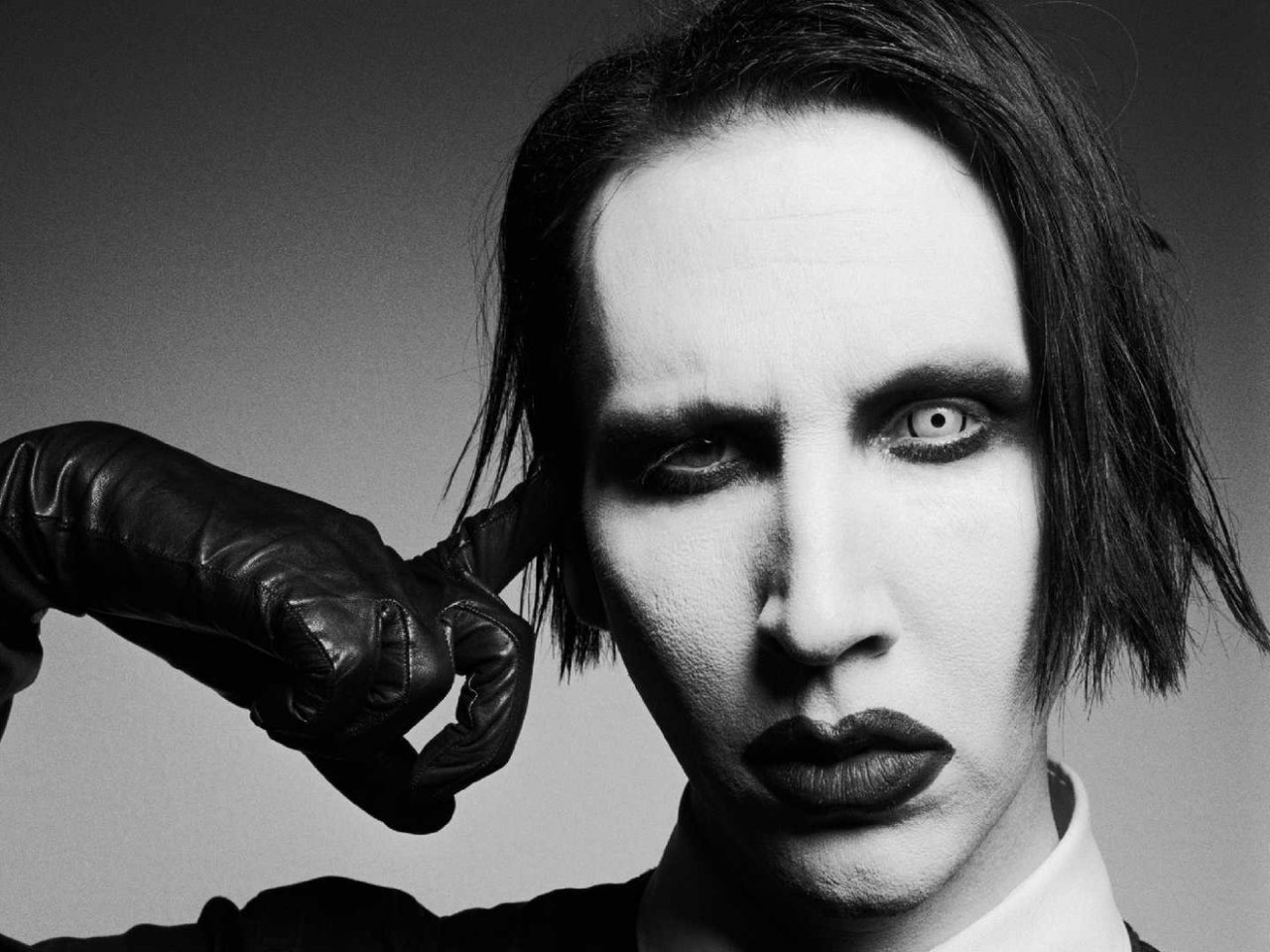
Who Is Marilyn Manson?
Marilyn Manson is both the stage name of Brian Hugh Warner (born 5 January 1969, Canton, Ohio) and the name of the band he fronts and leads. The name itself is a juxtaposition of two American cultural icons — Marilyn Monroe and Charles Manson — intended to represent the simultaneous beauty and violence at the heart of American popular culture. This conceptual approach extends throughout the catalogue: most Manson projects operate as deliberate provocations designed to expose the contradictions and hypocrisies of American mainstream culture rather than simply to shock.
The band formed in Fort Lauderdale, Florida in 1989 and relocated to Los Angeles as their profile grew. Discovered and signed by Trent Reznor of Nine Inch Nails, who produced their early work, the band broke through with Antichrist Superstar in 1996 — a concept album structured as a Nietzschean morality play about the creation and destruction of a cultural scapegoat, presented as the first part of a trilogy that would continue with Mechanical Animals (1998) and Holy Wood (In the Shadow of the Valley of Death) (2000).
At their commercial and creative peak, Manson were simultaneously one of the most commercially successful and most publicly denounced rock acts in the United States — attacked from political platforms, blamed for school violence by a Congress that had not listened to the records, and defended by cultural critics who recognised the intellectual seriousness of the project beneath the theatrical packaging.
Start with Mechanical Animals (1998) — the most melodically accessible and most sonically varied entry point. Then Antichrist Superstar (1996) for the conceptual peak. Holy Wood (2000) completes the essential trilogy.
Three Creative Eras
Band History
Discography
The Sound & The Concept
Manson's sound in the peak years is built on the specific intersection of Nine Inch Nails' industrial production aesthetic — heavy, programmed, layered, textural — with glam rock's theatrical excess and heavy metal's guitar weight. The Sweet Dreams cover that broke them through demonstrates the approach in miniature: take a piece of mainstream culture, strip it to its underlying anxieties, and reconstruct it with more weight and more confrontation than the original allowed.
The theatrical element is inseparable from the music: Manson's visual identity — the asymmetric contact lenses, the stage costumes, the deliberately transgressive imagery in videos and live shows — functions as a provocation designed to reveal what the audience's reaction to it says about them rather than about the band. The controversy has always been the point: a culture that responds to theatrical imagery with real-world moral panic demonstrates, in that response, exactly what the imagery was designed to expose.