✦ Back to Marilyn Manson
✦ Ranked Songs · Marilyn Manson · Industrial Rock

Marilyn Manson Best Songs Ranked — The Definitive Guide

Marilyn Manson built one of the most theatrically and intellectually serious industrial rock catalogues of the 1990s and 2000s — three consecutive concept albums engaging with religion, celebrity and American culture, packaged in the most controversial public persona in mainstream rock. This guide ranks the 10 essential tracks and explains what they actually mean.

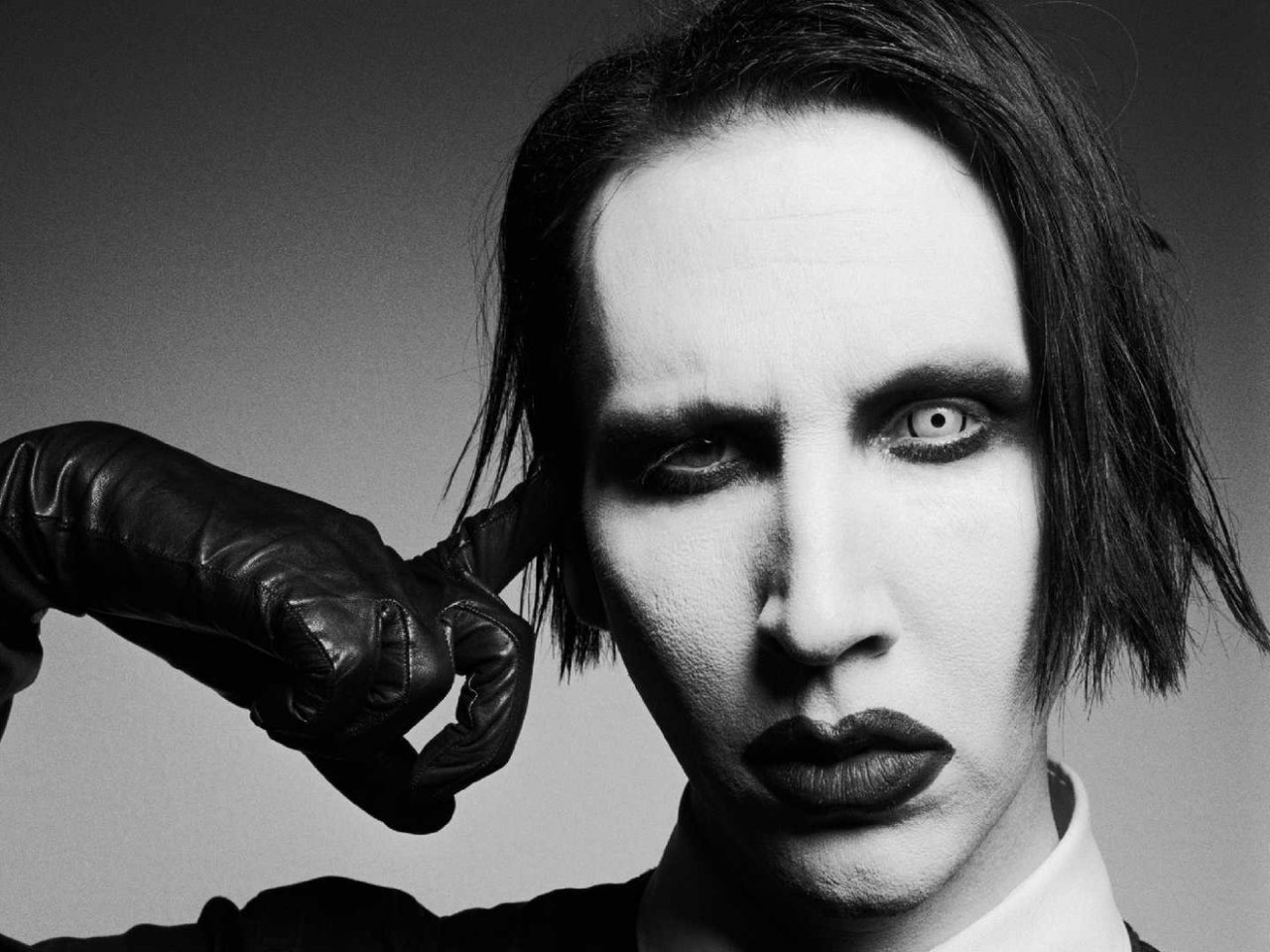
Marilyn Manson performing live
✦ Jump to Song

What Makes a Great Marilyn Manson Song?

A great Marilyn Manson song does something specific: it takes a cultural target — beauty, celebrity, religion, consumerism, media — and exposes its underlying mechanics through a combination of industrial rock weight, theatrical presentation and a lyric precise enough to make the argument rather than simply gesturing at it. The shock is not the point; the shock is the delivery mechanism for an argument that could be made in an essay but lands harder in a three-minute song.

The peak of this approach is the trilogy — Antichrist Superstar (1996), Mechanical Animals (1998) and Holy Wood (2000) — three consecutive concept albums that collectively constitute one of the most intellectually serious projects in mainstream rock history. The best individual tracks across all three albums are listed here.

Top 10 Marilyn Manson Songs Ranked

01

The Beautiful People

Album: Antichrist Superstar · 1996
Antichrist Superstar

The Beautiful People is Marilyn Manson's most complete and most enduring single statement — a track whose opening riff is one of industrial rock's most recognisable moments, whose lyrical argument is precise and philosophically grounded, and which retains its force completely after thirty years. The riff — a single descending figure repeated with increasing intensity — mirrors the relentlessness of the cultural pressure the lyric describes. The production, by Trent Reznor, is among the best on the album: the drums are physical, the guitars are layered with a density that feels architectural, and Manson's vocal alternates between controlled delivery and full-force aggression with complete conviction.

Song Meaning

The Beautiful People addresses the fascist underpinnings of beauty culture — the mechanisms of social exclusion that define acceptable appearances and conformity in modern consumer society. Manson draws on Nietzsche's concept of the herd mentality and on the historical connections between physical aesthetics and ideological power. The "beautiful people" are those whose conformity to dominant standards grants them social power over those who fall outside them — the song argues that this power structure is not benign but structurally fascist, enforcing compliance through the threat of exclusion. "There's no time to discriminate / hate every motherfucker that's in your way" is the herd mentality described from the inside.

Why #1: the most enduring Manson track, the most precisely argued lyric and the riff that has defined the band's identity for thirty years — everything the project was designed to do in one song.
02

The Dope Show

Album: Mechanical Animals · 1998
Mechanical Animals

The Dope Show is the most melodically sophisticated Manson track and the most immediate entry point for listeners approaching from outside the industrial rock context — a song that demonstrates the band's range by placing the most hook-driven arrangement in the catalogue at the centre of the most commercially successful album. The production is notably different from Antichrist Superstar: the Bowie and glam influences are audible, the arrangements are less industrial and more expansive, and Manson's vocal is more varied in register across the song than in the heavier surrounding material.

Song Meaning

The Dope Show addresses celebrity culture and the commodification of identity — the entertainment industry as a system that packages and sells performers as products, and the audience as consumers of the spectacle of those performers' lives. "The dope show" is both the entertainment industry (a show built on dopes — drugs, stupidity, spectacle) and the celebrity as dope — a substance that keeps the audience passive and consuming. Manson positions himself simultaneously as the object and the critic of this system, which gives the song a specific quality of knowing self-implication that straightforward cultural criticism lacks.

Why #2: the most melodically developed Manson track and the best entry point — celebrity culture as commodity with Manson as the self-aware product, over the most immediately accessible arrangement in the catalogue.
03

Sweet Dreams (Are Made of This)

EP: Smells Like Children · 1995
Early Era

Sweet Dreams is the cover that introduced Marilyn Manson to a mainstream audience and remains the most-played Manson track. The Eurythmics original (1983) is a specific kind of 80s synth-pop — cool, detached, melodically distinctive — and Manson's version does something precise with it: stripping the production warmth, replacing the synthesisers with industrial weight, and delivering Annie Lennox's lyric through a vocal that makes its content about desire, power and manipulation sound genuinely threatening rather than reflectively melancholic. The cover demonstrates the approach that defines the Manson project: mainstream cultural material reprocessed to reveal what was always in it.

Why #3: the cover that introduced most listeners to Manson and the clearest single demonstration of the project's approach — mainstream cultural material stripped and reprocessed to reveal what was always in it.
04

Disposable Teens

Album: Holy Wood · 2000
Holy Wood

Disposable Teens is the most energetically immediate track on Holy Wood and the song that directly addresses the Columbine moral panic and the media's use of Manson as a cultural scapegoat. Where most of the Holy Wood material is more conceptually dense and requires more contextual knowledge, Disposable Teens is a direct statement — fast, heavy and clear in its argument. The lyric's central claim, that teenage rebellion and violence are products of the culture that generates and then blames them, is the direct response to the years of Congressional hearings and media denunciations.

Song Meaning

Disposable Teens addresses the moral panic surrounding youth and rock music — the media and political mechanism by which the culture generates the alienation and anger of young people and then blames musicians who speak to that alienation for causing it. The "disposable teens" are both the young people the culture uses and discards and the cultural products (bands, songs) generated to serve and then be blamed for the market. Manson's response to the Columbine accusations is embodied here: the accusation is itself part of the mechanism being described.

Why #4: the most direct response to the Columbine moral panic and the clearest statement of Holy Wood's argument — the culture generates what it then blames, delivered at full speed over the heaviest Holy Wood arrangement.
05

mOBSCENE

Album: The Golden Age of Grotesque · 2003
Golden Age

mOBSCENE is the finest post-trilogy Manson track and the best argument for reassessing the Golden Age of Grotesque — a glam-metal-influenced industrial rock track with one of the most immediately memorable choruses in the Manson catalogue. The Weimar Republic cabaret influences that define the album's aesthetic are most audible here: the arrangement has a theatrical grandeur that suits the subject matter, and the chorus — delivered as a group chant — has the quality of a crowd performance rather than a solo statement. The song demonstrates that the post-trilogy Manson was still capable of producing tracks that matched the peak material on terms of immediate impact.

Why #5: the best post-trilogy Manson track — glam metal grandeur and Weimar cabaret theatrics converging in the most singable chorus outside the peak trilogy.
06

The Fight Song

Album: Holy Wood · 2000
Holy Wood

The Fight Song is the most anthemic and most physically immediate track on Holy Wood — a song built for live performance in the way that the more conceptually dense surrounding material is not. The arrangement is stripped back relative to the album's other tracks: the guitar riff drives everything, the production is more direct, and Manson's vocal has a confrontational energy that is less filtered through the album's Kennedy assassination and celebrity martyrdom conceptual framework than the surrounding tracks. It functions as the audience-facing, visceral centrepiece of a more abstractly conceived album.

Why #6: Holy Wood's live centrepiece — the most anthemic and most physically immediate track, stripped back and confrontational where the album's more conceptually dense surrounding material rewards patient attention.
07

Personal Jesus

Album: Mechanical Animals B-side / various releases
Depeche Mode Cover

Personal Jesus is Manson's cover of the Depeche Mode classic (originally 1989) — a version that takes the original's blues-rock guitar figure and industrial production and amplifies both to produce something heavier and more physically confrontational than the already-substantial original. Like Sweet Dreams, it demonstrates Manson's specific skill in selecting covers: the original material is already culturally significant, contains something the Manson aesthetic can usefully amplify, and the cover reveals something latent in the source that the original's context concealed. The Depeche Mode version is about the commodification of religious faith; Manson's version makes the critique more aggressive.

Why #7: the second essential Manson cover — takes the Depeche Mode original's industrial-blues and amplifies both elements, revealing the religious commodification critique with more aggression than the original's context allowed.
08

Antichrist Superstar

Album: Antichrist Superstar · 1996
Antichrist Superstar

The title track of the 1996 album is the most structurally ambitious Manson song — a piece that functions as the climactic statement of the album's Nietzschean narrative, arriving after forty minutes of build to deliver the Antichrist figure's final transformation and declaration. The arrangement is the most layered and most dense on the album: Reznor's production builds the track from near-silence to overwhelming force with a cinematic quality that makes it feel like a score as much as a rock track. Heard in the context of the full album, it is the most powerful individual moment; heard in isolation, it demonstrates a compositional ambition beyond anything on a conventional rock record.

Why #8: the album's climactic statement — the Nietzschean narrative's final moment, Reznor's production at its most cinematic, and the most compositionally ambitious Manson track heard in or out of album context.
09

If I Was Your Vampire

Album: Eat Me Drink Me · 2007
Eat Me Drink Me

If I Was Your Vampire is the finest track on Eat Me Drink Me and the most melodically graceful song in the Manson catalogue — a mid-tempo ballad in the most unironic sense that demonstrates a lyrical and melodic vulnerability absent from the confrontational peak material. The arrangement is unusual by Manson standards: acoustic guitar, restrained production and a vocal delivery that prioritises emotional precision over theatrical force. The song benefits from the specific creative context of the album's recording — reportedly the most personally revealing Manson record — and that personal investment is audible in the performance.

Why #9: the most melodically graceful Manson track and the best argument for the post-trilogy catalogue — personal, restrained, emotionally precise in a way the theatrical peak material rarely attempted.
10

This Is the New Shit

Album: The Golden Age of Grotesque · 2003
Golden Age

This Is the New Shit closes this ranking as the post-trilogy track most consistent with the peak material's intellectual approach — a song that takes the media's appetite for novelty and transgression as its subject and turns it into a self-referential statement about the Manson project's own relationship with that appetite. The lyric is among the sharpest post-trilogy writing: "Babble babble, bitch bitch / rebel rebel, party party / sex sex sex, don't forget the violence / blah blah blah" is a precise description of what the media and entertainment industries package and sell as rebellion, with Manson acknowledging his own position within that economy.

Why #10: the sharpest post-trilogy lyric — a self-referential statement about the media's appetite for transgression that implicates Manson in the economy it describes, with precision the peak trilogy would have been proud of.

Best Marilyn Manson Songs for Beginners

The Dope ShowStart here — the most melodically accessible Manson track and the best entry point from outside the industrial rock context.
Sweet DreamsThe cover that introduced most people to the band — the Manson approach demonstrated in three and a half minutes.
The Beautiful PeopleThe iconic track — once the above are familiar, this is the complete Manson statement with the most recognised riff.
mOBSCENEThe most immediately singable post-trilogy track — for listeners who want the theatrical grandeur without the full industrial weight.
Disposable TeensThe most direct Holy Wood track — fast, heavy and clear as an argument, the best single entry to the trilogy's political content.
If I Was Your VampireThe most melodically graceful Manson track — for listeners who want the personal and restrained side of the catalogue.

Best Marilyn Manson Albums to Hear Next

1998
Mechanical Animals

The best starting album — the most melodically accessible of the trilogy and the number-one debut. Contains The Dope Show, The Speed of Pain and I Don't Like the Drugs (But the Drugs Like Me).

1996
Antichrist Superstar

The creative peak. The Nietzschean concept album produced with Trent Reznor. Contains The Beautiful People, Tourniquet and the title track. Essential second album after Mechanical Animals.

2000
Holy Wood

The trilogy closer. The heaviest and most politically direct of the three. Contains Disposable Teens, The Fight Song and The Nobodies. Essential third step.

2007
Eat Me Drink Me

The strongest post-trilogy album. More personal and more melodic than the preceding records. Contains If I Was Your Vampire and Heart-Shaped Glasses.

Marilyn Manson Songs: FAQ

What is Marilyn Manson's best song?
The Beautiful People — the most complete and most enduring Manson statement, the most recognised riff and the most precisely argued lyric. The Dope Show is the most melodically sophisticated and the best entry point.
What does The Beautiful People mean?
Addresses the fascist underpinnings of beauty culture — social exclusion enforced through standards of acceptable appearance and conformity. Draws on Nietzsche's herd mentality and the historical connections between aesthetics and ideological power. The "beautiful people" are those whose conformity grants them power over those who fall outside the standard.
What does The Dope Show mean?
Celebrity culture and the commodification of identity — the entertainment industry packaging performers as products for audience consumption. "The dope show" is both a show built on dopes (spectacle, stupidity, drugs) and the celebrity as dope — a substance that keeps the audience passive. Manson positions himself as both product and critic of the system.
What is the best Marilyn Manson album to start with?
Mechanical Animals (1998) — the most melodically accessible and the number-one debut. Then Antichrist Superstar (1996) for the creative peak, and Holy Wood (2000) to complete the essential trilogy.
Was Marilyn Manson really blamed for Columbine?
Yes — multiple US senators and media commentators falsely claimed Manson's music influenced the Columbine killers, despite the killers not listening to his music. The episode — including Manson's response, documented in Michael Moore's Bowling for Columbine — is one of the most cited examples of media moral panic in rock history. Holy Wood (2000) addresses this directly.
Is Marilyn Manson a band or a person?
Both — Marilyn Manson is the stage name of Brian Hugh Warner (born 1969, Canton, Ohio) and also the name of the band he leads. The name juxtaposes Marilyn Monroe and Charles Manson — designed to represent the beauty and violence at the heart of American popular culture.

Explore More