← Back to Bands
Band Guide · Aerosmith · Hard Rock · Boston MA

AerosmithBand Guide

Founded 1970 · Boston, Massachusetts · Hard Rock / Blues Rock

Aerosmith are America's greatest rock and roll band — five decades, two creative peaks separated by a decade of chaos, a comeback that produced some of their biggest songs, and a front-of-house partnership between Steven Tyler and Joe Perry that has no equivalent in rock history. They burned out in the late seventies, came back clean in the late eighties, and made it work twice. This is the complete guide.
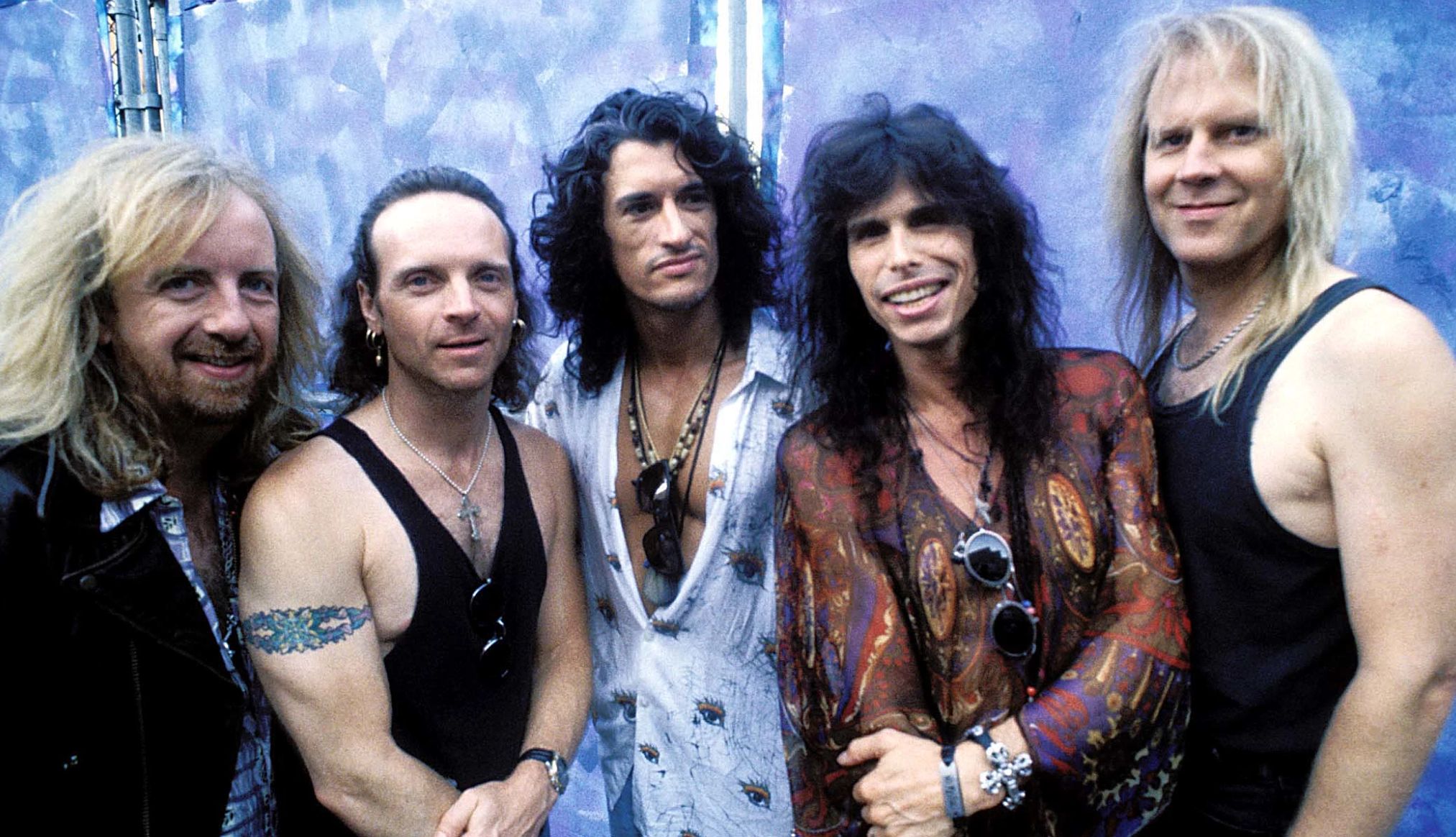
Aerosmith band photo
Founded1970Boston, MA
Studio Albums15
Records Sold150M+worldwide
Peak AlbumRocks1976
Start WithWalk This Way

Who Are Aerosmith?

Aerosmith are a hard rock band from Boston, Massachusetts, formed in 1970 by vocalist Steven Tyler and guitarist Joe Perry. Over five decades and fifteen studio albums they have sold more than 150 million records worldwide, making them the best-selling American rock band of all time. Their catalogue spans two distinct creative peaks — the raw, blues-drenched hard rock of the 1970s and the polished, radio-conquering comeback of the late 1980s and 1990s — with a decade of substance abuse, personnel changes and diminished output between them.

The band's identity is built on the Tyler-Perry axis — a front-man and lead-guitarist partnership often compared to Jagger and Richards, Plant and Page, and Lennon and McCartney in terms of its creative and commercial significance. Tyler's theatrical vocal acrobatics and Perry's blues-rooted guitar work are individually distinctive and collectively greater: the tension between them, including a genuine falling-out and several years apart in the early 1980s, is part of what gives the best Aerosmith music its specific energy.

New to Aerosmith?

Start with Rocks (1976) as an album — the rawest and most focused Aerosmith record. Then Pump (1989) for the comeback peak. For individual songs: Walk This Way, Dream On and Sweet Emotion are the essential three.

The Toxic Twins

Steven Tyler and Joe Perry were nicknamed the Toxic Twins by the press during the 1970s — a reference to their substance abuse that also captured something true about their creative relationship. They were genuinely difficult to be around, frequently at each other's throats, and capable together of producing music that neither produced separately in the years they were apart. The nickname stuck partly because of the alliteration and partly because it was accurate.

Steven Tyler — The Mouth of the South

Born Steven Victor Tallarico on 26 March 1948 in Manhattan, New York. His voice is one of the most immediately recognisable in rock — a high tenor that can move from a whisper to a full-force scream without losing pitch control, deployed with a theatrical showmanship that is simultaneously genuine and aware of its own excess. His stage presence — the scarves, the microphone stand, the constant movement — is the visual definition of a rock front man for a generation of fans who grew up with MTV. His lyric writing tends toward the double-entendre and the self-aware rather than the earnest, which gives Aerosmith songs a winking quality that distinguishes them from more po-faced hard rock contemporaries.

Joe Perry — The Guitar Hero

Born Anthony Joseph Perry on 10 September 1950 in Lawrence, Massachusetts. His guitar playing is built on a blues foundation — slide guitar, pentatonic lead work, rhythmic riffing that owes more to Muddy Waters and Howlin' Wolf than to the British rock bands who translated that tradition for the 1970s rock audience. The riffs he wrote with Tyler across the 1970s albums are among the finest in hard rock: instantly recognisable, physically demanding to play and deceptively simple in their construction. His tone — a combination of Les Paul and Marshall that has barely changed across five decades — is part of what makes Aerosmith songs identifiable within two seconds of the opening bar.

Two Creative Peaks

The 1970s Peak
1973 — 1979
The raw, blues-drenched original run — Toys in the Attic, Rocks, Draw the Line. The period that established Aerosmith as America's answer to the Rolling Stones and produced the classic rock canon: Walk This Way, Sweet Emotion, Back in the Saddle, Dream On. Ended in substance abuse, touring chaos and the departure of Perry and Brad Whitford.
The Comeback
1987 — 1997
The sober second act — Permanent Vacation, Pump, Get a Grip. Produced some of the biggest Aerosmith commercial hits including Love in an Elevator, Cryin', Crazy, Livin' on the Edge and I Don't Want to Miss a Thing. More polished than the 1970s material and enormous commercially, though debated among purists for the shift in sound and production.

Band Members

ST
Steven Tyler
Vocals · Harmonica
Born 26 March 1948, Manhattan, NY. The most theatrical front man in hard rock — a high tenor vocal that moves between whisper and scream without losing pitch, deployed with showmanship that defined the look of rock for a generation. Co-writer on the majority of the essential catalogue alongside Perry. Battled substance abuse through much of the 1970s and 1980s before getting sober in 1988, after which the commercial comeback produced some of the band's biggest hits.
JP
Joe Perry
Lead Guitar
Born 10 September 1950, Lawrence, MA. His blues-rooted guitar playing is the sonic foundation of Aerosmith — Les Paul through Marshall, pentatonic lead work and rhythmic riffing that owes more to Chicago blues than British rock. The riffs from the 1970s albums are among the finest in hard rock. Left the band in 1979, returned in 1984. Has maintained a parallel solo career and Joe Perry Project throughout the Aerosmith years.
BW
Brad Whitford
Rhythm Guitar
Born 23 February 1952, Winchester, MA. Rhythm guitarist and foil to Perry's lead work — the two-guitar interplay between Whitford and Perry is central to the Aerosmith sound but easy to overlook when Perry's lead lines command attention. Left alongside Perry during the substance-abuse-era personnel chaos; returned with Perry in 1984 and has remained since.
TH
Tom Hamilton
Bass
Born 31 December 1951, Colorado Springs, CO. Bassist and co-writer of Sweet Emotion — the bass line that opens that track is among the most recognisable in rock and roll. His playing has a melodic quality beyond the rhythm-section standard, contributing harmonic content to arrangements that the guitar-dominant Aerosmith sound doesn't always provide space for.
JK
Joey Kramer
Drums
Born 21 June 1950, Yonkers, NY. The rhythmic foundation of Aerosmith across fifty years — a drummer whose playing is deceptively simple in construction and extraordinarily effective in execution. His groove on the 1970s albums is what gives the music its specific physical quality: not technically flashy, not particularly fast, but impossible to not move to.

Band History

1970
Aerosmith form in Boston, Massachusetts. Tyler, Perry and the rest of the original lineup coalesce through a combination of circumstance and shared appetite for exactly the kind of music they end up making. The band develops a following in the Boston club scene before signing to Columbia Records.
1973
Self-titled debut album released on Columbia. Raw, energetic and not yet fully formed — but the essential elements are in place. Dream On, though initially a modest chart performer, establishes the template for Tyler's ballad vocal and becomes one of the band's signature songs through later exposure.
1975
Toys in the Attic released — the commercial breakthrough. Walk This Way and Sweet Emotion both appear on this album and both become among the most-played rock songs of the decade. The album establishes Aerosmith as one of America's premier rock acts and demonstrates the Tyler-Perry songwriting partnership at its most focused.
1976
Rocks released — widely regarded as the creative peak. More raw and more aggressive than Toys in the Attic, with a production approach that captures the band's live energy more accurately than the cleaner preceding album. Contains Back in the Saddle, Last Child and Rats in the Cellar. Considered by many critics and by the band themselves to be their finest album.
1977–1979
Substance abuse, touring exhaustion and internal conflict begin to damage the band's output. Draw the Line (1977) is inconsistent — containing moments of the earlier quality alongside clear evidence of creative deterioration. Joe Perry departs in 1979 following a backstage altercation; Brad Whitford leaves in 1981. The band continues with replacement members but the essential creative partnership is gone.
1984
Perry and Whitford return. The reunion tour is commercially successful but the band are still struggling with substance abuse and the creative recovery is gradual rather than immediate.
1986
Run-DMC release their hip-hop cover of Walk This Way featuring Tyler and Perry — a collaboration that reintroduces Aerosmith to a younger audience who had no context for the 1970s albums and establishes the band's commercial viability for the comeback era that follows.
1987–1989
The band gets sober. Permanent Vacation (1987) is the first album of the comeback era — more polished than the 1970s material, working with professional songwriting collaborators for the first time, and commercially far more successful. Pump (1989) follows and is even stronger — containing Love in an Elevator, Janie's Got a Gun and The Other Side. The commercial recovery is complete.
1993
Get a Grip released — the biggest-selling Aerosmith album commercially. Contains Cryin', Crazy, Livin' on the Edge and Amazing. The Alicia Silverstone videos for the ballads become among the most-watched on MTV and introduce the band to an audience younger than any they had previously reached. The album sells over 20 million copies worldwide.
1998
I Don't Want to Miss a Thing — from the Armageddon soundtrack — becomes the band's first US number one single. The ballad is not representative of the band's core sound but demonstrates their commercial reach and introduces them to an audience unfamiliar with the rock catalogue.
2000s–2020s
A series of later albums with diminishing returns, further lineup complications and health issues. Tyler undergoes vocal health treatment; Perry suffers a cardiac event on stage in 2016. The band announce a farewell tour in 2023, which is postponed and rescheduled multiple times due to Tyler's ongoing vocal rehabilitation. The final chapter of Aerosmith's performing career remains ongoing.

Discography

1973
Aerosmith
Debut. Raw and energetic. Contains Dream On. Essential for the origin story but not the first album to play.
Debut
1975
Toys in the Attic
Commercial breakthrough. Walk This Way, Sweet Emotion. The album that put Aerosmith on the map. Start here for the 70s material.
Essential
1976
Rocks
The creative peak. Back in the Saddle, Last Child, Rats in the Cellar. Rawer and more aggressive than Toys. The band's finest album.
Essential
1977
Draw the Line
Uneven but contains flashes of greatness. Draw the Line, Kings and Queens. The decline is audible but not total.
Good
1987
Permanent Vacation
The comeback begins. Dude (Looks Like a Lady), Angel, Rag Doll. More polished than the 70s records — the first sober Aerosmith album.
Great
1989
Pump
Comeback peak. Love in an Elevator, Janie's Got a Gun, The Other Side. The best album of the second era and arguably their second-finest record overall.
Essential
1993
Get a Grip
Biggest commercial album. Cryin', Crazy, Livin' on the Edge, Amazing. 20m+ copies worldwide. More pop-leaning but expertly executed.
Great

The Aerosmith Sound

Aerosmith's sound is American rock and roll filtered through the British blues rock tradition — the Rolling Stones' swagger and rhythm, Led Zeppelin's power and dynamics, and a specifically Boston quality of working-class directness that grounds the excess in something recognisably real. Joe Perry's guitar work is built on Chicago blues scales deployed with a hard rock force; Steven Tyler's vocal brings a theatrical extravagance that the blues tradition doesn't prepare you for but that somehow fits the music exactly.

The 1970s albums have a rawness that the comeback-era production doesn't match — the band recorded live in the studio with minimal overdubs, and the results sound like five musicians playing simultaneously in a room together, which is rarer than it should be in rock recordings. The comeback-era albums are more polished and more carefully produced, and lose some of that rawness in exchange for a cleaner and more radio-ready sound that proved extraordinarily successful commercially.

Hard Rock Blues Rock Rock and Roll Glam Metal Influence Arena Rock

See Also