← Back to Aerosmith
Ranked Songs · Aerosmith · Hard Rock · Boston

Aerosmith Best Songs Ranked — The Definitive Guide

Aerosmith built fifty years of American hard rock across two distinct creative peaks — the raw blues energy of the 1970s and the polished comeback of the late 1980s and 1990s. Both eras produced essential songs. This guide ranks the 10 best and explains what they actually mean.

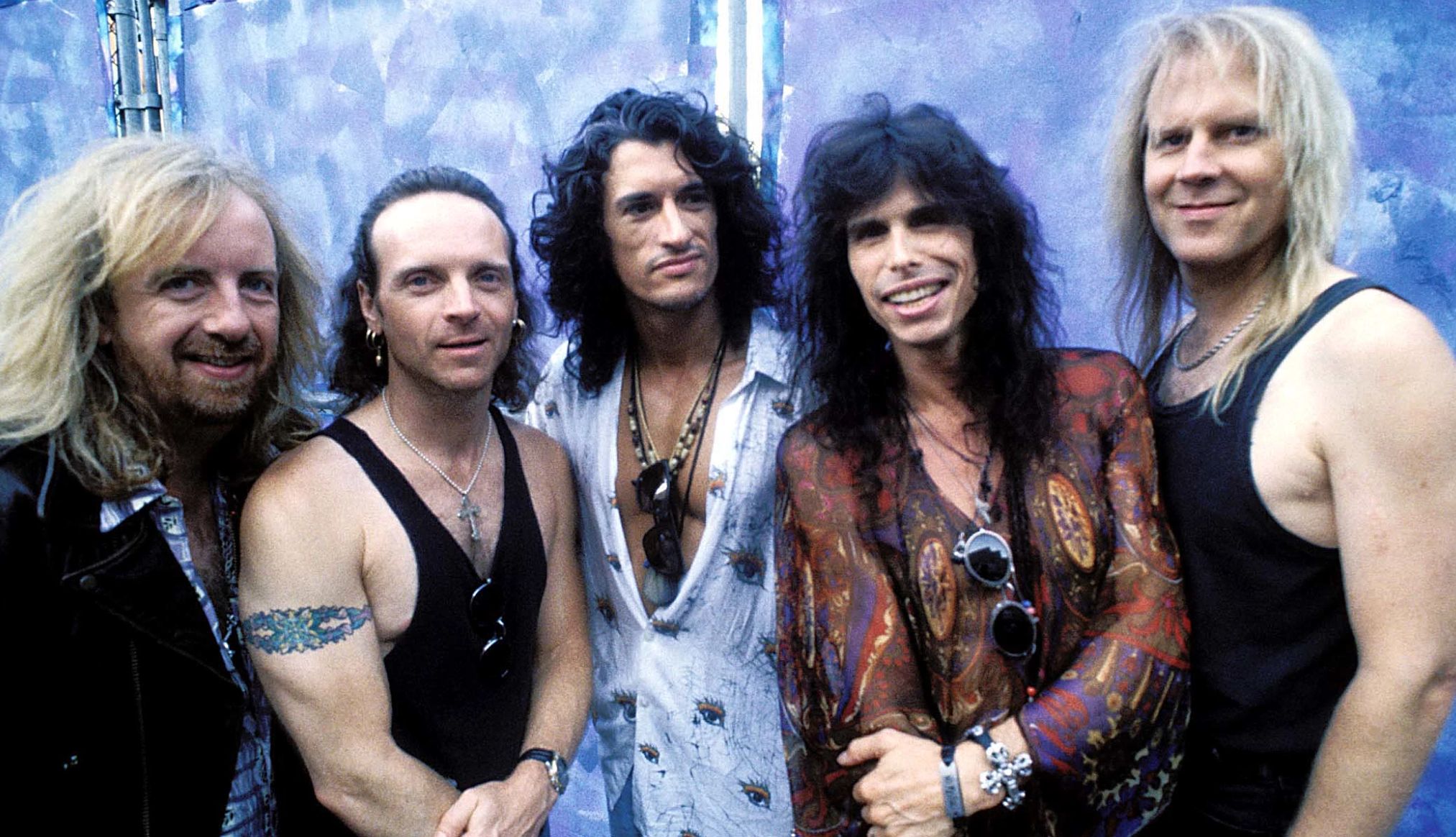
Aerosmith performing live
Jump to Song

What Makes a Great Aerosmith Song?

A great Aerosmith song is built on two things working simultaneously: Joe Perry's riff and Steven Tyler's vocal. The riff comes first — blues-rooted, rhythmically driven, deceptively simple in construction and extraordinarily effective in execution. The vocal wraps around it with a theatrical extravagance that should clash with the raw blues foundation and doesn't, because Tyler has the instinct to know when to push and when to pull back. The best Aerosmith songs feel like they couldn't have been made by anyone else, which is the mark of a band with a genuinely distinctive identity rather than a well-executed style.

The band formed in Boston in 1970 and have released fifteen studio albums across two distinct creative peaks. The ten tracks ranked here draw from both — the raw 1970s albums that established their identity and the polished comeback era that made them one of the biggest commercial acts of the 1990s.

Top 10 Aerosmith Songs Ranked

01

Walk This Way

Album: Toys in the Attic · 1975
1970s

Walk This Way is Aerosmith's most complete and most historically significant song — the riff that Joe Perry wrote from a drum pattern Joey Kramer was playing, the vocal that Tyler performs with a rhythmic precision more associated with hip-hop delivery than rock singing, and the track that bridged two musical worlds when Run-DMC sampled and then recorded it with Tyler and Perry in 1986, introducing both acts to audiences they hadn't previously reached. The original 1975 recording is still the essential version: rawer, more physical, and built on a groove that remains one of rock's most infectious.

Song Meaning

Walk This Way is a coming-of-age sexual narrative told through Tyler's typically double-entendre-laden lyric — a teenage encounter described with enough ambiguity to pass radio censors while being entirely legible to anyone paying attention. Tyler has described it as drawing on real experiences from his teenage years. The lyric's rhythm — delivering a stream of words with a precision that anticipates rap rather than conventional rock singing — is as important as its content, which is why the Run-DMC collaboration worked as naturally as it did.

Riff Note

The Walk This Way riff was written by Perry after hearing Kramer play a specific drum pattern — he found the notes that fitted the rhythm rather than writing a riff and building a groove around it. This reverse-engineered approach gives the riff its specific physical quality: it is a melodic line that functions as pure rhythm.

Why #1: the most historically significant Aerosmith track and the most complete single statement of the Tyler-Perry partnership — the riff, the vocal rhythm and the cultural crossover that the Run-DMC collaboration produced all make this irreplaceable.
02

Dream On

Album: Aerosmith · 1973
1970s

Dream On is Aerosmith's most emotionally resonant song and the track that most fully demonstrates Tyler's vocal range — the song builds from a quiet piano introduction through gradual orchestral and band development to the famous high-note conclusion, and Tyler's voice tracks that arc with a precision and control that is genuinely extraordinary. The song was written by Tyler as a teenager and recorded for the debut album when he was in his early twenties; the lyric about the passage of time and the persistence of ambition therefore has an unusual quality of anticipation — he was writing about an experience he hadn't yet had.

Song Meaning

Dream On addresses the passage of time and the persistence of ambition in the face of ageing — the specific experience of watching youth recede while dreams remain present. The central lyric is genuinely motivational rather than ironic: it tells the listener to keep dreaming until the dream comes true, delivered in a musical setting that builds the emotional case for that persistence across five minutes of escalating intensity. The song's initial modest chart performance followed by decades of radio play and cultural prominence makes it an unintentional argument for its own thesis.

Why #2: the most emotionally resonant Aerosmith track and the fullest demonstration of Tyler's vocal range — a ballad that builds across five minutes to one of rock's most famous climaxes, with a lyric that has aged better than almost anything else in the catalogue.
03

Sweet Emotion

Album: Toys in the Attic · 1975
1970s

Sweet Emotion opens with one of rock's most distinctive bass lines — Tom Hamilton's descending figure over a tambourine, before anything else arrives — which immediately establishes what kind of song this is going to be: slower, more menacing and more groove-dependent than the surrounding Toys in the Attic material. Perry's guitar enters with a wah-wah figure that becomes the song's primary sonic texture, and Tyler's vocal sits above it with a cool detachment that contrasts effectively with the passionate delivery of Dream On and the physical urgency of Walk This Way.

Song Meaning

Sweet Emotion is widely understood as Tyler's veiled commentary on the wife of then-manager David Krebs — the "sweet emotion" of the title being the complicated mixture of attraction and resentment that the lyric circles around without naming directly. The lyric is more oblique than most Tyler writing, which suits the slower and more atmospheric arrangement. The "can't catch me cause the rabbit done died" couplet is one of the period's best double-entendres.

Why #3: the finest pure groove in the Aerosmith catalogue — Hamilton's bass line, Perry's wah figure and Tyler's cool detachment producing something slower and more menacing than the surrounding Toys in the Attic material, with one of rock's best bass introductions.
04

Back in the Saddle

Album: Rocks · 1976
1970s

Back in the Saddle is the finest track on Rocks — the album considered by most critics and by the band themselves to be their creative peak — and one of the most physically immediate openings in hard rock. Perry's slide guitar riff, played on a six-string bass guitar, arrives immediately and sets the tone for four minutes of the most concentrated and most assured Aerosmith performance. The production on Rocks captures the band playing live in the room more accurately than the cleaner preceding albums, and this track is where that approach pays off most completely.

Why #4: the finest track on Aerosmith's finest album — Perry's slide-guitar six-string-bass riff as pure kinetic energy, the Rocks production capturing the band live in a room at maximum force, the most physically immediate opening in the catalogue.
05

Janie's Got a Gun

Album: Pump · 1989
Comeback

Janie's Got a Gun is the most serious and most musically ambitious track in the comeback-era catalogue — a song that addresses child abuse with a directness and a musical sophistication unusual in mainstream rock of the era. The arrangement builds from a quiet, atmospheric opening through a series of distinct sections before the full-band chorus arrives, and the production — by Bruce Fairbairn, who produced both Permanent Vacation and Pump — is among the finest on either album. Tyler's vocal here is at its most controlled and most emotionally committed.

Song Meaning

Janie's Got a Gun addresses a daughter who has killed her abusive father — specifically, a father who has been sexually abusing her. The lyric does not treat this subject metaphorically; Tyler has confirmed the song addresses real abuse and the response to it. The slow build from atmospheric quiet to full-force chorus mirrors the emotional escalation of a situation endured over time before finally exploding. It was one of the first mainstream rock songs to address child sexual abuse directly and without euphemism.

Why #5: the most emotionally serious and most musically ambitious comeback-era track — addresses child abuse with directness unusual in mainstream rock, the arrangement's build from quiet to chorus mirrors the lyrical content, Tyler's most controlled and most committed vocal performance of the era.
06

Love in an Elevator

Album: Pump · 1989
Comeback

Love in an Elevator is the most immediate and most purely entertaining Aerosmith comeback single — a track that demonstrates the band's ability to be simultaneously heavy and melodic, sexually suggestive and self-aware, and completely committed to having a good time. Perry's riff is the heaviest on Pump while the chorus is the most immediately singable, and Tyler's vocal moves between the two registers with the ease of someone who has been doing this for twenty years. The song announced the comeback at its most commercially confident.

Why #6: the most immediately entertaining comeback single — heavy riff and singable chorus in the same song, Tyler's self-aware double-entendre at its most concentrated, and the track that announced the commercial comeback at its most confident and most fun.
07

Livin' on the Edge

Album: Get a Grip · 1993
Get a Grip

Livin' on the Edge is the most socially engaged Aerosmith track — a song that takes the cultural anxiety of early 1990s America as its subject and addresses it with a directness unusual for a band more associated with sexual double-entendres than social commentary. The arrangement is the most complex on Get a Grip, moving through distinct sections with a structural ambition that most of the surrounding material doesn't attempt, and the production gives it a weight that suits the content. Perry's guitar solo is among his most melodically developed.

Song Meaning

Livin' on the Edge addresses social disintegration — the feeling that American society is on the edge of something catastrophic, that the contradictions and inequalities of early 1990s America are unsustainable. Tyler cites specific images of social breakdown: children killing children, loss of basic moral orientation. The "living on the edge" of the title is both a description of the cultural moment and an acknowledgment that the band itself had spent a decade doing exactly that, literally.

Why #7: the most socially engaged Aerosmith song and the most structurally complex track on Get a Grip — social commentary delivered with genuine weight, Perry's most melodically developed solo, and the song that demonstrates the comeback band could do something more than radio-friendly hard rock.
08

Cryin'

Album: Get a Grip · 1993
Get a Grip

Cryin' is the finest Aerosmith power ballad and the track that most fully realises the commercial potential of the comeback era — an emotional, melodically developed ballad that builds to a chorus of genuine force and that Tyler delivers with a commitment that transcends the more polished production context. The Alicia Silverstone video became one of the most watched on MTV in 1993 and introduced the song to an audience younger than any Aerosmith had previously reached. The song itself, stripped of that context, remains among the best things the band recorded in the comeback era.

Why #8: the finest Aerosmith power ballad — Tyler's most emotionally committed comeback-era vocal, a chorus of genuine force, and a song that achieves its emotional effect without relying on the MTV video context that originally surrounded it.
09

Same Old Song and Dance

Album: Get Your Wings · 1974
1970s

Same Old Song and Dance is the finest track on the second album and one of the purest expressions of the Aerosmith blues-rock identity — a track built on a Perry riff that owes an explicit debt to the Chicago blues tradition but delivers it with a hard rock force that is entirely American. The groove is among the most physical in the early catalogue, Tyler's vocal is perfectly calibrated between threat and invitation, and the production captures the band at a raw energy level that the more polished later work sometimes sacrifices. An essential early Aerosmith track frequently overlooked in favour of the Toys in the Attic singles.

Why #9: the finest track on Get Your Wings and the most overlooked essential in the 1970s catalogue — pure blues-rock identity at maximum energy, the Perry riff at its most raw, and the track that most directly demonstrates where Aerosmith's sound came from.
10

Dude (Looks Like a Lady)

Album: Permanent Vacation · 1987
Comeback

Dude (Looks Like a Lady) closes this ranking as the opening statement of the sober comeback — the first major Aerosmith hit after the band got clean, the track that announced the return on commercial terms, and still among the most immediately enjoyable things they recorded in the 1987–1993 period. The riff is more straightforward than the best 1970s material but delivered with a conviction that comes from a band who have something to prove, and Tyler's vocal has a specific energy — looser than the polished later ballads, more controlled than the substance-era recordings — that captures the comeback moment exactly.

Why #10: the opening statement of the sober comeback — announces the return with a conviction that comes from having something to prove, Tyler's vocal in the specific register of a band who have just got their life back together and intend to use it.

Best Aerosmith Songs for Beginners

Walk This WayStart here — the most historically significant Aerosmith track and the clearest statement of the Tyler-Perry partnership.
Dream OnThe ballad — Tyler's vocal at its most expansive, the most emotionally resonant track in the catalogue.
Love in an ElevatorThe most immediately entertaining comeback single — for listeners who want the fun, self-aware side of Aerosmith first.
Sweet EmotionThe groove — Hamilton's bass introduction, Perry's wah figure, the most physical early-era track after Walk This Way.
Janie's Got a GunThe most serious track — for listeners who want to see the comeback band at their most musically ambitious.
Back in the SaddleThe 1970s peak — Perry's slide riff on the finest album, the rawest production in the catalogue.

Best Aerosmith Albums to Hear Next

1975
Toys in the Attic

The correct starting album — contains Walk This Way and Sweet Emotion in their original context, plus Toys in the Attic and Uncle Salty. The commercial breakthrough and the most balanced early-era record.

1976
Rocks

The creative peak. Contains Back in the Saddle, Last Child and Rats in the Cellar. Rawer and more aggressive than Toys — the band at maximum energy with the production that captures it best.

1989
Pump

The comeback peak. Contains Janie's Got a Gun, Love in an Elevator and The Other Side. The best album of the second era and arguably the second-finest Aerosmith record overall.

1993
Get a Grip

The biggest commercial album. Contains Cryin', Crazy, Livin' on the Edge and Amazing. More pop-leaning than Pump but expertly executed and consistently strong across its running time.

Aerosmith Songs: FAQ

What is Aerosmith's best song?
Walk This Way — the most historically significant track and the clearest single statement of the Tyler-Perry partnership. Dream On is the most emotionally resonant. Sweet Emotion is the best pure groove.
What does Dream On mean?
About the passage of time and the persistence of ambition in the face of ageing — written by Tyler as a teenager, recording in his early twenties, anticipating an experience he hadn't yet had. The central message — keep dreaming until the dream comes true — is genuinely motivational rather than ironic. The build across five minutes to the high-note conclusion is one of rock's most famous emotional arcs.
What does Janie's Got a Gun mean?
Addresses a daughter who has killed her sexually abusive father. Tyler has confirmed the song addresses real abuse and the response to it. The slow build from quiet opening to full-force chorus mirrors the emotional escalation of a long-endured situation finally exploding. One of the first mainstream rock songs to address child sexual abuse directly.
What is the best Aerosmith album to start with?
Toys in the Attic (1975) — contains Walk This Way and Sweet Emotion, demonstrates the Tyler-Perry partnership at its most focused. Then Rocks (1976) for the raw creative peak, and Pump (1989) for the best comeback-era record.
Why did Run-DMC cover Walk This Way?
Rick Rubin suggested it to Run-DMC when producing their Raising Hell album in 1986, recognising that the original's rhythmic vocal delivery was effectively hip-hop before hip-hop had a name. Tyler and Perry appeared on the recording and in the video. The collaboration reintroduced Aerosmith to a younger audience and gave Run-DMC mainstream crossover, becoming one of the most significant moments in the history of both rock and hip-hop.
What is Aerosmith's biggest hit?
I Don't Want to Miss a Thing (1998) is their biggest chart hit — the band's only US number one single, from the Armageddon soundtrack. It is not representative of their core sound and does not appear in this ranking for that reason. Their most important and most enduring song is Walk This Way, followed by Dream On.

Explore More