◈ Back to Tool
◈ Ranked Songs · Tool · Progressive Metal · Los Angeles

Tool Best Songs Ranked — The Definitive Guide

Tool have one of heavy music's most intellectually and sonically rewarding catalogues — Fibonacci sequences in song structures, Jungian psychology in the lyrics, Danny Carey's polyrhythmic drumming and Maynard James Keenan's voice over five albums across thirty years. This guide ranks the 10 essential Tool songs and explains what they actually mean.

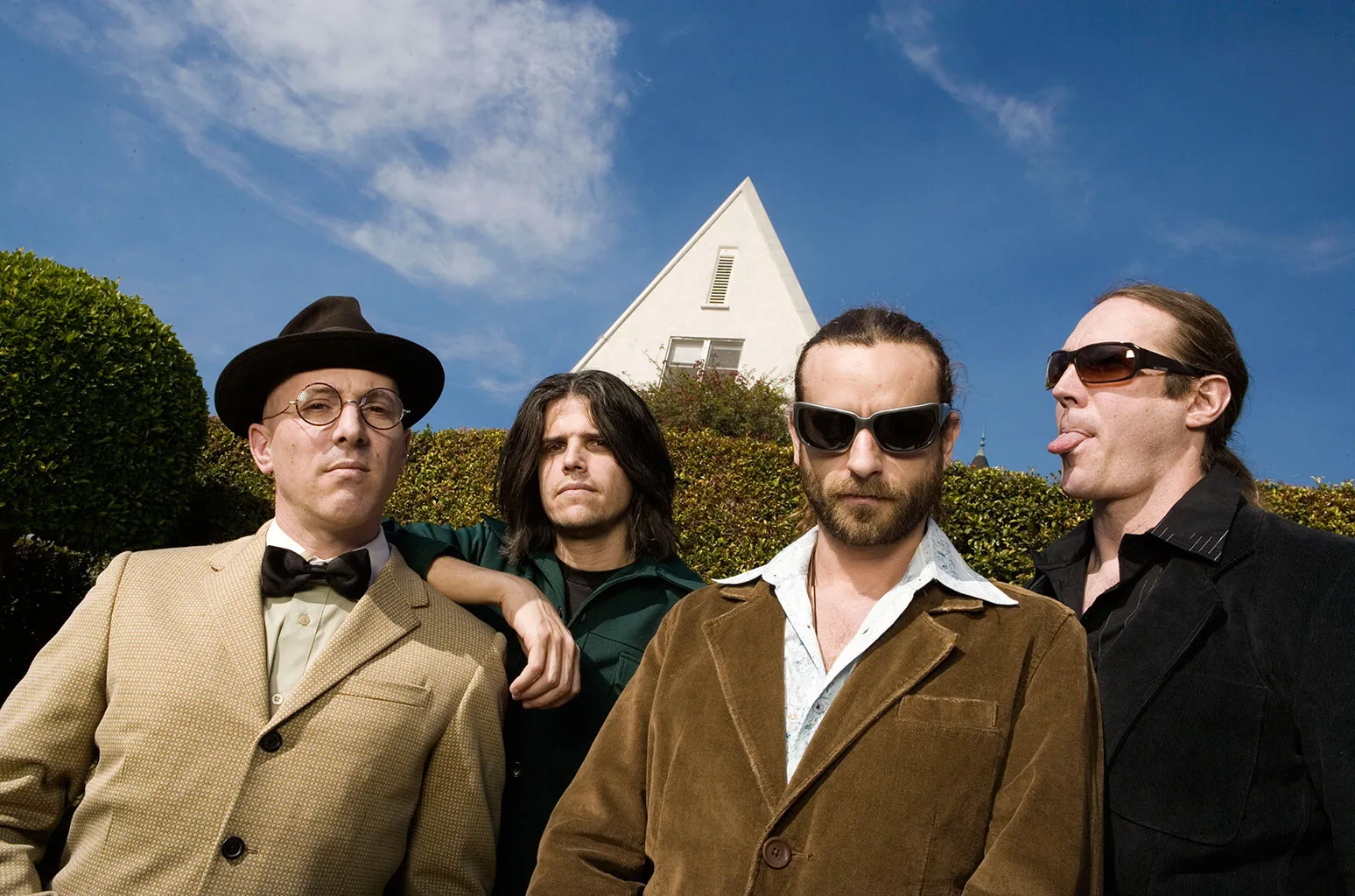
Tool performing live
◈ Jump to Song

What Makes a Great Tool Song?

A great Tool song works on at least three levels simultaneously: as a piece of music that is physically compelling regardless of any intellectual context; as a formally sophisticated composition that rewards study of its structure; and as a lyric that engages seriously with psychology, philosophy and the specific experience of being human. The best Tool songs do all three at once, which is why they repay repeated listening in a way that most heavy music does not.

Tool formed in Los Angeles in 1990. Five studio albums across nearly thirty years — Undertow (1993), Aenima (1996), Lateralus (2001), 10,000 Days (2006) and Fear Inoculum (2019) — constitute one of the most consistent and most demanding catalogues in the genre. Their music was absent from streaming platforms until 2019, which means their fanbase built entirely through album purchases and live shows rather than algorithmic recommendation, producing a listener base that is unusually engaged and unusually knowledgeable.

Top 10 Tool Songs Ranked

01

Lateralus 9:24

Album: Lateralus · 2001
Lateralus

Lateralus is the most formally ambitious and most philosophically complete Tool song — the track that most fully realises the band's intellectual and musical ambitions within a single piece. Its structure is built on the Fibonacci sequence with a precision that extends from the time signatures (which cycle through 9/8, 8/8 and 7/8, totalling 987 — a Fibonacci number) to the syllable count of the verses, which follows the sequence 1, 1, 2, 3, 5, 8, 5, 3, 2, 1, 1. This is not ornamental complexity but structural decision-making that gives the song its particular quality of forward momentum and release.

The musical experience justifies the structural analysis rather than depending on it. The song's nine-minute runtime feels earned: the patient building from the quiet opening to the explosive chorus to the extended outro reflects a compositional intelligence that makes every transition feel motivated. Danny Carey's drumming here is among his finest on record — the polyrhythmic complexity serving the emotional content rather than demonstrating itself.

Song Meaning

Lateralus addresses the human tendency toward self-limitation — the way people restrict their own perception and experience through fear, habit and the comfort of established patterns. The title refers to lateral thinking: moving sideways through problems rather than following conventional linear progressions. The lyric urges expansion beyond self-imposed constraints and challenges the listener to embrace the unknown as the only direction in which genuine growth is possible. The Fibonacci structure reinforces the lyrical content: nature's own spiral, applied to sound.

Why #1: the fullest realisation of Tool's formal and philosophical ambitions — Fibonacci structure, lateral thinking, Danny Carey's drumming at its most purposeful, and a nine-minute arc that earns every second.
02

Schism 6:47

Album: Lateralus · 2001
Lateralus

Schism is Tool's most famous single and the song most likely to be a new listener's first encounter with the band — the lead single from Lateralus, a Grammy winner for Best Metal Performance, and the piece that most clearly demonstrates the Tool proposition to an audience approaching the music for the first time. The opening bass line from Justin Chancellor is one of the most recognisable in progressive metal, and the song's structure — cycling through over forty distinct time signature changes across its runtime — creates a rhythmic instability that is simultaneously unsettling and compulsive.

The song demonstrates that formal complexity and emotional directness are not mutually exclusive: despite the rhythmic sophistication, Schism communicates its emotional content with complete clarity. The lyric about the breakdown of communication in a relationship is immediately comprehensible and immediately resonant, which is why the song functions as an effective entry point regardless of how technically demanding the arrangement is.

Song Meaning

Schism addresses the slow erosion of communication in a close relationship — the gradual dissolution of the shared language and mutual understanding that connects two people. A schism is a split or division, and the lyric traces the specific process by which people who once understood each other completely find themselves unable to bridge the growing distance between them. The repeated line "I know the pieces fit" acknowledges that the connection once existed and could theoretically be restored, making the failure to restore it more painful rather than less.

Why #2: the most famous Tool song and the most effective entry point — forty time signature changes and an immediately resonant lyric about disconnection, demonstrating that formal complexity and emotional clarity coexist.
03

Forty Six & 2 8:00

Album: Aenima · 1996
Aenima

Forty Six & 2 is the finest track on Aenima and the best demonstration of the Justin Chancellor era's specific contribution to the Tool sound. The bass line is melodic and independent — it does not follow the guitar but occupies its own harmonic space, creating a three-voice arrangement where guitar, bass and vocal each carry distinct melodic content simultaneously. The result is a density and a richness that Tool's earlier material, with a less melodically assertive bassist, could not achieve.

Danny Carey's drumming in the instrumental passage approaching the six-minute mark is frequently cited by drummers as one of the finest performances on record — the controlled build through increasingly complex polyrhythmic fills to the climactic release is a masterclass in how to use technical capability in service of emotional escalation rather than demonstration.

Song Meaning

Forty Six & 2 references the work of Drunvalo Melchizedek and the concept of chromosome pairs — humans have 44 + 2 = 46 chromosomes, and the song explores the idea of evolving to a new stage of consciousness represented by 46 + 2 chromosomes. The concept is drawn from Jungian shadow work: the process of confronting and integrating the darker, repressed aspects of the self as the prerequisite for genuine psychological growth and evolution. "My shadow" in the lyric refers to the Jungian shadow — the unconscious self that must be faced before it can be transcended.

Why #3: the finest Aenima track — Chancellor's melodic bass, Carey's instrumental passage and Jungian shadow work as lyrical content, all within eight minutes that demonstrate the full Tool capability.
04

Stinkfist 5:11

Album: Aenima · 1996
Aenima

Stinkfist opens Aenima and is the most immediately accessible and most direct Tool track — the song most likely to connect with listeners who encounter the band before they are prepared for the longer, more complex material. The riff is among the most recognisable in the Tool catalogue, the structure is more conventional than the surrounding album, and Keenan's vocal in the chorus has a melodic directness that the more atmospherically complex surrounding tracks occasionally trade for density.

Its title — which MTV refused to broadcast, renaming it "Track 1" for television — reflects Tool's deliberate provocation of broadcast standards, but the song itself is more emotionally complex than the provocative title suggests. The lyric is about desensitisation and the escalating need for more extreme stimulation to produce the same emotional response — a more philosophically serious subject than the title implies.

Song Meaning

Stinkfist is about emotional and sensory desensitisation — the progressive numbing that comes from overstimulation, and the escalating need for more extreme experience to produce the same feeling. Keenan has described it as addressing the human tendency to seek ever-stronger stimulation as previous levels cease to register, whether in relationships, media consumption or emotional life. The physical provocation of the title is a metaphor for this escalation: each level of intensity becomes insufficient, requiring something further.

Why #4: the most accessible Tool track and the best entry point — a conventional structure by Tool's standards, an immediately memorable riff, and a lyric about desensitisation that is more philosophically serious than its provocative title suggests.
05

The Pot 6:22

Album: 10,000 Days · 2006
10,000 Days

The Pot is the most energetically immediate track on 10,000 Days and the song that most directly demonstrates Keenan's vocal range — the falsetto sections in the verse, the full-voice aggression of the chorus and the transitions between them within a single track make it the most vocally demonstrative piece in the catalogue. The arrangement is also the most groove-oriented on the album, with a rhythmic drive that the longer, more atmospheric surrounding tracks deliberately sacrifice for space and patience.

Keenan has described the lyric as directed at specific individuals he perceived as hypocrites — people who judged others for behaviour they engaged in themselves. The line "who are you to wave your finger?" is the clearest direct address in the Tool catalogue, more confrontational and more personal than the philosophical content of most surrounding tracks.

Why #5: the most energetically immediate 10,000 Days track — Keenan's widest vocal range in a single song, the most groove-driven arrangement on the album, and the most directly confrontational lyric in the catalogue.
06

Parabola 6:04

Album: Lateralus · 2001
Lateralus

Parabola is the second part of a two-song sequence with Parabol — a quiet, atmospheric piece that establishes the emotional and thematic content before Parabola arrives and transforms it with full band force. The transition between the two tracks is one of the most dramatically effective moments in the Tool catalogue: the quiet drone of Parabol giving way to the full arrangement of Parabola with proportional impact. The chorus is among the most melodically beautiful in the Tool catalogue and one of the most emotionally open — a rare moment of uncomplicated affirmation in a body of work that is more frequently complex and demanding.

Song Meaning

Parabola addresses the experience of being fully present in physical existence — the specific quality of conscious embodiment as something to be celebrated rather than transcended. Where much of Tool's lyrical content deals with limitation, self-restriction and the difficulty of growth, Parabola is an affirmation: "this body holding me reminds me of my own mortality / embrace this moment, remember / we are eternal, all this pain is an illusion." The physical is not an obstacle to be overcome but a gift to be inhabited.

Why #6: the most emotionally open Tool song — a rare affirmation in a demanding catalogue, the transition from Parabol delivering proportional force, and a chorus of genuine melodic beauty.
07

Vicarious 7:07

Album: 10,000 Days · 2006
10,000 Days

Vicarious opens 10,000 Days and functions as the album's statement of intent — the most direct and most immediately engaging track on the record, demonstrating the full Tool sonic capability before the longer, more atmospheric pieces develop it further. The riff is one of Jones's finest on the album, the arrangement has the rhythmic density that Tool arrangements at their best achieve, and Keenan's vocal in the chorus is the most assertive on the record.

The lyric addresses humanity's relationship with violence in media — the specific phenomenon of consuming representations of suffering and death as entertainment, at a safe distance that the word "vicarious" precisely describes. The song implicates the listener in the behaviour it describes rather than positioning the narrator as a critic observing from outside: "eye on the TV / 'cause tragedy thrills me."

Why #7: the 10,000 Days opener and its most direct track — Jones's strongest riff on the album, Keenan's most assertive vocal, and a lyric that implicates the listener in the behaviour it describes.
08

Sober 5:06

Album: Undertow · 1993
Undertow

Sober is Tool's first major single and the track that introduced the band to a mainstream audience beyond the LA rock scene. It is the most straightforwardly heavy track in this ranking — the arrangement is direct, the riff is immediate and the song's structure is more conventional than the surrounding catalogue. The music video, a stop-motion animation directed by Adam Jones, became one of the most viewed on MTV and is part of the band's visual identity in its earliest form.

The song demonstrates that the Tool capability was fully present from the debut album — the specific quality of Keenan's vocal, the weight of Jones's guitar, the rhythmic precision of Carey's drumming — even before the subsequent albums developed the formal complexity that most critics associate with the band's peak.

Song Meaning

Sober is about the complex relationship between creativity and altered states — the fear that sobriety might remove the specific quality of perception that makes creative work possible. The narrator describes a state in which intoxication seems to be the only available route to the emotional openness and creative access that produce meaningful work, and the terror of discovering that the work might not exist without it. It is the most personally vulnerable lyric in the early Tool catalogue.

Why #8: Tool's founding statement — the most direct and most immediately heavy track in the catalogue, the video that introduced the band, and a lyric about creativity and altered states that is the most personally vulnerable in the early work.
09

10,000 Days (Wings Pt 2) 11:13

Album: 10,000 Days · 2006
10,000 Days

10,000 Days (Wings Pt 2) is the most personal and most emotionally direct extended piece in the Tool catalogue — an eleven-minute tribute to Keenan's mother, Judith Marie, who suffered a debilitating stroke when Keenan was eleven years old and lived paralysed for approximately 10,000 days (roughly 27 years) before her death in 2003. The song is a direct address to her and to the God whose existence she maintained faith in throughout her suffering — Keenan questioning how that faith went unrewarded, and simultaneously expressing awe at the strength it represented.

The lyric is Keenan's most emotionally exposed writing — more personal and more grief-stricken than anything else in the catalogue — and the musical setting, building across eleven minutes from quiet intimacy to full-band force and back, gives the emotional content the space it requires without forcing resolution it cannot honestly provide.

Why #9: the most personal Tool song — eleven minutes of grief, faith and awe dedicated to Keenan's mother, the most emotionally exposed writing in the catalogue given the space it requires.
10

Ænema 6:38

Album: Aenima · 1996
Aenima

Ænema closes this ranking as the most cathartic and most darkly humorous Tool track — a song that takes the San Andreas Fault's predicted eventual catastrophic failure as the framework for a sustained, furious critique of Los Angeles culture and everything Keenan found spiritually and intellectually bankrupt about it. The song is simultaneously a genuine expression of frustration and a piece of dark comedy, which gives it a quality that the more philosophically earnest surrounding catalogue does not always permit.

The title combines "enema" (a cleansing) with "anima" (the Jungian concept of the soul's feminine dimension), creating a portmanteau that captures both the scatological humour and the spiritual seriousness of the lyric simultaneously. It is the most immediate statement of Keenan's satirical voice and the best single demonstration that Tool's intellectual seriousness coexists with a genuine capacity for dark wit.

Why #10: the most cathartic and darkest-humoured Tool track — Los Angeles as deserving of a Pacific cleansing, Keenan's satirical voice at its most direct, and the title's portmanteau capturing both registers simultaneously.

Best Tool Songs for Beginners

StinkfistStart here — the most immediately accessible Tool track and the clearest entry point before the longer material.
SchismThe most famous single — forty time signatures, an immediately resonant lyric, and the Grammy winner that introduced many listeners.
The PotThe most groove-driven Tool track — the widest vocal range in a single song, immediate rhythmic energy.
Forty Six & 2The best Aenima entry point — Chancellor's melodic bass and Carey's instrumental passage make it immediately compelling.
VicariousThe best 10,000 Days entry — Jones's strongest riff on the album, most direct arrangement.
LateralusThe summit — approached after the shorter tracks have prepared the listener for its full nine-minute arc.

Best Tool Albums to Hear Next

1996
Aenima

The best starting album. Contains Stinkfist, Forty Six & 2, H. and Ænema. The most varied Tool record and the most accessible entry point for new listeners. Grammy winner for Best Metal Performance.

2001
Lateralus

The creative masterwork. Contains Schism, Parabola and the title track. The Fibonacci album. Grammy winner. The essential second step after Aenima and the strongest argument for the full depth of the catalogue.

2006
10,000 Days

Contains Vicarious, The Pot and the two-part title suite. Grammy-winning packaging. The most emotionally personal Tool album and the best demonstration of the mature band's range.

1993
Undertow

Contains Sober, Prison Sex and Intolerance. The heaviest and most direct Tool record — the best approach after the peak albums have established context for hearing where the band began.

Tool Songs: FAQ

What is Tool's best song?
Lateralus is placed first as the most compositionally ambitious and most philosophically complete Tool song — its Fibonacci structure and lateral thinking lyric represent the fullest realisation of the band's ambitions. Schism is the most famous single and the best entry point.
What does Lateralus mean?
About expanding consciousness and transcending self-imposed limitations — thinking laterally, outside established patterns. The song's structure is built on the Fibonacci sequence: time signatures cycle through 9/8, 8/8 and 7/8 (adding to 987, a Fibonacci number), and the verse syllable count follows the sequence 1, 1, 2, 3, 5, 8, 5, 3, 2, 1, 1.
What does Schism mean?
About the breakdown of communication in a close relationship — the erosion of shared language and mutual understanding. A schism is a split or division. The song changes time signature over forty times, creating rhythmic instability that mirrors the lyrical content.
What does Forty Six & 2 mean?
References Drunvalo Melchizedek's concept of evolving beyond 46 human chromosomes to a next stage of development (46 + 2 = 48). Draws on Jungian shadow work — confronting and integrating repressed aspects of the self as a prerequisite for psychological growth.
What is the best Tool album to start with?
Aenima (1996) — the most varied and most accessible entry point, containing Stinkfist, Forty Six & 2 and the title track. Lateralus (2001) is the creative peak and the essential second album.
Why wasn't Tool on Spotify until 2019?
Never officially confirmed — widely attributed to a combination of rights disputes and the band's philosophical preference for complete album listening rather than individual tracks. Their 2019 streaming arrival generated enormous listener numbers and introduced an entirely new generation to the catalogue.
What does 10,000 Days mean?
10,000 days is approximately 27 years — the length of time Keenan's mother Judith Marie lived paralysed following a stroke she suffered when Keenan was eleven. The album's two-part title track is dedicated to her and addresses her faith, her suffering and her death in 2003.
What genre is Tool?
Primarily progressive metal and alternative metal — with significant art rock, psychedelic and math rock influences throughout the catalogue. They resist genre categorisation more successfully than most heavy bands, which is part of why their audience spans listeners who would not otherwise overlap.

Explore More