← Back to Bands
Band Guide · The Who · Hard Rock / Mod / Proto-Punk · London, England

The WhoBand Guide

Formed 1964 · London, England · Hard Rock / Mod / Rock Opera

The Who are one of the greatest rock bands in history — four musicians from west London who between 1965 and 1978 produced some of the most inventive, powerful, and culturally significant rock ever recorded. Pete Townshend wrote guitar parts nobody else had written, John Entwistle played bass as a lead instrument before the concept properly existed, Keith Moon drummed as if the kit had personally offended him, and Roger Daltrey sang with a physicality that made every performance feel like a confrontation. Who's Next is one of the five greatest rock albums ever made. Tommy invented the rock opera. Quadrophenia told a story nobody else in the genre could have told. This is the complete guide.
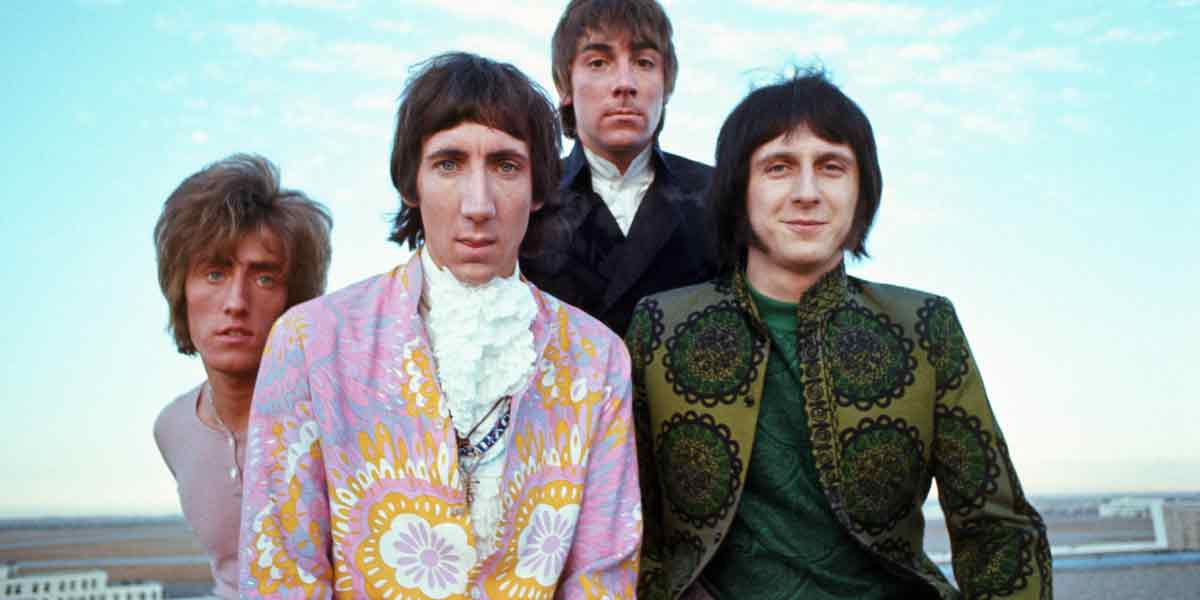
The Who band photo
Formed1964London, England
Studio Albums12
Records Sold100M+worldwide
Best AlbumWho's Next1971
Start WithWon't Get Fooled Again

Who Are The Who?

The Who are a British rock band formed in London in 1964, emerging from the city's Mod scene. The classic lineup — vocalist Roger Daltrey, guitarist and primary songwriter Pete Townshend, bassist John Entwistle, and drummer Keith Moon — is widely regarded as one of the greatest rock bands ever assembled. Each member was, by any reasonable assessment, among the best at their instrument in any era: Moon and Entwistle are routinely cited in discussions of the greatest rhythm sections in rock history, and Townshend's guitar playing defined an entire approach to the instrument — windmill strums, power chords, and feedback deployed with structural purpose rather than as showmanship.

Their recorded catalogue spans twelve studio albums and encompasses Mod anthems, the first widely recognised rock opera (Tommy, 1969), synthesiser-driven hard rock (Who's Next, 1971), and a double concept album exploring youth identity and subculture (Quadrophenia, 1973). Their live reputation was equally extraordinary — they were considered by many contemporaries to be the most powerful live band of their era, and their 1970 performance at the Isle of Wight Festival is frequently cited as one of the great rock concerts of the twentieth century.

Keith Moon & John Entwistle

Keith Moon died on 7 September 1978 of an accidental overdose of clomethiazole, a sedative prescribed to manage alcohol withdrawal. He was 32. His death effectively ended the classic Who lineup, and while the band continued with Kenney Jones and later Zak Starkey on drums, Moon's playing has never been replicated. He is widely regarded as one of the most technically inventive and musically distinctive drummers in rock history.

John Entwistle, known as "The Ox," died of a cocaine-induced heart attack on 27 June 2002, the night before a scheduled US tour was due to begin. He was 57. Entwistle's melodic, lead-style bass playing — influenced by classical music and unusually prominent in the band's mix — was a defining element of The Who's sound across their entire career. His death left Daltrey and Townshend as the sole surviving members of the classic lineup.

New to The Who?

Start with Won't Get Fooled Again — the definitive Who track and still the best single entry point. Then Who's Next (1971) as a full album, one of the greatest rock records ever made and the correct first full-album listen for any new fan.

The Classic Lineup

RD
Roger Daltrey
Vocals · 1964–present
The band's frontman and one of rock's most physically commanding vocalists. Daltrey's microphone-swinging stage presence and powerful, unaffected tenor gave The Who their human face. His relationship with Townshend was frequently contentious — creative tensions that produced some of the band's most vital music. Also pursued a significant acting career, most notably in the film adaptation of Tommy (1975).
PT
Pete Townshend
Guitar · Songwriter · 1964–present
The band's primary creative force and one of the most influential songwriters and guitarists in rock history. Townshend's windmill strumming technique, pioneering use of feedback, and willingness to smash guitars on stage all became part of rock's visual vocabulary. His songwriting moved between three-minute singles, full rock operas, and everything between — and his best work (Who's Next, Tommy, Quadrophenia) is among the most ambitious in the canon.
JE
John Entwistle
Bass · 1964–2002
Known as "The Ox," Entwistle is one of the most influential bassists in rock history. Where most bass players of his era played a supporting rhythmic role, Entwistle's approach was melodic and often lead-like — his bass fills and countermelodies were as compositionally important as Townshend's guitar. His playing anchored Moon's chaotic drumming and gave The Who a sonic density unusual for a four-piece. He died in 2002.
KM
Keith Moon
Drums · 1964–1978
One of the most technically inventive and musically distinctive drummers in rock history. Moon's playing bore no resemblance to any conventional drumming approach — he treated the kit as a lead instrument, playing fills and countermelodies simultaneously with the main rhythm, and his live performances were feats of physical and musical endurance. His off-stage behaviour was equally legendary. He died in 1978.

Band History

1964
The Who form in London, originally as The Detours and then The High Numbers, before settling on The Who. The classic four-piece lineup is established. They become a fixture of the Mod scene at the Marquee Club.
1965
"My Generation" released — an anthem for British youth culture and one of the defining rock singles of the 1960s. The stuttered vocal, Entwistle's bass break, and the song's defiant energy make it an immediate cultural landmark.
1967
The Who perform at the Monterey Pop Festival, smashing instruments on stage and introducing themselves to a US audience. Townshend and Jimi Hendrix famously argued backstage about who would close the set.
1969
Tommy released — the first widely recognised rock opera, telling the story of a "deaf, dumb and blind boy" who becomes a pinball wizard. The album is a commercial and critical breakthrough that establishes The Who as one of rock's most ambitious acts. They perform it in full at Woodstock.
1970
Live at Leeds recorded and released — widely regarded as one of the greatest live rock albums ever made, capturing the band's extraordinary live power at the University of Leeds.
1971
Who's Next released — salvaged from the abandoned Lifehouse concept project, it becomes one of the greatest rock albums ever recorded. "Won't Get Fooled Again," "Baba O'Riley," and "Behind Blue Eyes" are all contained within its eight tracks.
1973
Quadrophenia released — a double album concept record set in 1965 Mod London, exploring youth identity and disillusionment through the story of a young Mod named Jimmy. Widely regarded as Townshend's most ambitious and personal work.
1978
Keith Moon dies on 7 September of an accidental overdose of clomethiazole, aged 32. The classic four-piece lineup is finished. The band continue with Kenney Jones on drums.
1982
The band announce a farewell tour, suggesting the end. They subsequently reunite periodically for tours and one-off performances throughout the 1980s and 1990s.
2002
John Entwistle dies of a cocaine-induced heart attack on 27 June, the night before a US tour is due to begin. Only Daltrey and Townshend remain from the classic lineup.
2010
The Who perform at the Super Bowl XLIV halftime show — one of the most-watched live performances in television history.
2019
Who released — the band's first studio album in thirteen years. Daltrey and Townshend, with Zak Starkey on drums, continue to tour internationally.

Essential Discography

1971
Who's Next
Won't Get Fooled Again, Baba O'Riley, Behind Blue Eyes. One of the five greatest rock albums ever made. Start here.
Essential
1969
Tommy
Pinball Wizard, See Me Feel Me. The first rock opera. A landmark of ambition and invention.
Essential
1973
Quadrophenia
The Real Me, Love Reign O'er Me. Townshend's most personal and ambitious work.
Essential
1970
Live at Leeds
Substitute, My Generation, Young Man Blues. One of the greatest live albums in rock history.
Essential
1965
My Generation
My Generation, The Kids Are Alright. The debut and the Mod anthem that launched them.
Great
1978
Who Are You
Who Are You. The final album recorded with Keith Moon, released weeks before his death.
Great

The Who Trivia Quiz

Five questions — how many can you get right?

Best Songs by Mood

Not sure where to begin? Use this as your entry point.

First song ever
Won't Get Fooled Again
Most iconic opener
Baba O'Riley
Best youth anthem
My Generation
Most emotionally powerful
Love Reign O'er Me
Best ballad
Behind Blue Eyes
Most fun
Pinball Wizard
Best Entwistle showcase
The Real Me
Best deep cut
The Song Is Over

The Who FAQ

When did The Who form?
The Who formed in London in 1964, originally as The Detours and briefly The High Numbers, before settling on The Who. They emerged from the city's Mod scene and became one of the defining bands of British rock, selling over 100 million records across a career of more than fifty years.
What is Who's Next about?
Who's Next (1971) was salvaged from the wreckage of Pete Townshend's abandoned Lifehouse project — a science-fiction concept about music and human consciousness. When the full concept proved too complex to realise, the band selected the strongest material and recorded it as a standalone album. The synthesiser drones that open "Baba O'Riley" and "Won't Get Fooled Again" were originally part of that larger vision. The result is widely regarded as one of the greatest rock albums ever made.
What happened to Keith Moon?
Keith Moon died on 7 September 1978 of an accidental overdose of clomethiazole, a sedative prescribed to help him manage alcohol withdrawal. He was 32 years old. Moon had taken 32 of the pills — well in excess of the prescribed dose — over the course of the day. His death ended the classic Who lineup and is widely considered one of rock's most significant losses.
What is Tommy about?
Tommy (1969) is the story of Tommy Walker, a boy who witnesses a traumatic event as a child and becomes "deaf, dumb and blind" as a result. He discovers an exceptional talent for pinball ("Pinball Wizard"), gains a following of disciples, and eventually breaks free from his disabilities, only to find that his followers reject him. The album was adapted into a film directed by Ken Russell in 1975, with Roger Daltrey in the title role.
What is the best Who album to start with?
Who's Next (1971) is the essential starting point — one of the greatest rock albums ever made, containing "Won't Get Fooled Again," "Baba O'Riley," and "Behind Blue Eyes." Tommy (1969) is the essential next listen for the rock opera ambition. Live at Leeds (1970) is the correct introduction to the band's extraordinary live power.
Why is John Entwistle considered one of rock's greatest bassists?
John Entwistle's approach to bass was categorically different from most of his contemporaries. Rather than playing a supporting rhythmic role, he treated the instrument melodically — his fills and countermelodies were as compositionally important as Townshend's guitar, and his bass was unusually prominent in The Who's mix. Tracks like "The Real Me" and "My Generation" contain bass lines that function as lead performances. He is also credited as one of the originators of the finger-picking technique that became standard in rock bass.

See Also