System of a DownBand Guide
Founded 1994 · Glendale, California · Alternative Metal / Art Rock
System of a Down are the most musically and politically radical band to achieve genuine mainstream success in the history of heavy rock — an Armenian-American quartet whose songs lurch between thrash metal, folk, cabaret and pop within the same track, and whose best albums address the Armenian Genocide, the military-industrial complex and human trafficking with a directness that no comparable band has attempted.
Who Are System of a Down?
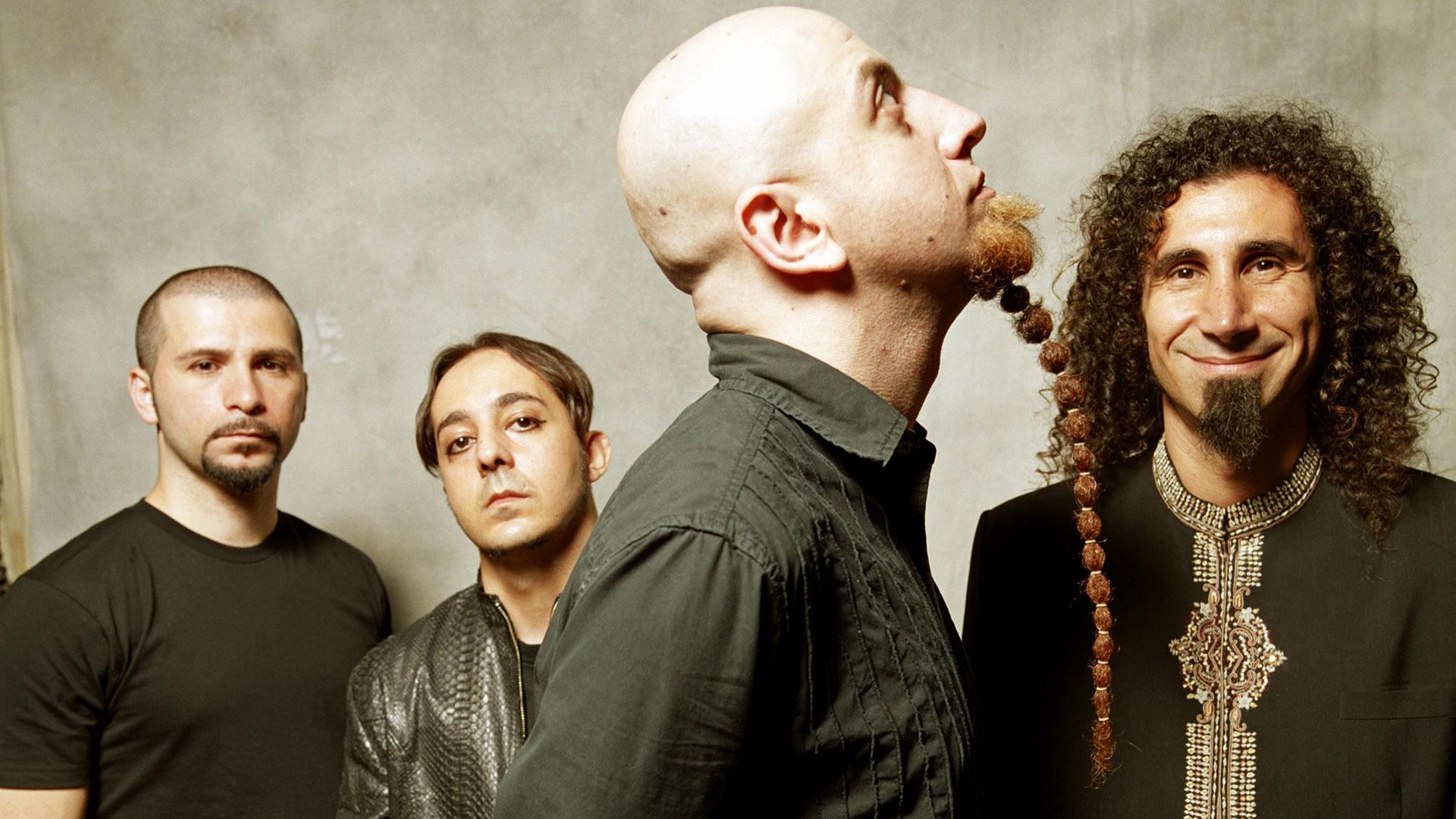
System of a Down are an alternative metal band from Glendale, California, formed in 1994 by four Armenian-Americans whose shared heritage and shared political consciousness gave the band an identity that no other mainstream rock act possessed. Across five studio albums between 1998 and 2005, they produced some of the most musically unpredictable and most politically serious rock music of the decade — genre-lurching compositions that move between thrash metal, Armenian folk music, circus cabaret and pop hooks within a single three-minute track, over lyrics that engage with US military policy, the prison-industrial complex and the Armenian Genocide with a directness that the surrounding nu-metal context entirely lacked.
Serj Tankian's vocal — operatic, falsetto, sardonic, shrieking — and Daron Malakian's guitar work (rhythm as complex as lead, lead as rhythmically driving as rhythm) create a sound that is immediately recognisable and genuinely unique. The band's most commercially successful period — the number-one debuts of Toxicity (2001), Mezmerize (2005) and Hypnotize (2005) — made them simultaneously one of the biggest rock acts in the world and one of the most genuinely radical.
Start with Toxicity (2001) — the essential album. Then Mezmerize (2005). The self-titled debut (1998) is essential third listening once those two are familiar.
Band Members
The Armenian Identity
The Armenian heritage of all four System of a Down members is not background detail but the core of the band's identity. Three of the four (Tankian, Dolmayan and Odadjian) were born in Beirut or Yerevan to families displaced by the Armenian Genocide of 1915–1923 and its aftermath. Malakian was born in Hollywood but grew up in an Armenian-American community in the Los Angeles suburbs.
The Armenian Genocide — the Ottoman-organised mass killing of an estimated 600,000 to 1.5 million Armenians — is one of the earliest and most documented genocides of the 20th century. Turkey has not formally recognised it, and the United States only formally did so in 2019 — a recognition that SOAD and their advocacy organisation Axis of Justice actively lobbied for. The track P.L.U.C.K. on the self-titled debut (the acronym standing for "Politically Lying Unholy Cowardly Killers") is a direct reference to the genocide's perpetrators.
The influence of Armenian musical tradition is audible throughout the catalogue: the folk scales and melodic intervals in Tankian's vocal, the duduk-influenced tonality of quieter passages, and the specific quality of the band's harmonic language all carry traces of Armenian musical tradition alongside the Western metal and rock influences. SOAD are the most commercially successful Armenian band in history and have been consistent and serious in using that platform for advocacy.
Band History
Discography
The System of a Down Sound
SOAD's sound is built on radical musical unpredictability — the refusal to stay in any single genre, tempo or register long enough to become predictable. A single SOAD song might pass through thrash metal, Armenian folk, circus cabaret, straight pop and heavy sludge within three minutes, and the transitions feel inevitable rather than jarring because Malakian and Tankian's shared musical instincts align precisely enough to make each lurch feel motivated rather than arbitrary.