◆ Back to System of a Down
◆ Ranked Songs · System of a Down · Alternative Metal

System of a Down Best Songs Ranked — The Definitive Guide

System of a Down made five albums of alternative metal that lurched between thrash, Armenian folk, cabaret and pop within the same song — over lyrics addressing war, genocide, alienation and political power with a directness that no comparable mainstream band attempted. This guide ranks the 10 essential tracks and explains what they actually mean.

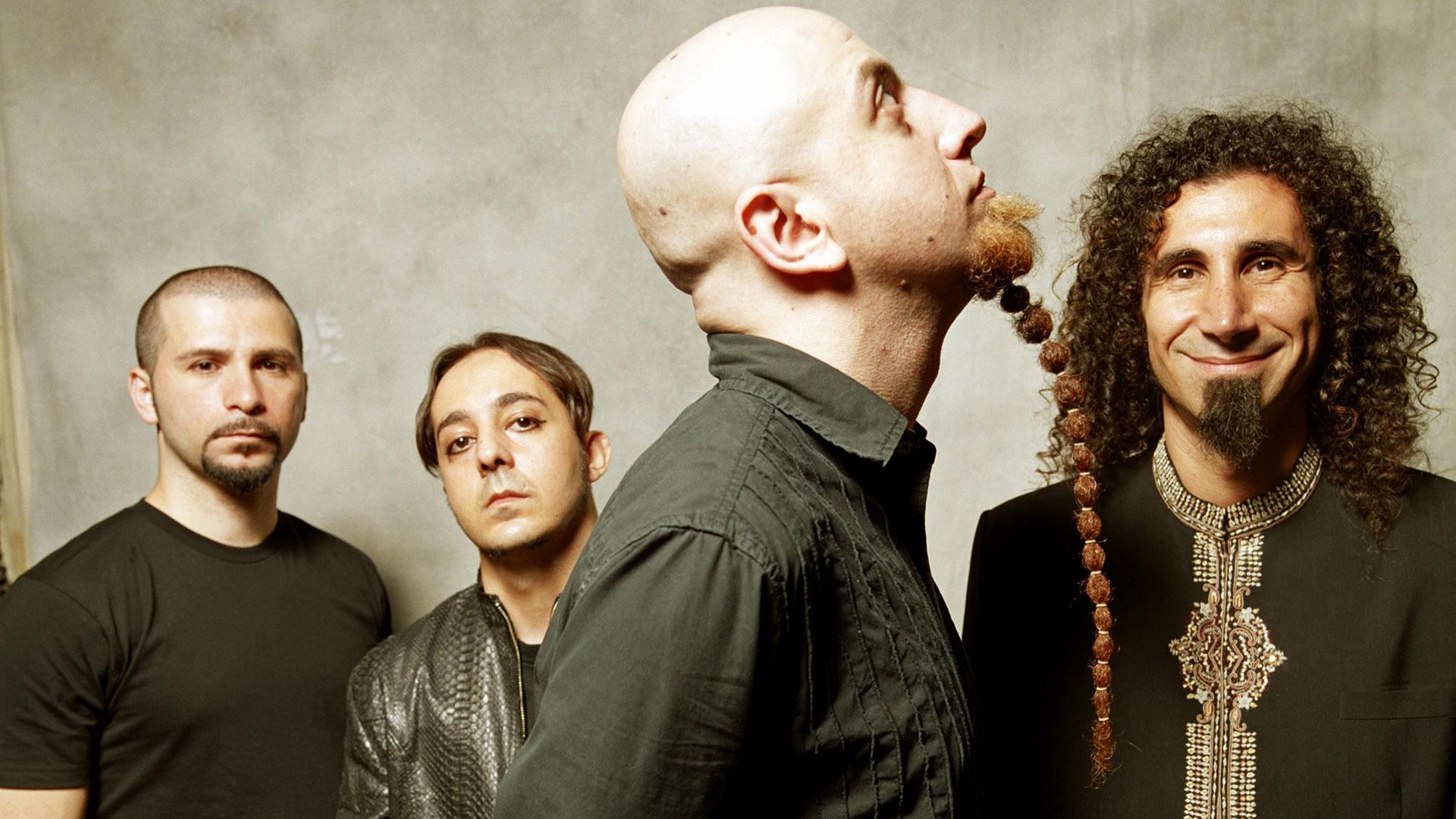
System of a Down performing live
◆ Jump to Song

What Makes a Great SOAD Song?

A great System of a Down song operates on radical musical unpredictability — the genre-lurching, tempo-smashing, register-flipping approach that makes every SOAD track feel like multiple ideas simultaneously rather than one idea extended. Serj Tankian's vocal can be operatic, sardonic, falsetto, shrieking and warm within the same verse; Daron Malakian's guitar is rhythmically complex in a way that most metal guitarists cannot replicate; and the whole assembly is deployed in service of political content serious enough that the music's chaos feels motivated rather than arbitrary.

Five studio albums between 1998 and 2005. No new full album since — only the 2020 singles written in response to the Nagorno-Karabakh war. The existing catalogue is finite and remarkable. These are its best ten tracks.

Top 10 System of a Down Songs Ranked

01

B.Y.O.B.

Album: Mezmerize · 2005
Mezmerize

B.Y.O.B. opens Mezmerize and is SOAD's most complete single statement — five minutes that contain every element of the band's vocabulary simultaneously: the opening thrash blast, Malakian's rhythmically relentless guitar, Tankian's full vocal range from aggressive rap-shouting to melodic falsetto, the mid-section's melodic Armenian-influenced passage, and the closing anthemic singalong chorus. No other SOAD track compresses the full band identity into a single piece as completely or as effectively.

The song won the Grammy Award for Best Hard Rock Performance in 2006 and remains the most-played SOAD track. Its opening — an explosion of sound after a single kick drum — is one of the most recognisable first seconds in alternative metal.

Song Meaning

B.Y.O.B. stands for "Bring Your Own Bombs" — a direct anti-war song addressing the class dynamics of military service. The central argument: wars are declared by political and economic elites who do not fight them, and are fought by working-class people who have limited options. "Why don't presidents fight the war? / Why do they always send the poor?" is the clearest statement. The "bring your own bombs" of the title is an ironic challenge: if you want war, come fight it yourself. Written in the context of the Iraq War but applicable to any conflict managed by people who bear none of its cost.

Why #1: the fullest single statement of everything SOAD does — every element of the band vocabulary at full intensity, the Grammy winner, and the most immediate argument for why the band matters.
02

Toxicity

Album: Toxicity · 2001
Toxicity

Toxicity is the title track of SOAD's best album and their most emotionally resonant song — the track that most fully demonstrates Tankian's melodic range and Malakian's ability to write a riff that is simultaneously heavy and deeply singable. The song moves between a compressed, intense verse and a spacious, melodic chorus with a naturalness that makes the transition feel inevitable, and Tankian's delivery of the chorus — "conversion, software version 7.0" — achieves the specific SOAD quality of being simultaneously absurdist and genuinely affecting.

Song Meaning

Toxicity addresses urban alienation — the spiritual and physical pollution of modern city life. The "toxicity of our city" is both literal (pollution, noise, overcrowding, the material accumulation that deadens consciousness) and metaphorical (the social toxicity of alienated modern living). Tankian has described it as being about the loss of genuine connection to nature and human experience in the urban environment. The "conversion" imagery suggests a process of being made over in the city's image — a surrender of authentic selfhood to the demands of urban consumer society.

Why #2: the title track of the essential album and the most emotionally resonant SOAD song — Tankian's melodic range at its finest and the most naturally constructed chorus in the catalogue.
03

Aerials

Album: Toxicity · 2001
Toxicity

Aerials closes Toxicity and is the most atmospheric and most musically patient SOAD track — an eight-minute piece that builds slowly from a delicate, folk-influenced opening through full-band intensity to a sustained outro of considerable emotional power. The song demonstrates that SOAD's musical vocabulary was broader than their most aggressive tracks suggested, and Tankian's vocal here — controlled, searching, genuinely tender — is among the finest performances on any of the five albums.

The song also contains one of the most musically interesting decisions in SOAD's catalogue: the Armenian duduk-influenced melodic line that runs through the quiet sections, the most explicit audible connection to the band's musical heritage in their mainstream catalogue.

Song Meaning

Aerials is about spiritual transcendence — the experience of consciousness expanding beyond the limitations of physical existence. The aerial image represents a perspective free from the constraints that usually limit human awareness: an antenna, a hovering presence, a consciousness above the material world. The lyric encourages this expanded state: "in our eyes aerials, in our eyes aerials." It is the most explicitly spiritual SOAD song, and its position as the closing track of Toxicity gives the album its specific emotional arc — from the urban toxicity of the title track to the transcendent possibility of the finale.

Why #3: the most atmospheric and most musically patient SOAD track — the Armenian folk influence most audibly present, Tankian's most tender vocal, and the closing statement of the essential album.
04

Lonely Day

Album: Hypnotize · 2005
Hypnotize

Lonely Day is SOAD's most accessible and most conventionally structured song — a track that functions as a straightforward emotional ballad by rock standards while retaining enough of the band's character to feel entirely authentic rather than commercial. Tankian's vocal here is at its most melodically direct, the arrangement is built around one of Malakian's most immediately beautiful guitar figures, and the emotional content — isolation, longing, the specific quality of a day that feels unliveable — is communicated with complete clarity.

For listeners approaching SOAD from outside the metal context, Lonely Day is often the entry point — the most immediately emotionally legible track in the catalogue, demonstrating the band's range before the more chaotic surrounding material reveals the full picture.

Why #4: the most emotionally accessible SOAD track and the best entry point for listeners outside the metal context — Malakian's most beautiful guitar figure and Tankian at his most directly melodic.
05

Sugar

Album: System of a Down · 1998
Self-Titled

Sugar is the finest track on the self-titled debut and the most musically inventive early SOAD song — a track that demonstrates the full band vocabulary two years before Toxicity refined it. The genre shifts are more abrupt than in the later material, the production is rawer, and Malakian's guitar work has a ferocity that makes some of the more polished later recordings feel comparatively restrained. It is the song that most clearly shows what SOAD were before commercial success required any smoothing of edges.

Song Meaning

Sugar is widely interpreted as addressing the Armenian Genocide — the imagery of forced marches, sweetness masking violence, and the references to historical suffering connect to the same territory as P.L.U.C.K. on the same album. Malakian has also described it as addressing the exploitation of desire and the way pleasure is weaponised as a mechanism of social control. The two interpretations — personal and historical — are not mutually exclusive, and SOAD's best political songs typically operate on both levels simultaneously.

Why #5: the finest debut track and the most ferocious demonstration of the early SOAD sound — the full band vocabulary in its rawest form, with the Armenian Genocide interpretation adding historical depth.
06

Hypnotize

Album: Hypnotize · 2005
Hypnotize

Hypnotize opens the second half of the 2005 double album and is the most groove-oriented SOAD track — built on a Malakian riff that is more funk-influenced than most surrounding material, with a rhythmic quality that makes it physically compelling in a different register from the thrash intensity of the heavier catalogue. Tankian's vocal delivery matches the groove: more conversational and rhythmically relaxed in the verse than his characteristically intense approach to the faster material.

Song Meaning

Hypnotize addresses media manipulation and the manufacture of political consent — the way mass media hypnotises audiences into passive acceptance of narratives that serve the interests of those who produce them. The title is the mechanism: a population kept in a state of manufactured certainty about a reality constructed for political purposes. The lyric references specific media behaviours — the simultaneous presentation of contradiction as truth, the normalisation of the unacceptable — in a way that has become more rather than less relevant since 2005.

Why #6: the most groove-oriented SOAD track and the most prescient media criticism — the hypnotise-as-mechanism metaphor for manufactured consent, delivered over the most funk-influenced riff in the catalogue.
07

Question!

Album: Mezmerize · 2005
Mezmerize

Question! is the most melodically sophisticated track on Mezmerize — a song that cycles through multiple distinct melodic and rhythmic phases with the compositional confidence that the band's later material consistently demonstrated. The exclamation mark in the title captures the song's specific quality: a question delivered not with the tentativeness of genuine uncertainty but with the urgency of someone who knows the answer and wants to know why you don't. Tankian's vocal performance here is among his most varied on the album — the range of registers in a single track is wider than most vocalists achieve across a full career.

Why #7: the most melodically sophisticated Mezmerize track — multiple distinct phases, Tankian's widest vocal range on the album, and the urgency of the question-as-demand rather than question-as-uncertainty.
08

Psycho

Album: Toxicity · 2001
Toxicity

Psycho is the most rhythmically inventive track on Toxicity — a song built around one of Malakian's most complex and most immediately memorable riff structures, with time signature shifts that are more abrupt and more disorienting than the surrounding material. The song demonstrates Dolmayan's drumming capability at its most technically demanding, as the rhythm section navigates the constant metric changes with a precision that makes the complexity feel natural rather than effortful. Tankian's delivery is deliberately unhinged, which suits the subject matter.

Song Meaning

Psycho addresses the US prison-industrial complex and the military draft — the mechanisms by which the state coerces compliance and eliminates dissent. The narrator describes the experience of being processed through an institution that seeks to reshape identity and enforce conformity. The "psycho" of the title is both the label applied to those who resist institutional processing and the system itself, which Tankian presents as the more genuinely disordered of the two.

Why #8: the most rhythmically inventive Toxicity track — Malakian's most complex riff structure, the prison-industrial complex as lyrical target, and Dolmayan's most technically demanding performance.
09

Cigaro

Album: Mezmerize · 2005
Mezmerize

Cigaro is SOAD's most concentrated burst of energy — a track lasting barely two minutes that contains more rhythmic and melodic information per second than most bands manage in five. It opens Mezmerize's second track position (immediately after B.Y.O.B.) and demonstrates that the band could sustain the same intensity at compressed length as in longer pieces. The lyric's deliberate vulgarity — world leaders boasting about the size of their genitalia as a metaphor for political ego and military aggression — is SOAD's most direct satirical statement and their funniest.

Why #9: the most concentrated SOAD track and their funniest — two minutes of maximum intensity, political satire delivered as deliberate vulgarity, the best short-form argument for the band's range.
10

Protect the Land

Single · 2020
2020 Single

Protect the Land closes this ranking as SOAD's most significant post-hiatus statement and the most direct expression of their Armenian identity in a single track. Released in November 2020 alongside Genocidal Humanoidz — their first new material in fifteen years — it was written and released within weeks of Azerbaijan's military offensive against the Armenian-populated region of Nagorno-Karabakh, and all proceeds were donated to the Armenia Fund. The band made no commercial consideration a part of the decision to release it; the songs exist as direct political responses to an ongoing crisis.

The track demonstrates that the creative machinery was still fully functional despite the long hiatus: the genre-lurching, the vocal interplay between Tankian and Malakian, the physical force of the rhythm section and the directness of the political content are all present exactly as they were in 2005. It is also a reminder of why SOAD matters beyond music — few bands of their commercial scale have used that scale for consistent, serious political advocacy over three decades.

Why #10: the most significant post-hiatus statement — fifteen years of silence broken to respond to the Nagorno-Karabakh crisis, proving the creative machine intact and reminding listeners why the band's political commitment was always the point.

Best SOAD Songs for Beginners

Lonely DayStart here — the most emotionally accessible SOAD track and the best entry point for listeners outside the metal context.
ToxicityThe essential song — once Lonely Day is familiar, this is the fullest statement of the band's core emotional and musical identity.
B.Y.O.B.The complete SOAD experience in five minutes — every element of the band vocabulary at full intensity, for listeners ready for the full picture.
AerialsThe atmospheric track — for listeners who want to hear the Armenian folk influence and Tankian's most tender vocal register.
HypnotizeThe most groove-oriented track — the best entry for hip-hop or funk listeners who want the rhythmic side of the SOAD equation.
SugarThe debut highlight — the rawest and most ferocious demonstration of the early sound, for listeners who want the band before commercial success.

Best SOAD Albums to Hear Next

2001
Toxicity

The only correct starting album. Contains B.Y.O.B. (on Mezmerize but thematically a Toxicity-era statement), Toxicity, Aerials, Psycho and Bounce. The most consistent and most varied SOAD album, debuting at number one.

2005
Mezmerize

The essential second album. Contains B.Y.O.B., Cigaro, Question! and Violent Pornography. Malakian's songwriting voice is most prominent here. Pair with Hypnotize as originally intended.

2005
Hypnotize

The second half of the 2005 double album. Contains Hypnotize, Lonely Day and She's Like Heroin. More melodic and more varied than Mezmerize — essential alongside its partner.

1998
System of a Down

The self-titled debut — rawer and more chaotic than the later material. Contains Sugar and P.L.U.C.K.. Best approached fourth, after the peak albums have established context for hearing where the sound began.

SOAD Songs: FAQ

What is System of a Down's best song?
B.Y.O.B. — the most complete single statement of everything SOAD does, the Grammy winner and the most immediate argument for why the band matters. Toxicity is the most emotionally resonant. Lonely Day is the most accessible entry point.
What does B.Y.O.B. mean?
"Bring Your Own Bombs" — an anti-war song about the class dynamics of military service. Wars are declared by people who don't fight them and fought by people who have no choice. "Why don't presidents fight the war? / Why do they always send the poor?" is the central argument. Written in the context of the Iraq War.
What does Toxicity mean?
Urban alienation and the spiritual pollution of modern city life — both the literal toxicity (pollution, noise, overcrowding) and the metaphorical (the social and psychological cost of modern alienated living). Tankian described it as being about the loss of genuine connection to nature and authentic human experience.
What does Aerials mean?
Spiritual transcendence — consciousness expanding beyond physical limitations. The aerial image is a perspective free from material constraints. The most explicitly spiritual SOAD song and the one most directly influenced by Armenian folk tonality.
What does Sugar mean?
Widely interpreted as referencing the Armenian Genocide — the imagery of forced marches and historical violence connects to the same territory as P.L.U.C.K. on the same album. Also interpreted as addressing the exploitation of desire. Both readings coexist; SOAD's best political songs operate on multiple levels simultaneously.
What is the best System of a Down album?
Toxicity (2001) — the most consistent album and the fullest realisation of the band's combined strengths. Mezmerize (2005) is the essential second album. The self-titled debut is best approached after those two.
Why did System of a Down go on hiatus?
Creative tensions between Serj Tankian and Daron Malakian over the band's direction led to an indefinite hiatus announced in 2006. Both have spoken publicly about their differing visions. The band have reunited for touring since 2011 and released two singles in 2020, but no new full album has followed despite occasional suggestions that one is possible.
What is Protect the Land about?
Written and released in 2020 in direct response to Azerbaijan's military offensive against the Armenian-populated region of Nagorno-Karabakh. All proceeds went to the Armenia Fund. The first new SOAD material in fifteen years, demonstrating the band's willingness to use their platform for direct Armenian advocacy when events demanded it.

Explore More