★ Back to RATM
★ Ranked Songs · Rage Against the Machine · Rap Metal

Rage Against the Machine Best Songs Ranked — The Definitive Guide

Rage Against the Machine made three studio albums across nine years and produced some of the most politically urgent and most musically innovative music in the history of rock. This guide ranks the 10 essential RATM songs, explains what the lyrics mean, and breaks down Tom Morello's guitar techniques — no samples, no synthesisers, just a guitar doing things nobody had heard before.

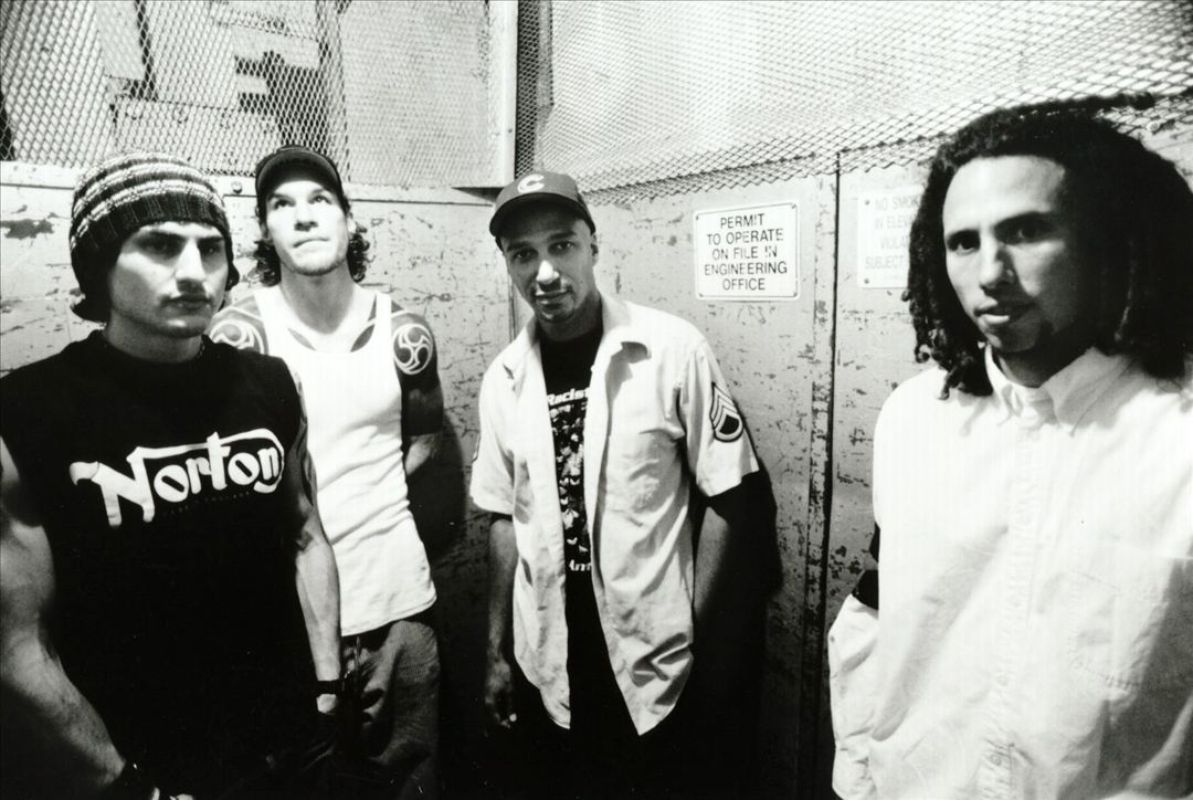
Rage Against the Machine performing live
★ Jump to Song

What Makes a Great RATM Song?

A great Rage Against the Machine song does two things simultaneously that most bands cannot do separately: it is physically overwhelming as a piece of music, and it is saying something specific and serious about the world. The groove is not incidental to the politics, and the politics are not a veneer over the groove — they are the same thing, expressed through different means within the same three and a half minutes.

RATM formed in Los Angeles in 1991 and released three studio albums — the self-titled debut (1992), Evil Empire (1996) and The Battle of Los Angeles (1999) — before breaking up in 2000. All three albums are essential. Their total studio output is remarkably compact: twelve studio albums worth of influence compressed into three records across nine years.

A note on Tom Morello's guitar: every sound in RATM's recordings that sounds like a turntable, a synthesiser or a sample is produced by a conventional electric guitar. The debut album liner notes state this explicitly. The techniques — toggle switching, whammy bar, feedback, volume knob as kill switch — are explained in the meaning sections below where they're most relevant.

Top 10 Rage Against the Machine Songs Ranked

01

Killing in the Name

Album: Rage Against the Machine · 1992
Self-Titled

Killing in the Name is RATM's most iconic song and the clearest statement of everything the band does — the opening track of the debut album, containing the most famous moment in their catalogue and the most direct expression of the political and musical identity that the band was built on. The song opens with one of the most recognisable guitar riffs in alternative metal, builds through de la Rocha's controlled rap verses, and arrives at the repeated closing declaration — a statement of refusal that became one of rock's most recognisable moments. It reached number one in the UK in 2009 as the result of a public campaign to prevent the X Factor winner from claiming the Christmas number one spot.

The song demonstrates the specific RATM proposition in its most concentrated form: Morello's riff is heavy enough for metal audiences, de la Rocha's delivery is rhythmically rooted in hip-hop, and the lyrical content is explicitly political in a way that no surrounding mainstream rock act was attempting. It is the song most people encounter first and the one that best explains why the band mattered.

Song Meaning

Killing in the Name addresses police brutality and institutional racism — specifically the documented phenomenon of law enforcement officers who are members of white supremacist organisations using their legal authority to commit violence against Black Americans. The line "some of those that work forces are the same that burn crosses" makes the accusation direct and specific. The closing refrain — repeated seventeen times in escalating intensity — is a statement of refusal against any authority demanding compliance with systems that are themselves unjust. The song was written in the immediate aftermath of the 1991 Rodney King beating in Los Angeles.

Why #1: the most iconic RATM song and the clearest single statement of what the band is — the riff, the delivery, the political content and the closing declaration in five minutes that changed what a mainstream rock song could say.
02

Bulls on Parade

Album: Evil Empire · 1996
Evil Empire

Bulls on Parade is the most musically inventive RATM track and the one that most fully demonstrates Tom Morello's guitar technique at its most spectacular. The solo — which produces sounds indistinguishable from a DJ's turntable scratching — is created entirely using the guitar's pickup selector toggle switch, switched rapidly between pickups at rhythmic intervals to produce the stuttering, scratching effect. No turntables. No samples. A guitar toggle switch moved fast enough to create a rhythm.

The song also contains one of the finest RATM riffs — the wah-heavy, funk-driven opening figure that Tim Commerford's bass sits underneath with equal weight. The arrangement is the most groove-oriented on Evil Empire and the track most likely to immediately connect with listeners who come from hip-hop or funk backgrounds rather than rock.

Song Meaning

Bulls on Parade addresses the US military-industrial complex — the relationship between arms manufacturers, financial institutions and the government that profits from perpetual military conflict. The "bulls" are the powerful interests who benefit from war; the "parade" is the public spectacle through which this power is displayed and normalised. The lyric references weapons stockpiles, corporate profit from conflict and the media apparatus that manages public perception of military action. De la Rocha co-wrote the lyric with an explicit awareness of the Gulf War's economic context.

Morello Guitar Technique

The guitar solo on Bulls on Parade is produced by rapidly toggling the guitar's pickup selector switch between the neck and bridge pickups while muting the strings. The switching rhythm creates the stuttering, scratching sound that resembles DJ turntable scratching. Morello also uses a wah pedal and whammy bar to complete the effect. Everything heard is produced by a standard electric guitar.

Why #2: the most musically inventive RATM track — the toggle-switch DJ solo that changed what guitar could sound like, over one of the finest funk-metal riffs in the catalogue.
03

Guerrilla Radio

Album: The Battle of Los Angeles · 1999
Battle of LA

Guerrilla Radio is the Grammy-winning lead single from The Battle of Los Angeles and the most immediately accessible entry point from the later catalogue — the riff is direct, the structure is relatively conventional by RATM's standards, and de la Rocha's verses build to a chorus that functions as an anthem in the most straightforward sense. The song won the Grammy Award for Best Hard Rock Performance in 2001 and remains one of the most-played RATM tracks on radio and streaming.

The song was performed at Rage's notorious 2000 Democratic National Convention protest concert, at which the band played on a flatbed truck outside the Staples Center while protesters clashed with police. The performance was shut down by police, becoming one of the most discussed political rock events of the era.

Song Meaning

Guerrilla Radio is about media control and the suppression of political dissent through the monopolisation of information channels. The "guerrilla radio" of the title is the alternative, underground, independent voice that bypasses corporate media control to reach people directly. The lyric references the concentration of media ownership and the political consequences of information being filtered through a small number of powerful interests. "Turn that shit up" is both a literal instruction and a political imperative.

Why #3: the Grammy winner and the most immediately accessible later-catalogue RATM track — the clearest entry point to The Battle of Los Angeles and one of the most-played RATM songs for good reason.
04

Wake Up

Album: Rage Against the Machine · 1992
Self-Titled

Wake Up closes the debut album and is RATM's most atmospheric and most cinematically conceived track — an eight-minute piece that moves through multiple distinct sections with a patience unusual in the surrounding catalogue. The song is built around one of Morello's most controlled and most melodic guitar parts on the album, and de la Rocha's vocal — delivered at a mid-range intensity rather than at full aggression — has a quality of sustained urgency that makes the full eight minutes feel propulsive rather than slow.

The song achieved its widest exposure in the closing sequence of The Matrix (1999), where it plays over a montage of Morpheus's speech and Neo's flight — a usage that introduced RATM to an audience who had not encountered the band through their records, and that remains one of the most effective music placements in blockbuster film history.

Song Meaning

Wake Up references the FBI's COINTELPRO programme — the covert surveillance and disruption operations directed at civil rights leaders and political activists in the 1950s through 1970s, including Martin Luther King Jr. and Malcolm X. The lyric charges that political assassinations of Black leaders were carried out or enabled by government agencies. The "wake up" of the title is a call to political consciousness — an insistence that the comfortable narrative of American democratic idealism conceals a history of state violence against those who challenge power.

Why #4: the most atmospheric and most cinematically conceived RATM track — eight minutes that earn their length, the Matrix closing sequence, and the most controlled Morello performance on the debut.
05

Bombtrack

Album: Rage Against the Machine · 1992
Self-Titled

Bombtrack opens the debut album — and with it, RATM's public existence — with a quiet guitar figure that gives no indication of what follows. When the full band drops in after the opening bars, it establishes in the first sixty seconds everything that RATM would spend three albums and three decades representing. The riff is heavy, the rhythm section is locked into a groove, and de la Rocha's delivery arrives with complete conviction. As opening statements go, it is one of the most effective in alternative metal history.

The song is not as immediately famous as the tracks that follow it on the album, but it is the foundational statement — the first thing most listeners who buy the debut hear, and the piece that establishes the specific character of the band before anything else has a chance to define it.

Why #5: the opening statement of the debut — the first sixty seconds of RATM's public existence, establishing everything the band represents before any subsequent track has the chance to define it.
06

Sleep Now in the Fire

Album: The Battle of Los Angeles · 1999
Battle of LA

Sleep Now in the Fire is the most politically confrontational track on The Battle of Los Angeles and the song whose recording produced the most dramatic event in RATM's history. The music video, directed by Michael Moore, was filmed on Wall Street in New York. The filming disrupted the New York Stock Exchange to the degree that trading had to be briefly suspended, and the band were arrested. The sequence — a rock band filming a protest video outside the NYSE and shutting it down — is one of the most effective political gestures in the history of rock.

The song itself is built on one of Morello's most straightforward and most effective riffs — a descending figure whose repetition creates an atmosphere of inevitable confrontation. De la Rocha's lyric is some of his most direct writing, addressing American capitalism's global consequences with a specificity that goes beyond the generalised anti-corporate content of surrounding tracks.

Why #6: the most politically confrontational RATM track and the song whose music video shut down the New York Stock Exchange — the most effective political gesture in rock video history.
07

Testify

Album: The Battle of Los Angeles · 1999
Battle of LA

Testify is the most musically varied track on The Battle of Los Angeles — a song that moves through distinct rhythmic and tonal phases with a compositional sophistication that the shorter, more direct surrounding tracks do not attempt. Morello's guitar in the verses produces one of the most unusual sounds on the album, and the chorus has a melodic expansiveness that makes it the closest thing to a conventional rock anthem in the later RATM catalogue.

The lyric — addressing the blurring of political boundaries between ostensibly opposing candidates and the management of public political choice — is some of de la Rocha's most prescient writing: the specific phenomenon it describes, the convergence of elite political interests across party lines, became more rather than less relevant in the years after the song's release.

Why #7: the most compositionally varied Battle of Los Angeles track and the closest to a conventional rock anthem in the later catalogue — prescient politics and Morello's most unusual guitar sound on the album.
08

People of the Sun

Album: Evil Empire · 1996
Evil Empire

People of the Sun opens Evil Empire and is the most energetically immediate track on the album — arriving without preamble at full speed and sustaining that energy through a runtime that wastes nothing. De la Rocha's delivery here is at its most rapid and most rhythmically complex — the verses are among the most demanding vocal performances in the RATM catalogue, requiring both the rhythmic precision of a rapper and the physical force of a hardcore vocalist simultaneously.

The lyric addresses the history of Spanish colonialism in the Americas and its legacy for indigenous and Chicano communities — content that reflects de la Rocha's Mexican-American heritage and the political education he received from his father, the muralist Roberto de la Rocha. It is the RATM song most directly rooted in de la Rocha's personal history.

Why #8: the most energetically immediate Evil Empire track and de la Rocha's most rhythmically demanding vocal — Latin American colonial history through the perspective of a Mexican-American vocalist with personal connection to the content.
09

Calm Like a Bomb

Album: The Battle of Los Angeles · 1999
Battle of LA

Calm Like a Bomb is the most patient and most atmospherically considered track on The Battle of Los Angeles — a song that builds slowly from a quiet, almost ominous opening through escalating intensity to a conclusion of considerable force. The title's paradox — calm like a bomb — is embodied in the arrangement: the apparent restraint of the verses contains an implied violence that the final section eventually releases.

Morello's guitar in the opening section is more textural than melodic — creating atmosphere through sustained tones and controlled feedback rather than riffing — which distinguishes the track from the more immediately aggressive surrounding material. It demonstrates a range within the RATM musical vocabulary that the faster, heavier tracks do not prioritise.

Why #9: the most atmospherically patient RATM track — the title's paradox embodied in an arrangement that builds from ominous calm to released force, Morello's most textural guitar on the album.
10

Renegades

Album: Renegades · 2000
Renegades

Renegades closes this ranking as RATM's finest cover recording — a version of the Afrika Bambaataa and Soulsonic Force track that transforms a hip-hop original into something that sounds entirely like a RATM composition rather than a borrowed piece. The choice of source material is revealing about the band's musical DNA: the original is a foundational hip-hop track, and RATM's version makes explicit the hip-hop roots that the band's metal context occasionally obscures.

The covers album from which it comes (Renegades, 2000) is worth hearing for the same reason — the selection of source material (including tracks by Bob Dylan, Bruce Springsteen, MC5 and Cypress Hill) maps the full range of influences behind the original RATM sound and demonstrates how consciously the band was synthesising those traditions into something new.

Why #10: RATM's finest cover — a hip-hop original transformed into something entirely their own, and the clearest single demonstration of the hip-hop roots beneath the metal surface.

Best RATM Songs for Beginners

Guerrilla RadioStart here — the Grammy winner and the most immediately accessible RATM track, direct without sacrificing the band's essential qualities.
Killing in the NameThe most famous track — once Guerrilla Radio is familiar, this is the complete RATM statement.
Bulls on ParadeThe guitar showcase — for anyone who wants to understand what Tom Morello is actually doing with that toggle switch.
BombtrackThe debut opener — start here if you want to hear the band's first public statement in its original context.
Wake UpThe atmospheric track — eight minutes that reward patience and the one most people know from The Matrix.
People of the SunThe fastest track — de la Rocha at his most rhythmically complex if you want the full vocal capability.

Best RATM Albums to Hear Next

1992
Rage Against the Machine

The only correct starting point. Contains Killing in the Name, Wake Up, Bombtrack and Freedom. One of the most fully formed debut albums in rock — every element of the RATM sound is completely realised from the first track.

1999
The Battle of Los Angeles

The creative peak. Contains Guerrilla Radio, Sleep Now in the Fire, Testify and Calm Like a Bomb. The most musically varied RATM album and the Grammy winner. Essential second album.

1996
Evil Empire

Contains Bulls on Parade, People of the Sun and Tire Me. More funk-influenced than the debut. Grammy winner. The right third album — after the debut and Battle of Los Angeles have established context.

RATM Songs: FAQ

What is Rage Against the Machine's best song?
Killing in the Name is placed first as the most iconic and most complete RATM statement. Bulls on Parade is the most musically inventive. Guerrilla Radio is the Grammy winner and the most immediate entry point from the later catalogue.
What does Killing in the Name mean?
Addresses police brutality and institutional racism — specifically law enforcement officers who are also members of white supremacist organisations. Written in the aftermath of the 1991 Rodney King beating in Los Angeles. The closing declaration is a statement of refusal against authority demanding compliance with unjust systems.
What does Bulls on Parade mean?
Addresses the US military-industrial complex — the relationship between arms manufacturers, financial institutions and government that profits from perpetual military conflict. The toggle-switch guitar solo on this track is Morello's most famous technique demonstration.
How does Tom Morello make those guitar sounds?
By rapidly toggling the pickup selector switch, using the whammy bar for pitch effects, manipulating feedback, and using the volume knob as a kill switch. No samples, keyboards or synthesisers — the debut album liner notes state this explicitly. Everything heard is a standard electric guitar.
What is the best RATM album to start with?
The self-titled debut (1992) — one of the most fully formed debut albums in rock, containing Killing in the Name, Wake Up and Bombtrack. The Battle of Los Angeles (1999) is the creative peak and essential second album.
Are Rage Against the Machine still active?
Yes — they reunited in 2019 and have toured extensively since 2022. De la Rocha suffered a leg injury that interrupted the touring schedule. No new studio material has been released since the 2000 breakup, but the band remain active as a live act.

Explore More