← Back to Interpol
Ranked Songs · Interpol · Post-Punk Revival · New York City

Interpol Best Songs Ranked — The Definitive Guide

From a perfectly constructed 2002 debut to a late-career resurgence, Interpol built a catalogue defined by interlocking guitar lines, cavernous bass, and Paul Banks' deadpan baritone. These are the 10 essential tracks.

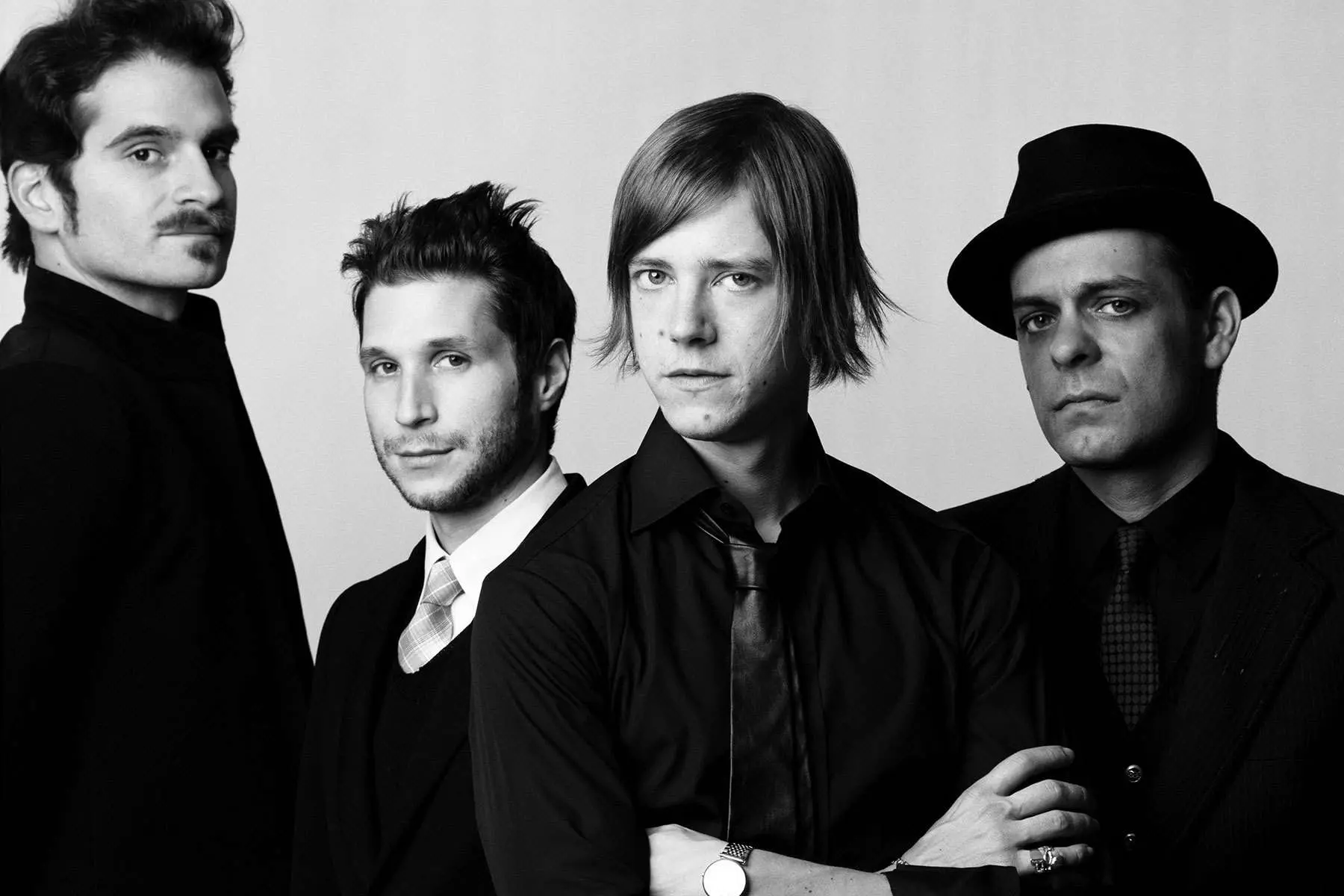
Interpol performing live
Jump to Song

What Makes a Great Interpol Song?

A great Interpol song is built on precision. Daniel Kessler's guitar lines interlock and repeat in ways that are simultaneously melodic and rhythmic — textural rather than lead-focused, influenced by post-punk's use of the guitar as atmosphere rather than statement. Beneath them, Carlos Dengler's bass (on the first three albums) functions as a second melodic voice, often carrying more of the song's weight than the guitars. Paul Banks' deadpan baritone sits above all of it, delivering imagery that is deliberately opaque without being evasive.

The band formed in New York City in 1997 and released their debut Turn on the Bright Lights in 2002. These ten tracks span from that debut to their 2022 album The Other Side of Make-Believe, covering the Dengler era and the trio years that followed.

Top 10 Interpol Songs Ranked

01

Obstacle 1

Album: Turn on the Bright Lights · 2002
Bright Lights

Obstacle 1 is Interpol's most perfectly constructed song and still the definitive introduction to the band. Kessler's opening guitar line announces itself as something fully formed — the interlocking, arpeggiated pattern that follows is one of post-punk revival's most recognisable riffs. Dengler's bass is a third guitar line happening simultaneously. Banks delivers one of his most compelling vocals over the top of it. Nothing in the catalogue surpasses the way all four elements lock together here.

Song Note

Banks' lyrics on Obstacle 1 follow his characteristic approach — imagistic, elliptical, resistant to simple interpretation. The song's emotional impact comes from the space between the words rather than any single line, which is consistent with how the band treated language across the debut.

Why #1: the most perfectly constructed Interpol track — all four elements locking together in a way the catalogue never quite surpasses.
02

Slow Hands

Album: Antics · 2004
Antics

Slow Hands is Interpol's biggest single and the most immediately accessible song in the catalogue — a driving, propulsive track built on one of Kessler's most straightforwardly hooky riffs. The song moves with a momentum that the more atmospheric debut material doesn't always aim for, and Banks' vocal is more direct here than almost anywhere else. It remains their most recognisable track to casual listeners and the correct entry point for anyone who wants something immediate.

Why #2: the band's biggest single and most immediately accessible track — the correct entry point for new listeners.
03

Evil

Album: Antics · 2004
Antics

Evil is the most immediately compelling track on Antics — an unusual song in the Interpol catalogue because its tension comes from understatement rather than atmosphere. The verse guitar is almost minimal, the bass more prominent than usual, and the chorus doesn't arrive with the release you might expect. Banks' delivery on the title word has been dissected at length. The song has aged into one of their most distinctive.

Why #3: the most immediately compelling track on Antics — tension through understatement rather than atmosphere.
04

Leif Erikson

Album: Turn on the Bright Lights · 2002
Bright Lights

Leif Erikson is the most atmospheric track on Turn on the Bright Lights and arguably the most purely beautiful song in the Interpol catalogue. It closes the debut at a lower temperature than much of what precedes it — slower, more spacious, with Dengler's bass carrying a melodic weight that is almost orchestral. Banks' vocal sounds genuinely raw here in a way the band rarely allowed elsewhere. A song that improves with repeated listening in a way few of the singles do.

Why #4: the most atmospheric track on the debut — the most purely beautiful song in the catalogue and essential for full-album listeners.
05

All the Rage Back Home

Album: El Pintor · 2014
El Pintor

All the Rage Back Home is the best post-Dengler Interpol track and the song that proved the trio configuration could produce something worthy of the early catalogue. The opening riff is among Kessler's most propulsive, the rhythm section sounds energised rather than reduced, and Banks' vocal has a directness that had been missing from the two albums preceding it. The song effectively announced that El Pintor was going to be a genuine return to form.

Why #5: the best post-Dengler Interpol track — proved the trio configuration could match the early catalogue.
06

Untitled

Album: Turn on the Bright Lights · 2002
Bright Lights

Untitled opens Turn on the Bright Lights and serves as the most effective album opener in the Interpol catalogue — a track that establishes tone, palette, and intent within its first thirty seconds. The guitar line that opens it is spare and patient. Fogarino's drums arrive with authority. By the time Banks delivers his first line, the listener already understands exactly what kind of record this is going to be. A masterclass in opening a debut album.

Why #6: the best Interpol album opener — establishes the entire sonic and emotional palette of the debut within thirty seconds.
07

The Heinrich Maneuver

Album: Our Love to Admire · 2007
Our Love to Admire

The Heinrich Maneuver is the most danceable song in the Interpol catalogue and the strongest single from their major-label debut — a track that takes the post-punk structural template and pushes it closer to something you could actually move to. The production is bigger than anything on the first two albums, which suits this particular song better than it suits most of the surrounding material. One of their most underrated singles.

Why #7: the most danceable Interpol track and the strongest single from their major-label debut.
08

Hands Away

Album: Turn on the Bright Lights · 2002
Bright Lights

Hands Away is the most underrated song on the debut and one of the best deep cuts in the Interpol catalogue — a mid-tempo track that demonstrates the band's range within a single album. It moves differently from the surrounding material, slightly warmer in texture, with a chorus that opens up in a way the more austere tracks don't allow. Regularly overlooked by lists that focus on the singles, and consistently the track that rewards listeners who go deeper into the record.

Why #8: the most underrated track on the debut — a deep cut that rewards listeners who go beyond the singles.
09

Narc

Album: Antics · 2004
Antics

Narc is the most rhythmically propulsive track on Antics and a song that demonstrates how well Fogarino and Dengler function as a rhythm section when the material gives them room to drive. The guitar is more restrained than on many of the singles, which lets the rhythm section take more of the song's structural weight. It sits in the middle of the album and is frequently cited as the track that makes the record more than just a collection of singles.

Why #9: the most rhythmically propulsive Antics track — the song that makes the album more than a collection of singles.
10

Toni

Album: The Other Side of Make-Believe · 2022
Make-Believe

Toni closes this ranking as the strongest track from Interpol's most recent album and a late-career proof of concept — evidence that a band twenty-five years into their existence can still write songs that belong alongside their best early work. Produced by Flood, it is more restrained and atmospheric than the Marauder-era material, with a melodic precision in the guitars that recalls the debut without imitating it.

Why #10: the strongest late-career Interpol track — late-period proof that the band's instincts remain intact.

Best Interpol Songs for Beginners

Obstacle 1Start here — the most perfectly constructed Interpol track.
Slow HandsFor immediacy — the biggest single and most radio-friendly track.
EvilFor tension — understatement used to maximum effect.
The Heinrich ManeuverFor energy — the most danceable song in the catalogue.
All the Rage Back HomeFor the later era — the best post-Dengler track.
Leif EriksonFor depth — the most atmospheric and beautiful deep cut.

Best Interpol Albums to Hear Next

2002
Turn on the Bright Lights

The correct starting album. Contains Obstacle 1, Leif Erikson, and Untitled. One of the most acclaimed debut records of the 2000s.

2004
Antics

Contains Slow Hands, Evil, and Narc. More immediate and accessible — the best entry point if you want something radio-ready.

2014
El Pintor

Contains All the Rage Back Home. The strongest post-Dengler album and the band's most convincing late-career statement.

Interpol Songs: FAQ

What is Interpol's best song?
Obstacle 1 — the most perfectly constructed track in the catalogue, with Kessler's interlocking guitar lines, Dengler's melodic bass, and Banks' vocal all locking together in a way the band never quite surpasses. Slow Hands is the biggest single. Evil is the most immediately compelling track on Antics.
What is the best Interpol album to start with?
Turn on the Bright Lights (2002) — one of the most acclaimed debut albums of the 2000s, containing Obstacle 1 and Leif Erikson. Antics (2004) is the correct starting point if you want something more immediately accessible. El Pintor (2014) is the best recommendation for listeners who want to understand where the band ended up.
Are Interpol and Joy Division comparable?
The Joy Division comparison is the most frequently made critical observation about Interpol, particularly on the debut, and the band have acknowledged the influence. Paul Banks' baritone, the band's use of reverb, minor keys, and austere presentation all share DNA with Joy Division. The distinction is in the precision and formality — Interpol's arrangements are more controlled and interlocking than Joy Division's rawer, more instinctive approach.
Why is Turn on the Bright Lights so highly regarded?
Turn on the Bright Lights is regarded as one of the best debut albums of the 2000s because it arrived fully formed — a complete sonic and emotional world that owed clear debts to its influences without simply reproducing them. The production by Peter Katis preserved the live energy of the band while giving every element of the sound room to breathe. It also arrived at exactly the right cultural moment, when the post-punk revival was generating genuine critical excitement.
What happened to the bass sound after Carlos Dengler left?
Dengler's departure in 2010 produced an audible shift in the Interpol sound. His melodic bass playing had functioned as a third guitar on the first three albums — often carrying lead melodic lines rather than rhythmic support. From El Pintor (2014) onward, the bass is present but sits more conventionally in the rhythm section, making the guitar work more prominent by default. Many listeners regard this as a trade-off rather than a straight loss, since the trio configuration produced stronger results than the transitional Interpol (2010) album suggested.

Explore More