← Back to Bands
Band Guide · Interpol · Post-Punk Revival / Indie Rock · New York City

InterpolBand Guide

Formed 1997 · New York City · Post-Punk Revival / Indie Rock

Interpol are the band most responsible for bringing the austere, overcoat-and-reverb aesthetic of Joy Division and The Chameleons into the early 2000s New York indie scene — and making it feel urgent rather than nostalgic. Their 2002 debut Turn on the Bright Lights is one of the most acclaimed debut albums of that decade, a record that arrived fully formed, dressed in black, and has never stopped sounding like itself. Seven studio albums in, the band remain one of the most consistent acts to emerge from the post-punk revival. This is the complete guide.
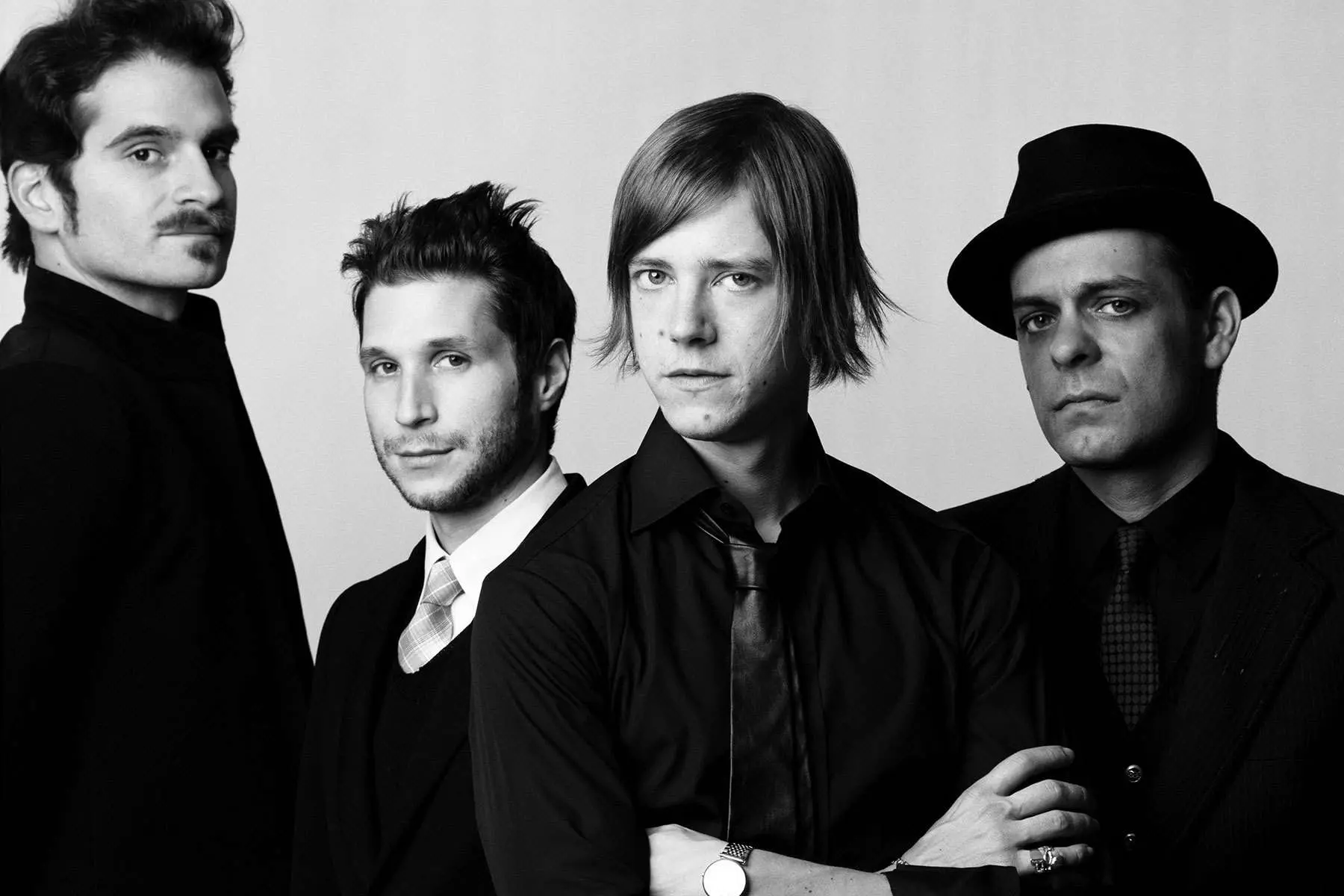
Interpol band photo
Formed1997New York City
Studio Albums7
MovementPost-Punk Revivalearly 2000s NYC
Best AlbumTurn on the Bright Lights2002
Start WithObstacle 1

Who Are Interpol?

Interpol are an American rock band formed in New York City in 1997, when members met as students at NYU. The band's core lineup — Paul Banks on vocals and guitar, Daniel Kessler on guitar, Carlos Dengler on bass, and Sam Fogarino on drums — developed their sound through the city's late-1990s indie circuit before signing to Matador Records and releasing Turn on the Bright Lights in 2002. The album's combination of interlocking guitar lines, cavernous bass, and Banks' deadpan baritone made it one of the most influential debut records of its era.

Alongside The Strokes, LCD Soundsystem, and Yeah Yeah Yeahs, Interpol are widely regarded as one of the defining bands of the early 2000s New York rock renaissance. Their sound drew heavily from late-1970s and early-1980s post-punk — Joy Division, The Chameleons, Echo and the Bunnymen — but filtered that influence through a precision and formality that was distinctly their own. The suits, the stillness, the reverb: Interpol had an image as controlled and deliberate as their music.

Carlos Dengler's Departure

Carlos Dengler, the band's original bassist, left Interpol in 2010 following the recording of their self-titled fourth album. His departure was described as amicable, and he subsequently pursued acting. Dengler's melodic, prominent bass lines were a defining element of the band's sound on their first three albums — particularly on Turn on the Bright Lights, where tracks like "Obstacle 1" and "Leif Erikson" are built around his playing as much as the guitars.

The band continued as a trio and with touring and session bassists, releasing four further studio albums without him. The sonic shift toward a more guitar-driven, slightly less bass-centric sound is audible across the post-Dengler catalogue, though the core identity of the band remained intact.

New to Interpol?

Start with Obstacle 1 — the defining Interpol track and still the best entry point. Then Turn on the Bright Lights (2002) as a full album, one of the most acclaimed debut records of the 2000s and the record that established everything the band would build on.

Band Members

PB
Paul Banks
Vocals · Guitar · 1997–present
The band's frontman and lyricist, known for his deadpan baritone delivery and deliberately opaque, imagistic writing. His vocal style — controlled, flat-affect, emotionally ambiguous — became as central to the Interpol sound as the guitars. Has also released solo material under the name Julian Plenti.
DK
Daniel Kessler
Guitar · 1997–present
Founding guitarist and the band's primary musical architect. Kessler's interlocking, arpeggiated guitar lines are the structural foundation of the Interpol sound — melodic and rhythmic simultaneously, influenced by post-punk's use of guitar as texture rather than lead instrument. Often cited as one of the underrated guitarists of his generation.
CD
Carlos Dengler
Bass · 1997–2010
Original bassist whose melodic, prominent playing was central to the band's first three albums. His bass lines on Turn on the Bright Lights and Antics function as lead melodic elements rather than rhythmic support. Departed in 2010 to pursue acting.
SF
Sam Fogarino
Drums · 1997–present
The band's drummer across their entire recording career, providing the metronomic precision and understated power that underpins the Interpol sound. His playing is restrained by design — propulsive without ever drawing attention to itself, which is exactly what the music requires.

Band History

1997
Paul Banks, Daniel Kessler, Carlos Dengler and Sam Fogarino form Interpol in New York City, meeting as students at NYU and beginning to develop their sound through the city's indie circuit.
2002
Turn on the Bright Lights released on Matador Records. The album is immediately acclaimed as one of the best debut records of its era, establishing Interpol as a defining voice of the post-punk revival and the New York indie scene.
2004
Antics released. The more immediate, slightly more accessible follow-up reaches a wider audience, with "Slow Hands" and "Evil" becoming their most radio-played singles. The album reaches the top 20 in the UK.
2007
Our Love to Admire released on Capitol Records — their major label debut. The album is the most sonically expansive of their career, with a larger production scale, and reaches number four on the Billboard 200.
2010
Self-titled fourth album released. Carlos Dengler departs the band following the recording sessions. The band continues as a three-piece and with additional touring musicians.
2014
El Pintor released — an anagram of "Interpol." Recorded as a trio, the album is widely regarded as their strongest work since Antics and signals a creative resurgence.
2018
Marauder released, produced by Dave Fridmann. A rawer, more aggressive record than its predecessors.
2022
The Other Side of Make-Believe released. The band's seventh studio album, produced by Flood, marks a more atmospheric, restrained direction and receives strong critical notices.

Discography

2002
Turn on the Bright Lights
Obstacle 1, Hands Away, Leif Erikson. The debut. One of the best albums of the 2000s. Start here.
Essential
2004
Antics
Slow Hands, Evil, Narc. More immediate and accessible. The band at their most radio-ready.
Essential
2014
El Pintor
All the Rage Back Home, Anywhere. The trio-era comeback. Their best post-Dengler record.
Essential
2007
Our Love to Admire
The Heinrich Maneuver, Mammoth. Major label debut. Sonically the most expansive record.
Great
2022
The Other Side of Make-Believe
Toni, Fables. Produced by Flood. Atmospheric and restrained — a late-career highlight.
Great
2018
Marauder
If You Really Love Nothing, The Rover. Rawer and more aggressive, produced by Dave Fridmann.
Good
2010
Interpol
Lights, Barricade. Final album with Dengler. Transitional but underrated.
Good

Interpol Trivia Quiz

Five questions — how many can you get right?

Best Songs by Mood

Not sure where to begin? Use this as your entry point.

First song ever
Obstacle 1
Most immediate single
Slow Hands
Most atmospheric
Leif Erikson
Most sinister
Evil
Best album opener
Untitled
Best post-Dengler track
All the Rage Back Home
Most danceable
The Heinrich Maneuver
Best deep cut
Hands Away

Interpol FAQ

When did Interpol form?
Interpol formed in New York City in 1997, meeting as students at NYU. They became one of the defining bands of the early 2000s post-punk revival alongside The Strokes and LCD Soundsystem, and released their debut album Turn on the Bright Lights on Matador Records in 2002.
What is Interpol's most famous song?
Obstacle 1 and Slow Hands are widely considered Interpol's most famous songs. Obstacle 1, from their debut Turn on the Bright Lights, remains the definitive introduction to the band — a perfectly constructed post-punk track built around Daniel Kessler's interlocking guitar lines and Carlos Dengler's melodic bass. Slow Hands from Antics was their biggest radio hit.
What does El Pintor mean?
El Pintor is Spanish for "the painter," and is also an anagram of "Interpol." The 2014 album title reflects both meanings simultaneously — a deliberate piece of wordplay that suited the band's controlled, precise approach to everything from music to presentation.
What happened to Carlos Dengler?
Carlos Dengler left Interpol in 2010 following the recording of the band's self-titled fourth album. His departure was described as amicable; he subsequently pursued a career in acting. His melodic bass playing was a defining element of the band's first three albums, and his absence marked an audible shift in the band's sound from Interpol (2010) onward.
Are Interpol influenced by Joy Division?
Yes — Joy Division is one of Interpol's most frequently cited influences, and the comparison was made repeatedly on the release of Turn on the Bright Lights. The band have acknowledged the influence while noting that they also drew from The Chameleons, Echo and the Bunnymen, and other late-1970s and early-1980s post-punk acts. Paul Banks' baritone and the band's use of reverb, minor keys, and austere imagery all carry that lineage clearly.
What is the best Interpol album to start with?
Turn on the Bright Lights (2002) is the essential starting point — one of the most acclaimed debut albums of the 2000s. Antics (2004) is the best entry point if you want something more immediate. El Pintor (2014) is the strongest recommendation for listeners who come to the band later and want to understand where they ended up.

See Also