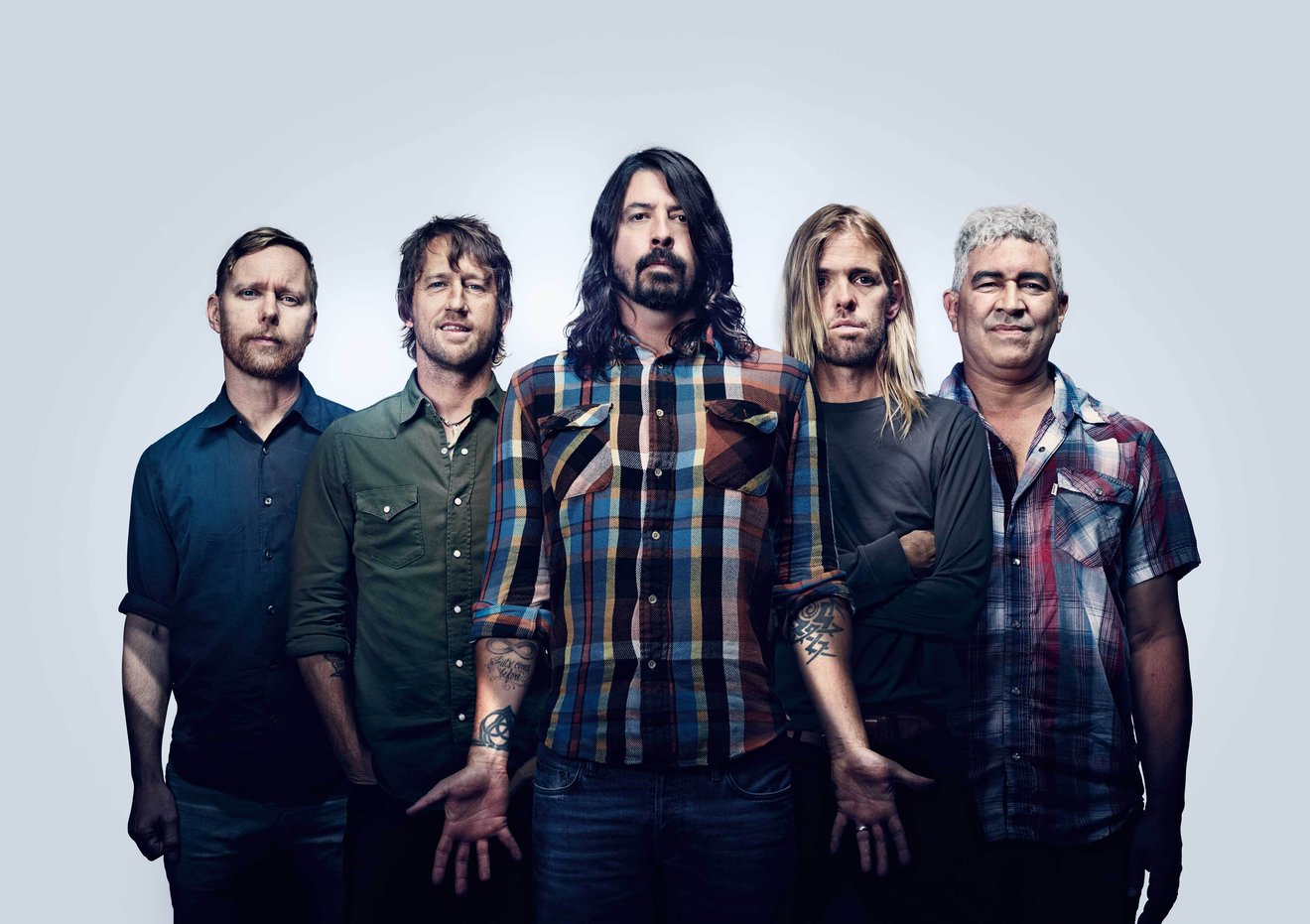
What Makes a Great Foo Fighters Song?
A great Foo Fighters song does something that sounds simple and is
actually very difficult: it makes you feel like the person playing
it absolutely means it. Dave Grohl's enthusiasm for rock music —
his genuine love of the form, his joy in the physicality of
playing it and his capacity to communicate that directly to an
audience of fifty thousand as convincingly as to a room of fifty —
is the defining quality of the Foo Fighters live experience and
the quality that makes the best studio recordings feel alive in a
way that more calculated rock rarely achieves.
Foo Fighters began in 1994 as a solo recording project — Grohl
playing all instruments on a cassette tape that was originally
shared with friends following the dissolution of Nirvana. He has
spoken about recording those tracks as a way of processing grief
and finding a creative outlet that was his alone. The decision to
turn that project into a full band — and to tour relentlessly, to
work with the best producers, to pursue the largest possible
audiences while maintaining the energy of the earliest recordings
— produced one of the great rock catalogues of the past thirty
years.
This ranking covers the full arc of the catalogue, from the 1995
debut through to But Here We Are (2023). That most recent
album — made in the aftermath of Taylor Hawkins's death and with
the additional loss of Dave Grohl's mother Virginia — is
acknowledged throughout this guide as part of the ongoing story of
what Foo Fighters are and what they mean.
Top 10 Foo Fighters Songs Ranked
Everlong is the most universally beloved Foo Fighters
song and the consensus choice for the finest piece of music
Dave Grohl has ever made. It is a love song — urgent,
specific, physically overwhelming in its chorus — and it earns
its reputation through the quality of every component rather
than through a single exceptional element. The quiet-loud
dynamic is perfectly executed: the whispered verse over the
picked guitar, building through the pre-chorus, the release of
the chorus arriving with exactly the right weight at exactly
the right moment. The drums — recorded by Taylor Hawkins and
Grohl together — drive the song with a physicality that
transforms the emotional content into something you feel
rather than merely hear.
Grohl has described it as the song he would take to a desert
island and has performed it at significant personal moments —
most notably an intimate, acoustic performance on the Late
Show with David Letterman following Letterman's heart surgery
that became one of the most celebrated live rock moments of
the 2000s. The choice to play Everlong in that
context — a quiet, personal expression of care rather than a
stadium performance — revealed something about the song's
deeper character: it works at every scale and in every
context, because the emotional content is real enough to
survive any format.
Song Meaning
Everlong was written by Dave Grohl about his
then-girlfriend Louise Post of Veruca Salt — the specific
experience of a new relationship in which the connection
feels permanent and consuming. Grohl has confirmed the
autobiographical context and described the song as one of
the most personal he has written. The lyric's quality — its
ability to describe the specific, almost desperate intensity
of early love without tipping into sentimentality — is what
has made it speak to listeners whose specific circumstances
are entirely different from the one that prompted the
writing. The "everlong" of the title is both the duration of
the feeling and its quality: this is love that intends to
last and that feels as though it already has been lasting
forever.
Why #1: the most beloved Foo Fighters song
and the most fully realised — where the quiet-loud dynamic,
the melody, the lyric and the emotional content are all
simultaneously perfect.
Best of You is the most emotionally powerful Foo
Fighters track after Everlong — a song of unusual
intensity that takes the experience of being in a diminishing
relationship and turns it into a declaration of self-worth
that functions at the scale of a stadium anthem. The verses
are restrained and precise, the build is patient, and the
chorus arrives with proportional force: Grohl's vocal at
maximum intensity, the arrangement at its densest, the
emotional content delivered at full volume.
The song was debuted at Live 8 in 2005 — a global audience for
its first performance — and the power of that context (the
scale, the audience, the collective energy) has been part of
the song's identity ever since. It is the most reliably moving
Foo Fighters live moment and the track most likely to produce
the specific feeling of being in a large crowd all singing the
same words and meaning them individually and collectively
simultaneously.
Song Meaning
Best of You is about the experience of being in a
relationship — romantic or otherwise — where someone takes
more than they give, where the love or loyalty you extend is
used against you rather than returned. The "best of you" is
the best that the narrator has to offer, and the repeated
question "was someone getting the best of you?" addresses
the specific dynamic of being diminished by someone you
trusted. Grohl has described it as partly personal and
partly universal — the emotional territory is specific
enough to feel genuine and broad enough to speak to anyone
who has experienced a relationship in which they were not
treated with the dignity they deserved.
Why #2: the most emotionally powerful stadium
Foo Fighters track — a declaration of self-worth that works at
every scale from headphones to arena.
The Pretender is the finest opening track on any Foo
Fighters album — a song that arrives at its full intensity
within twenty seconds and sustains that intensity across its
full runtime without losing momentum or repeating itself. The
opening guitar riff is one of Grohl's finest, the verse builds
effectively, and the chorus is among the most physically
immediate Foo Fighters have ever written. It received a Grammy
Award for Best Rock Song and remains one of the most
frequently cited examples of what the band does at their most
immediately powerful.
The song's subject — resistance to external forces that
attempt to define or control you — gave it a natural life as a
sports broadcast anthem and as a track that has soundtracked
moments of personal defiance for listeners across a range of
different contexts. That versatility is not a weakness but a
strength: the emotional content is specific enough to feel
genuine and broad enough to speak to anyone who has felt the
need to stand their ground.
Song Meaning
The Pretender is about the refusal to be
controlled, defined or diminished by external forces — the
"pretender" being whoever attempts to impose a false
identity or to extract submission. Dave Grohl has described
it as a song about standing your ground and refusing to
surrender what you know to be true about yourself. The "what
if I say I'll never surrender?" is a question that becomes a
declaration: the act of asking it is already the answer.
Why #3: the finest Foo Fighters album opener
and the most immediately physically powerful track — from
first riff to final chorus without a wasted moment.
All My Life is the most aggressively immediate and
physically relentless Foo Fighters track — a song that arrives
at full force and maintains that force for four minutes
without respite. The riff is one of the great heavy rock
guitar figures of the 2000s, Taylor Hawkins's drumming is at
its most viscerally overwhelming, and Grohl's vocal in the
verse — the barely-contained aggression building through the
pre-chorus — is the finest example of his ability to perform
controlled fury at its most effective.
The song won a Grammy for Best Hard Rock Performance and is
consistently cited in discussions of the finest rock singles
of the decade. It is the most direct expression of the purely
physical joy of hard rock in the Foo Fighters catalogue — the
track that most completely delivers the experience of a great
rock band at maximum velocity — and its placement at #4
reflects an honest assessment that the songs above it are more
emotionally complete, not that this one is lesser.
Why #4: the most aggressively immediate Foo
Fighters track — pure physical rock energy at its most
relentless, the Grammy-winning statement of the band's harder
capabilities.
Monkey Wrench is the finest song on
The Colour and the Shape that is not
Everlong — which, on any other album, would make it
the defining track of the record. The song opens at full
speed, the verse is tightly wound, and the chorus is
immediately anthemic. But its most remarkable moment is the
bridge: Dave Grohl's uninterrupted stream of lyrics delivered
at tempo, a piece of performance that requires both vocal
control and stamina and that functions as one of the most
exciting moments on any Foo Fighters record.
The song was written about Grohl's troubled relationship with
his then-wife and has a personal urgency that the more general
lyrical content of surrounding tracks lacks. That specificity
gives it an edge — a quality of something being genuinely
worked through in real time — that the more polished
surrounding material occasionally trades for professional
accomplishment.
Why #5: the second essential Colour and the
Shape track — the most energetically perfect early Foo
Fighters song, with a bridge section that is among the finest
moments on the album.
Times Like These is the most emotionally optimistic
Foo Fighters song and the one most frequently performed at
moments of collective difficulty — BBC Radio 2's Live Lounge
version became a UK charity single during the Covid-19
pandemic. The lyric's message (that times of difficulty are
exactly the times that reveal character and make necessary
growth possible) is universal and direct, and the song's
combination of melodic warmth with enough rock energy to suit
a live setting has made it one of the most versatile tracks in
the catalogue.
The acoustic version strips the song to its melodic foundation
and demonstrates that the songwriting quality is independent
of the production — one of the clearest signs of a
well-constructed song is that it works in multiple
arrangements, and Times Like These is consistently
cited as the Foo Fighters song that translates best across
formats.
Why #6: the most emotionally optimistic Foo
Fighters track and the most collective — the song that has
most consistently served as an anthem at moments of public
difficulty.
Learn to Fly is the most melodically perfect Foo
Fighters song — the one where the pop instinct that has always
been part of Grohl's songwriting is most completely realised
without any sacrifice of rock energy. The chorus is among the
most immediately singable in the catalogue, the production is
the most polished on any pre-2000 Foo Fighters record, and the
video — a deliberately silly airline disaster comedy — helped
make it one of the band's most broadly known singles without
trivialising the song itself.
The song's message — the willingness to be in a state of
becoming, to be in the process of learning rather than having
arrived — is handled with enough lightness to avoid
self-importance while retaining enough genuine feeling to make
it more than a pop confection. It is the easiest Foo Fighters
entry point for listeners who do not typically engage with
harder rock, and it executes what it sets out to do with
complete precision.
Why #7: the most melodically perfect Foo
Fighters track — the pop sensibility and rock energy in their
most complete balance, with a chorus that stays with the
listener indefinitely.
Rope is the finest track on Wasting Light —
the album recorded in Dave Grohl's garage with producer Butch
Vig (who produced Nirvana's Nevermind) and the one
most consistently praised as the band's creative comeback
after the more varied and less focused preceding records. The
song's opening riff is immediately distinctive, the verse has
a groove and momentum that the band's heavier material often
sacrifices for volume, and the chorus is anthemic in the
direct, unironic way that the best Foo Fighters material
always is.
The recording process — analogue, in a domestic setting, with
no digital editing — gives the track a texture and a live feel
that the previous studio albums occasionally lacked. You can
hear the room, the specific quality of instruments recorded in
a space with dimensions and acoustics, and that physicality is
part of what makes the song work.
Why #8: the essential Wasting Light track and
the best argument for the garage-recorded analogue approach —
the physical texture of the recording as inseparable from the
song's impact.
Walk is the most emotionally vulnerable Foo Fighters
track of the Wasting Light era — the song that most
directly addresses the experience of feeling like you have
lost your way and are looking for a reason to continue. The
lyric's admission of exhaustion and disorientation ("I never
wanna die / I never wanna die / I never wanna die") alongside
the declaration that the narrator is "learning to walk again"
gives the song an emotional openness that the band's more
aggressive material does not always permit.
It has become particularly meaningful in the context of loss —
played at memorial services and cited by fans in moments of
personal difficulty. The song's combination of emotional
directness and musical momentum creates the specific Foo
Fighters quality at its most needed: music that acknowledges
difficulty while providing the energy to continue through it.
Why #9: the most emotionally vulnerable
Wasting Light track — where the admission of exhaustion and
the determination to continue are held in the same song with
complete conviction.
These Days closes this ranking as the most
melodically accomplished ballad in the Foo Fighters catalogue
— a song that demonstrates Grohl's ability to write across the
full range of rock's emotional and dynamic spectrum, from the
maximum force of All My Life to the patient, melodic
warmth of this track. The chorus is among the finest Foo
Fighters have written, and the production — orchestral
elements alongside the rock arrangement — gives it a grandeur
that the more straightforward surrounding material does not
attempt.
The lyric's message — a meditation on what "these days" (the
difficult ones) require and what they eventually become — has
a maturity and a sense of perspective that earlier Foo
Fighters material did not always reach for. It is the clearest
evidence that Grohl's songwriting developed significantly
across the first decade of the band's career, moving from the
urgent personal intensity of the early records toward
something more considered and more broadly humane.
Why #10: the most melodically accomplished
Foo Fighters ballad — orchestral grandeur and songwriting
maturity, the clearest evidence of how far Grohl's writing had
developed by 2007.
Best Foo Fighters Songs for Beginners
New to Foo Fighters? These six tracks introduce the different
dimensions of the catalogue — the love song, the anthem, the hard
rocker, the melodic pop-rock and the emotionally direct.
Learn to FlyStart here — the most melodically immediate and most broadly
accessible Foo Fighters track, a perfect entry point for
listeners from any rock background.
Best of YouThe defining stadium Foo Fighters moment — the most
emotionally powerful sing-along in the catalogue.
The PretenderThe most immediately energetic track — from first riff to
last chorus without a wasted moment.
EverlongOnce you know the others — this is where you discover the
full emotional depth of the catalogue.
Times Like TheseThe most universally resonant Foo Fighters song — the one
most likely to matter in a difficult moment.
All My LifeFor listeners who want the hardest and most physically
immediate Foo Fighters experience first.
Dave Grohl: From Nirvana to the World's Biggest Rock Band
David Eric Grohl was born on 14 January 1969 in Warren, Ohio, and
grew up in Springfield, Virginia. He dropped out of high school at
seventeen to join Scream, a Washington DC hardcore punk band, and
was subsequently recruited as Nirvana's drummer in 1990 — a role
in which he appeared on Nevermind (1991) and
In Utero (1993), two of the most important albums in rock
history.
Following Kurt Cobain's death in April 1994, Grohl — rather than
retire from the music industry or remain in a supporting role —
recorded a solo cassette tape of original songs while processing
his grief. That tape became the self-titled Foo Fighters debut
(1995), initially credited to the band name alone without
individual credits. The decision to turn the project into a full
band, add a lineup and tour, was arguably the most consequential
creative decision in post-grunge rock history.
Grohl's specific creative gifts — his ability to write immediately
appealing melodies, his physical presence as a performer, his
genuine enthusiasm for rock music in all its forms and his
capacity to connect with audiences at massive scale — have made
Foo Fighters one of the defining rock acts of the past thirty
years. He has also produced albums for other artists, played drums
on numerous recordings (including Queens of the Stone Age's
Songs for the Deaf), and founded Roswell Records as the
band's imprint. His memoir The Storyteller (2021)
provides the fullest account of his life and the experiences
behind the music.
Taylor Hawkins: In Memoriam
Taylor Hawkins was born on 17 February 1972 in Fort Worth, Texas.
He joined Foo Fighters as drummer in 1997 — replacing William
Goldsmith, who had played on the debut and second album — and
remained in that role for twenty-five years, across eight studio
albums and countless tours and festival appearances. He was, by
wide agreement, one of the finest rock drummers of his generation:
technical, physical, musical and possessed of a stage presence
that rivalled Grohl's own.
His influence on the band's sound was profound. The specific
quality of the Foo Fighters live experience — the physicality of
the rhythm section, the momentum of the arrangements, the way the
music felt in a large venue — was substantially his creation. He
was also a frontman in his own right, performing his own set
during the extended Foo Fighters live shows and handling multiple
lead vocals on recordings.
Taylor Hawkins died on 25 March 2022 in Bogotá, Colombia, aged 50,
shortly before the band was due to perform at the Festival Estéreo
Picnic. The cause was cardiac arrest. He is survived by his wife
Alison and their three children. Two tribute concerts — held at
Wembley Stadium, London and Kia Forum, Los Angeles — brought
together an extraordinary range of musicians to celebrate his
life. Josh Freese joined Foo Fighters as drummer in 2023, and the
band released But Here We Are — shaped by the grief of
Hawkins's death and the subsequent loss of Dave Grohl's mother
Virginia — later that year.
Best Foo Fighters Albums to Hear Next
1997
The Colour and the Shape
The best starting album and the creative peak. Contains
Everlong, Monkey Wrench,
My Hero and Hey Johnny Park. The album
that most completely realised Grohl's songwriting ambitions
and that established the Foo Fighters as something more than
a post-Nirvana project.
2005
In Your Honor
The double album and the emotional peak. Contains
Best of You, The Last Song,
DOA and — on the acoustic disc —
Miracle and Over and Out. The most
ambitious Foo Fighters project and the one most consistently
cited as their most emotionally varied.
2007
Echoes, Silence, Patience & Grace
Contains The Pretender, These Days,
Long Road to Ruin and Let It Die. The most
sonically varied mid-period record and the album that won
the Grammy for Best Rock Album — a strong starting point for
listeners who want the full range of what Grohl's
songwriting had become by the late 2000s.
2011
Wasting Light
The analogue comeback. Contains Rope,
Walk, Arlandria and These Days.
Recorded in Grohl's garage with Butch Vig, the physical
texture of the recording is an essential part of what makes
this album work. The most cohesive post-In Your Honor
record.
2023
But Here We Are
The grief album. Contains Rescued,
Show Me How, The Teacher and
But Here We Are. Made in the aftermath of Taylor
Hawkins's death and with the loss of Grohl's mother Virginia
— the most emotionally raw Foo Fighters album and a document
of grief being transmuted into music.
Honourable Mentions
The Foo Fighters catalogue is thirty years deep and the songs
below this top 10 are frequently exceptional. Strong honourable
mentions include:
-
My Hero (The Colour and the Shape,
1997) — written about the ordinary people Grohl admires rather
than celebrity, and one of the most consistently beloved Foo
Fighters tracks outside this ranking
-
Best of You (Live) — the live version of any
major Foo Fighters track approaches a different quality from the
studio recording; the live Best of You in particular
benefits from audience participation at scale
-
DOA (In Your Honor, 2005) — the most
energetically immediate track on the double album, a hard rock
statement that stands alongside All My Life as the
band's heaviest work
-
Long Road to Ruin (Echoes, Silence, Patience & Grace, 2007) — the most melodically cheerful Foo Fighters track and
a live fan favourite for its energy
-
Rescued (But Here We Are, 2023) — the
most emotionally direct track from the grief album, Grohl
working through loss with the directness that the best Foo
Fighters writing always achieves
-
This Is a Call (Foo Fighters debut, 1995) — the
opening track of the debut and the first demonstration of what
Grohl was building after Nirvana
-
In Your Honor (In Your Honor, 2005) —
the album-opening title track and one of the most emotionally
direct Foo Fighters declarations of purpose
Foo Fighters Band History
Foo Fighters began in 1994 when Dave Grohl, working through grief
following Kurt Cobain's death, recorded a solo cassette of
original songs. He played all instruments himself, recorded in a
single session, and shared the tape with friends without
commercial intent. The response encouraged him to consider
releasing the material. Signed to Capitol Records, he assembled a
full band — Nate Mendel, Pat Smear and William Goldsmith alongside
Grohl — and released the self-titled debut in 1995.
Taylor Hawkins replaced Goldsmith on drums in 1997, just in time
for the recording of The Colour and the Shape — the album
that most fans consider the band's creative peak. Chris Shiflett
joined as lead guitarist in 1999 (playing on
There Is Nothing Left to Lose and all subsequent
records), and Rami Jaffee joined as touring and then full
keyboardist. Pat Smear rejoined as a full member in 2010 after
leaving briefly in 1997. That lineup — Grohl, Hawkins, Mendel,
Smear, Shiflett and Jaffee — recorded
Wasting Light (2011), Sonic Highways (2014),
Concrete and Gold (2017) and
Medicine at Midnight (2021).
Taylor Hawkins died on 25 March 2022. The band cancelled their
remaining 2022 commitments before announcing Josh Freese as
Hawkins's replacement in May 2023. But Here We Are —
recorded with Freese and released in June 2023 — was the band's
first album since Hawkins's death and was received as both a
document of grief and an act of creative survival. It is one of
the most emotionally significant albums in the Foo Fighters
catalogue.
Foo Fighters Songs: FAQ
What is Foo Fighters' best song?
Everlong is almost universally considered Foo Fighters'
finest song — the quiet-loud dynamic perfectly executed, the
lyric one of Grohl's most personal, the melody one of his
finest. Dave Grohl has described it as the song he would take to
a desert island. It has topped numerous polls and is the
emotional centrepiece of every Foo Fighters live set.
What does Everlong mean?
A love song written by Grohl about his then-girlfriend Louise
Post of Veruca Salt — the specific experience of a new
relationship so consuming it feels permanent. Grohl has
confirmed the autobiographical context and described it as one
of his most personal pieces of writing. The title refers both to
duration and quality: love that intends to last and already
feels as though it has.
What does Best of You mean?
About the experience of being in a relationship — romantic or
otherwise — where someone takes more than they give. The "best
of you" is the best the narrator has to offer, and the repeated
question addresses the specific dynamic of having love or
loyalty used against you rather than returned. Grohl has
described it as partly personal and partly universal.
What does The Pretender mean?
About the refusal to be controlled or defined by external forces
— the "pretender" being whoever attempts to impose a false
identity or extract submission. A song about standing your
ground and refusing to surrender what you know to be true about
yourself. The "what if I say I'll never surrender?" becomes a
declaration by being asked.
Who is Dave Grohl?
Dave Grohl (born 1969, Warren, Ohio) is the founder, vocalist
and lead guitarist of Foo Fighters, and former drummer for
Nirvana. His transition from Nirvana's drummer to leading his
own band after Kurt Cobain's death in 1994 is one of the most
remarkable creative reinventions in rock history. Known for
extraordinary work ethic, genuine love of rock music and the
ability to connect with audiences at every scale.
What happened to Taylor Hawkins?
Taylor Hawkins, Foo Fighters' drummer since 1997, died on 25
March 2022 in Bogotá, Colombia, aged 50, shortly before the band
was due to perform. He was one of the most beloved drummers in
rock. Two tribute concerts were held — at Wembley Stadium and
Kia Forum, Los Angeles. Josh Freese joined as drummer in 2023.
What is the best Foo Fighters album to start with?
The Colour and the Shape (1997) is the best starting
album — it contains Everlong,
Monkey Wrench and My Hero and represents the
band at their creative peak. In Your Honor (2005) is
the essential second step. Wasting Light (2011) is the
best recent-era starting point.
Where are Foo Fighters from?
Foo Fighters formed in Seattle, Washington in 1994, though Dave
Grohl is originally from the Washington DC area (Warren, Ohio,
then Springfield, Virginia). The band subsequently relocated to
Los Angeles. They are closely associated with Seattle through
Grohl's Nirvana connection, though the band itself has been
based in the Los Angeles area for most of their career.
Is Foo Fighters still active?
Yes. Foo Fighters released But Here We Are in 2023 and
continue to tour internationally. Josh Freese joined as drummer
following Taylor Hawkins's death. The band remain one of the
biggest live rock acts in the world.
Did Dave Grohl play in Nirvana?
Yes. Dave Grohl was Nirvana's drummer from 1990 until the band's
dissolution following Kurt Cobain's death in April 1994. He
appeared on Nevermind (1991) and
In Utero (1993), and subsequently founded Foo Fighters
as a solo project that became a full band.