← Back to Deep Purple
Ranked Songs · Deep Purple · Hard Rock / Heavy Metal · England

Deep Purple Best Songs Ranked — The Definitive Guide

From the most recognisable guitar riff in rock history to an eleven-minute progressive ballad, Deep Purple's catalogue spans hard rock's full range of possibility. These are the 10 essential tracks across every era.

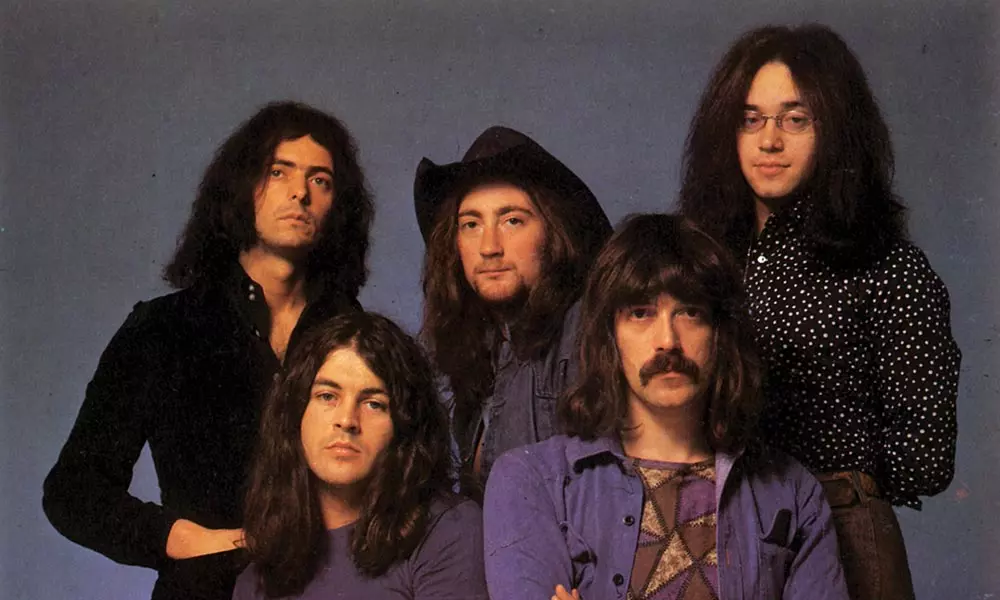
Deep Purple performing live
Jump to Song

What Makes a Great Deep Purple Song?

A great Deep Purple song is built on the creative tension between its three principal voices: Ritchie Blackmore's classical-influenced, aggressive guitar; Jon Lord's Hammond organ, which could match the guitar's aggression or pull the music toward something more symphonic; and Ian Gillan's wide-ranging, operatic vocal, capable of explosive power and genuine delicacy within the same song. The rhythm section of Roger Glover and Ian Paice provided the propulsive foundation that allowed those three voices to work against each other and together.

This ranking covers the Mark II era that produced Machine Head, the Mark III era that produced Burn, and the reunion years. The catalogue spans over fifty years and more than twenty studio albums — these ten represent the best of it.

Top 10 Deep Purple Songs Ranked

01

Smoke on the Water

Album: Machine Head · 1972
Machine Head

Smoke on the Water contains the most recognisable guitar riff in rock history — four notes that have been learned by more beginner guitarists than any other passage in the music. But the song is not simply a riff in search of a song: the lyric documents a real event with a specificity and matter-of-fact wit unusual in heavy rock, and the full arrangement, particularly Gillan's vocal and Lord's organ in the verses, demonstrates why the Mark II lineup was something more than a riff machine. It is the correct starting point for any new listener and one of the five most important rock singles ever recorded.

Song History

The song documents the December 1971 fire at the Montreux Casino, which burned down during a Frank Zappa concert after someone fired a flare gun. Deep Purple watched from across Lake Geneva as smoke rose over the water, and subsequently recorded Machine Head in a nearby hotel using the Rolling Stones' mobile recording unit. The lyric is a direct, almost journalistic account of those events.

Why #1: the most recognisable guitar riff in rock history, and a song that fully earns its fame across its full four minutes.
02

Highway Star

Album: Machine Head · 1972
Machine Head

Highway Star is the most technically accomplished single in the Deep Purple catalogue — a six-minute demonstration of the Mark II lineup operating at full throttle from the opening bar. Blackmore's guitar solo and Lord's organ solo arrive in sequence and are both benchmarks of what rock soloing could be in 1972: technically demanding, structurally coherent, and driven by genuine musical ideas rather than just speed. It opens Machine Head and has opened countless Deep Purple live sets since. If you want to understand why Blackmore and Lord are spoken of as two of the most influential musicians in hard rock history, this is the track to study.

Why #2: the most technically accomplished Deep Purple track — both Blackmore's guitar solo and Lord's organ solo are among the finest in hard rock history.
03

Child in Time

Album: Deep Purple in Rock · 1970
In Rock

Child in Time is the most ambitious and emotionally powerful song in the Deep Purple catalogue — an eleven-minute piece that moves from quiet piano and organ through to some of the most extreme vocal work in rock history. Gillan's screaming in the song's climactic section remains one of the most technically demanding vocal performances in the genre, and it was recorded live in the studio without overdubs. The song addresses nuclear war and the fragility of peace with a directness that stands apart from most hard rock material of its era. The live version on Made in Japan is equally essential.

Why #3: the most ambitious Deep Purple song — eleven minutes, Gillan's most extreme vocal performance, and still the most emotionally powerful track in the catalogue.
04

Burn

Album: Burn · 1974
Burn

Burn is the finest song from the Mark III era and proof that Deep Purple remained a creative force after Gillan's departure. The title track introduces David Coverdale and Glenn Hughes — two vocalists who could trade lines in real time — and demonstrates a harmonic ambition and vocal richness that the Mark II material rarely attempted. Blackmore's guitar on the title track is among his most ferocious, and the arrangement moves through its sections with a confidence that makes it one of the most underrated songs in any Deep Purple lineup's catalogue.

Why #4: the finest Mark III Deep Purple track — proof the band remained vital after Gillan's departure, with Coverdale and Hughes at their joint best.
05

Perfect Strangers

Album: Perfect Strangers · 1984
Perfect Strangers

Perfect Strangers is the best song from the Mark II reunion era — a track that arrived with more creative purpose than most comeback singles have any right to claim. The riff is unmistakably Blackmore but more atmospheric than the early-1970s material, and Gillan's vocal has a weathered quality that suits the lyric's meditation on time and return. The song demonstrated that the chemistry between the Mark II lineup had survived the eleven-year gap between their original run and the reunion, and it remains one of the most convincing reunion tracks in rock history.

Why #5: the best Deep Purple reunion track — more atmospheric than the classic era and a genuine creative statement rather than a nostalgia exercise.
06

Space Truckin'

Album: Machine Head · 1972
Machine Head

Space Truckin' closes Machine Head and is the track that best demonstrates the band's improvisational side on record — the studio version is tight and propulsive, but the live versions, particularly on Made in Japan, expand it into something that could run for twenty minutes without losing momentum. The riff is simpler than "Highway Star" but completely locked in, and Gillan's vocal has a loose, joyful energy that contrasts with the more controlled performances elsewhere on the album. A song that sounds different at high volume than at any other level.

Why #6: the most improvisationally alive Machine Head track — listen to the Made in Japan version to understand what it could become live.
07

Lazy

Album: Machine Head · 1972
Machine Head

Lazy is the best showcase for Jon Lord's Hammond organ in the entire Deep Purple catalogue — a slow-burning blues that gives him extended solo space and demonstrates why he is regarded as one of the most accomplished keyboard players in rock history. The song moves at a deliberate, unhurried pace that contrasts with the speed of "Highway Star" and the drama of "Smoke on the Water," showing a different dimension of the Mark II lineup. Gillan's vocal is loose and playful. For anyone who wants to understand Lord's contribution to the band, this is the track.

Why #7: the best Jon Lord showcase in the catalogue — the track that best demonstrates why his Hammond work was irreplaceable.
08

Strange Kind of Woman

Album: Fireball · 1971
Fireball

Strange Kind of Woman is the most underrated song in the classic-era Deep Purple catalogue — a track from Fireball that sits in the space between the blues rock of the early records and the full hard rock confidence of Machine Head. The guitar-vocal call-and-response structure is unusual in the catalogue and gives Gillan room to improvise against Blackmore in a way most of their material doesn't allow. The live versions from this period are more intense than the studio recording and worth seeking out independently.

Why #8: the most underrated classic-era Deep Purple track — the guitar-vocal call and response gives it a dynamic the album tracks rarely match.
09

Speed King

Album: Deep Purple in Rock · 1970
In Rock

Speed King opens Deep Purple in Rock and is the most historically significant track in this ranking after "Smoke on the Water" — a song that, in 1970, helped define what heavy metal was going to sound like before the genre had a name. The tempo, the distortion, the vocal aggression, and Lord's organ all operate at a level of intensity that was genuinely without precedent. It established the Mark II lineup's credentials immediately and remains as striking now as it was when it opened their first fully hard rock album.

Why #9: the most historically significant early Deep Purple track — helped define heavy metal before the genre existed as a named category.
10

Knocking at Your Back Door

Album: Perfect Strangers · 1984
Perfect Strangers

Knocking at Your Back Door closes this ranking as the second great track from the reunion album and the one that best demonstrates the Mark II lineup's ability to write melodic hard rock with genuine commercial instinct. The song was a major rock radio hit and introduced a new generation of listeners to the band during the 1980s hard rock boom. Blackmore's solo is economical and precisely right, and the production by Roger Glover gives it a crisp, contemporary sound that suits the material without dating it.

Why #10: the most radio-friendly reunion track — introduced the band to a new generation of hard rock listeners in the 1980s.

Best Deep Purple Songs for Beginners

Smoke on the WaterStart here — the most famous riff in rock history.
Highway StarFor technical ambition — Blackmore and Lord at full throttle.
Child in TimeFor emotional depth — Gillan's most extreme vocal performance.
BurnFor the Mark III era — Coverdale and Hughes at their best.
Perfect StrangersFor the reunion era — more atmospheric, still unmistakably Purple.
LazyFor the keyboard side — the definitive Jon Lord showcase.

Best Deep Purple Albums to Hear Next

1972
Machine Head

The correct starting album. Contains Smoke on the Water, Highway Star, Space Truckin', and Lazy. One of the greatest hard rock albums ever made.

1972
Made in Japan

The essential live companion to Machine Head. Contains the definitive live versions of Child in Time, Space Truckin', and Smoke on the Water. One of the best live albums in any genre.

1970
Deep Purple in Rock

Contains Speed King and Child in Time. The first full Mark II statement and a heavy metal landmark.

Deep Purple Songs: FAQ

What is Deep Purple's best song?
Smoke on the Water — the most recognisable guitar riff in rock history and a song that fully earns its fame. Highway Star is the most technically accomplished single. Child in Time is the most ambitious and emotionally powerful track in the catalogue.
What is Smoke on the Water about?
The song documents the December 1971 fire at the Montreux Casino, which burned down during a Frank Zappa concert after an audience member fired a flare gun. Deep Purple watched the fire from across Lake Geneva as smoke rose over the water. The lyric is a direct, almost journalistic account of the event and the subsequent search for somewhere to record what became Machine Head.
What is the best Deep Purple album to start with?
Machine Head (1972) is the correct starting album — one of the greatest hard rock records ever made. Made in Japan (1972) is the essential live companion. Deep Purple in Rock (1970) is the best entry point for the heavier, earlier Mark II sound.
Why is Child in Time considered one of rock's greatest performances?
Ian Gillan's vocal on Child in Time — particularly the extended screaming sections — remains one of the most technically demanding vocal performances ever recorded in rock. The screaming was recorded live in the studio without overdubs. Beyond the vocal, the song's eleven-minute structure moves through distinct sections with genuine compositional purpose, addressing nuclear war with a seriousness rare in heavy rock of the era.
Are the Mark III Deep Purple songs worth exploring?
Absolutely. The Mark III era (1973–1975) with David Coverdale and Glenn Hughes produced Burn (1974), which many consider a legitimate classic on a par with the best Mark II work. Coverdale and Hughes brought a bluesy, soulful dimension to the band that Gillan's more operatic approach didn't provide. Mistreated, also from Burn, is one of the finest slow blues rock tracks in the hard rock canon.

Explore More