← Back to Bands
Band Guide · Deep Purple · Hard Rock / Heavy Metal · Hertford, England

Deep PurpleBand Guide

Formed 1968 · Hertford, England · Hard Rock / Heavy Metal / Classic Rock

Deep Purple are one of the three bands — alongside Led Zeppelin and Black Sabbath — most responsible for inventing heavy metal and defining hard rock as a genre. In the early 1970s, their Mark II lineup of Ian Gillan, Ritchie Blackmore, Roger Glover, Jon Lord, and Ian Paice produced some of the most influential rock music ever recorded. Machine Head contains two of rock's most famous riffs. Made in Japan remains one of the greatest live albums in any genre. Across more than fifty years of constant lineup changes, the band have sold over 100 million records and placed their guitarist, keyboardist, and vocalist among the most influential musicians of their era. This is the complete guide.
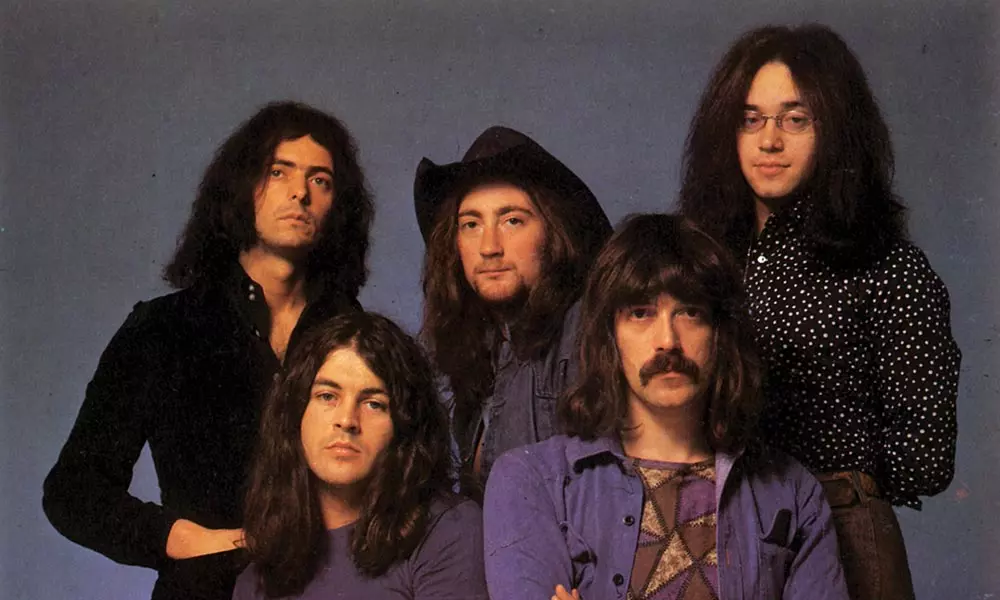
Deep Purple band photo
Formed1968Hertford, England
Studio Albums21
Records Sold100M+worldwide
Best AlbumMachine Head1972
Start WithSmoke on the Water

Who Are Deep Purple?

Deep Purple are a British rock band formed in Hertford, England in 1968. Alongside Led Zeppelin and Black Sabbath, they are widely regarded as one of the three founding bands of heavy metal and hard rock — a critical triumvirate that established the sonic vocabulary the genre would build on for the next five decades. The band's most celebrated lineup, known as Mark II, consisted of vocalist Ian Gillan, guitarist Ritchie Blackmore, bassist Roger Glover, keyboardist Jon Lord, and drummer Ian Paice.

The combination of Blackmore's aggressive, classically influenced guitar style, Lord's powerful Hammond organ work, and Gillan's wide-ranging, operatic vocals created a sound that was genuinely without precedent at the time. Their 1972 album Machine Head — recorded in Montreux, Switzerland in a mobile studio after the casino where they had planned to record burned down during a Frank Zappa concert — is routinely cited as one of the greatest hard rock albums ever made. The accompanying live record Made in Japan captured the band at the height of their improvisational powers and remains a benchmark for live rock recording.

Lineup Changes & the Mark System

Deep Purple's lineup history is among the most complex in rock. The band has been categorised into multiple lineup configurations known as Mark I through Mark IX. Mark I (1968–1969) featured Rod Evans on vocals and Nick Simper on bass. The celebrated Mark II lineup (1969–1973, 1984–1989, 1992–1994, 2002–present in various forms) is the configuration most listeners associate with the band. Mark III, featuring David Coverdale and Glenn Hughes replacing Gillan and Glover, recorded Burn (1974) — itself regarded as a classic. Ritchie Blackmore departed definitively in 1993 and was replaced by Steve Morse, who served for over two decades before leaving in 2022.

Jon Lord, the band's keyboardist and one of the most distinctive voices in rock organ playing, died of pancreatic cancer on 16 July 2012. His contribution to the band's sound across more than four decades was irreplaceable, and his death marked a significant moment in rock history.

New to Deep Purple?

Start with Smoke on the Water — the most famous riff in rock history and still the best single entry point. Then Machine Head (1972) as a full album, one of the greatest hard rock records ever made and the definitive Deep Purple statement.

Mark II — The Classic Lineup

IG
Ian Gillan
Vocals · 1969–1973, 1984–present (various)
One of the most technically accomplished and influential vocalists in hard rock history. Gillan's four-octave range, operatic screams, and improvisational instincts gave Deep Purple their most distinctive human element. He is also the original vocalist on Andrew Lloyd Webber's Jesus Christ Superstar (1970), recording the role of Jesus before returning to the band.
RB
Ritchie Blackmore
Guitar · 1968–1975, 1984–1993
One of the most influential guitarists in rock history, whose classical music training informed a playing style that bridged the gap between blues rock and the emerging heavy metal vocabulary. His work on Machine Head and Made in Japan defined the sound of hard rock guitar for a generation. Left to form Rainbow in 1975, returned briefly, then departed definitively in 1993 to pursue Renaissance music.
JL
Jon Lord
Keyboards · 1968–2002
The band's keyboardist for over three decades and one of the most distinctive Hammond organ players in rock history. Lord's ability to match the aggression of heavy rock with classical composition sensibility was a defining element of Deep Purple's unique sound. He died of pancreatic cancer on 16 July 2012.
RG
Roger Glover
Bass · 1969–1973, 1984–present
The band's primary bassist across their most celebrated periods, Glover also took on an important production role — producing or co-producing numerous Deep Purple and associated albums. His melodic bass work provided the rhythmic foundation for some of hard rock's most enduring songs.
IP
Ian Paice
Drums · 1968–present
The only member to have performed in every Deep Purple lineup, Paice is one of the most respected and influential drummers in rock. His technique combines power with an elegance and musicality that distinguishes him from many of his contemporaries, and his fifty-plus year tenure makes him central to the band's entire history.
DC
David Coverdale
Vocals · Mark III & IV (1973–1976)
Joined as Gillan's replacement in 1973 and recorded four albums with the band including Burn and Stormbringer. His powerful, blues-inflected voice gave the Mark III era its own distinctive character. He later founded Whitesnake, which became one of the biggest bands of the 1980s.

Band History

1968
Deep Purple form in Hertford, England with the Mark I lineup. Early albums blend psychedelic rock and classical influences. Cover of "Hush" reaches number four in the US.
1969
Mark II lineup established with Ian Gillan and Roger Glover joining. The band's direction shifts decisively toward harder rock. Concerto for Group and Orchestra performed at the Royal Albert Hall with the Royal Philharmonic Orchestra — an early indicator of their classical ambitions.
1970
Deep Purple in Rock released — the first full statement of the Mark II hard rock sound, and the album that established Blackmore, Lord, and Gillan as major forces in British rock. Widely regarded as a heavy metal landmark.
1971
Fireball released. The band are among the loudest acts in the world — verified by the Guinness Book of World Records at a London Rainbow Theatre show that year.
1972
Machine Head recorded in Montreux using the Rolling Stones' mobile studio after the planned recording venue burns down during a Frank Zappa concert. "Smoke on the Water" documents the fire. Made in Japan recorded live in Osaka and Tokyo, released later the same year.
1973
Ian Gillan and Roger Glover depart. David Coverdale and Glenn Hughes join for the Mark III era. Burn (1974) demonstrates the new lineup's considerable strengths.
1975
Ritchie Blackmore departs to form Rainbow. Tommy Bolin joins for the Mark IV era and Come Taste the Band (1975). The band disbands in 1976.
1984
The Mark II lineup reunites. Perfect Strangers released to significant commercial success, with the title track and "Knocking at Your Back Door" becoming major rock radio staples.
1993
Ritchie Blackmore departs definitively. Steve Morse joins as his replacement — a long-term partnership that would produce seven studio albums over nearly three decades.
2012
Jon Lord dies of pancreatic cancer on 16 July, aged 71. His loss is felt across the rock community as one of the most distinctive and accomplished keyboard players in the genre's history.
2016
Deep Purple inducted into the Rock and Roll Hall of Fame — a recognition that had been notably delayed for a band of their influence and commercial stature.
2022
Steve Morse departs to spend time with his wife during her cancer treatment. Simon McBride joins as guitarist. The band continue to tour and record.

Essential Discography

1972
Machine Head
Smoke on the Water, Highway Star, Space Truckin'. The masterpiece. One of the greatest hard rock albums ever made. Start here.
Essential
1972
Made in Japan
Child in Time, Space Truckin', Smoke on the Water (live). One of the greatest live albums in rock history.
Essential
1970
Deep Purple in Rock
Speed King, Child in Time. The first full Mark II statement. A heavy metal landmark.
Essential
1974
Burn
Burn, Mistreated. Mark III at their peak. David Coverdale's finest hour with the band.
Great
1984
Perfect Strangers
Perfect Strangers, Knocking at Your Back Door. The reunion album. Stronger than it had any right to be.
Great
1971
Fireball
Fireball, Strange Kind of Woman. The transitional album between In Rock and Machine Head.
Great

Deep Purple Trivia Quiz

Five questions — how many can you get right?

Best Songs by Mood

Not sure where to begin? Use this as your entry point.

First song ever
Smoke on the Water
Maximum speed
Highway Star
Most epic
Child in Time
Best keyboard showcase
Lazy
Best Mark III track
Burn
Best reunion track
Perfect Strangers
Most underrated
Strange Kind of Woman
Best deep cut
Space Truckin'

Deep Purple FAQ

When did Deep Purple form?
Deep Purple formed in Hertford, England in 1968. Alongside Led Zeppelin and Black Sabbath, they are widely regarded as one of the three founding bands of heavy metal and hard rock, and have sold over 100 million records worldwide across a career of more than fifty years.
What is the story behind Smoke on the Water?
"Smoke on the Water" documents a real event: in December 1971, the band arrived in Montreux, Switzerland to record at the Casino there. During a Frank Zappa and the Mothers of Invention concert, someone in the audience fired a flare gun, which ignited the rattan ceiling and burned the building to the ground. The band watched from across Lake Geneva as smoke rose over the water. They subsequently recorded Machine Head in a nearby empty hotel using the Rolling Stones' mobile recording unit.
What are the Deep Purple lineups or Marks?
Deep Purple's lineup changes are typically referred to as Mark I through Mark IX. The celebrated Mark II lineup — Ian Gillan, Ritchie Blackmore, Roger Glover, Jon Lord, and Ian Paice — is the most famous configuration and recorded Machine Head and Made in Japan. Mark III replaced Gillan and Glover with David Coverdale and Glenn Hughes and recorded Burn. Ian Paice is the only member to have performed in every lineup.
When were Deep Purple inducted into the Rock and Roll Hall of Fame?
Deep Purple were inducted into the Rock and Roll Hall of Fame in 2016 — a recognition that was widely considered overdue for a band of their influence. Their induction came significantly later than contemporaries of comparable stature, and the delay was a frequent topic of discussion in rock criticism for years prior to the announcement.
What happened to Jon Lord?
Jon Lord, Deep Purple's keyboardist from the band's formation in 1968 until his retirement in 2002, died of pancreatic cancer on 16 July 2012, aged 71. He had been diagnosed in 2011. Lord was one of the most distinctive Hammond organ players in rock history, and his classical training informed an approach that gave Deep Purple a harmonic and textural richness unusual in heavy rock.
What is the best Deep Purple album to start with?
Machine Head (1972) is the essential starting point — one of the greatest hard rock albums ever made, containing "Smoke on the Water" and "Highway Star." Made in Japan (1972) is the correct second listen, capturing the live power of the Mark II lineup at its peak. Deep Purple in Rock (1970) is the best starting point for the earlier, even heavier pre-Machine Head sound.

See Also