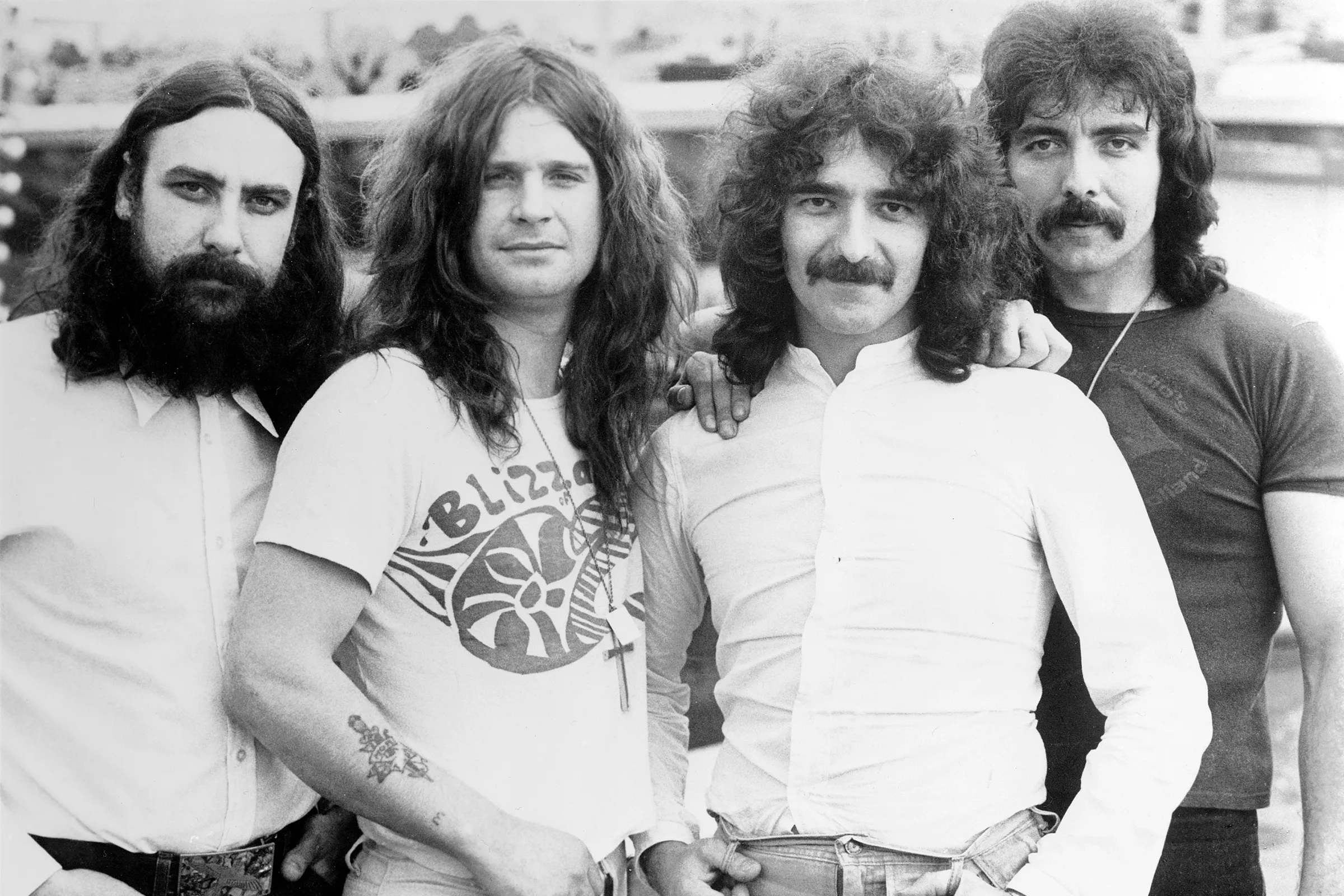
Black Sabbath
The self-titled track that opens the debut album is not merely a great song — it is one of the most historically significant recordings in the history of rock music. Everything that follows in fifty-plus years of heavy metal begins here: the tritone riff (the diabolus in musica, the interval that medieval theorists considered diabolical), the rain-and-bell opening, the slow grinding tempo, the sense of supernatural dread made completely credible through sound. When this track begins, it sounds like nothing that existed before it.
Iommi's down-tuned guitar — the result of his factory injury requiring both lighter strings and lower tuning to allow him to bend notes with his prosthetic fingertips — produces a tone with more weight and darkness than standard-tuned rock guitar. The specific riff he plays on Black Sabbath uses the augmented fourth (the tritone) — C to F-sharp — an interval so associated with tension and unease that the Catholic Church had supposedly forbidden its use in sacred music. Whether that prohibition is historical fact or legend, the interval sounds wrong in exactly the right way, and Iommi used it instinctively.
Ozzy Osbourne's vocal performance deserves as much attention as the guitar. His delivery here — frightened, uncertain, climbing to a wail at the lyric's most extreme moments — does something that most rock vocals cannot: it makes the supernatural content feel genuinely alarming rather than theatrical. He sounds as if he actually believes what he is singing, which changes the emotional register entirely.
The lyric was written by Geezer Butler after he borrowed an occult book from Ozzy Osbourne, placed it on a shelf across from his bed and woke in the night to see (or believe he saw) a dark figure standing at the foot of his bed looking at him. The figure disappeared when he turned the light on. Butler returned the book immediately and wrote the lyric from that experience. Whether the encounter was real, a hypnagogic hallucination or pure imagination is irrelevant — the lyric captures the specific terror of that moment with a directness that most horror writing lacks, and the music makes it feel completely credible.