← Back to Bands
Band Guide · Bad Religion · Melodic Hardcore / Punk Rock · Los Angeles, California

Bad ReligionBand Guide

Formed 1980 · Los Angeles, California · Melodic Hardcore / Punk Rock

Bad Religion are one of the founding acts of melodic hardcore punk and one of the most intellectually ambitious bands the genre has ever produced. Formed in Los Angeles in 1980 by teenagers Greg Graffin and Brett Gurewitz, they have released music across five decades without ever losing the sense that the songs are trying to say something specific and important about the world. Graffin holds a PhD in zoology from Cornell University; the band's lyrics draw on evolutionary biology, philosophy, and social criticism in ways that have no real equivalent in punk. Suffer (1988) defined modern melodic punk. Stranger Than Fiction (1994) brought them to the mainstream. The catalogue between and beyond those two points is one of the deepest in the genre. This is the complete guide.
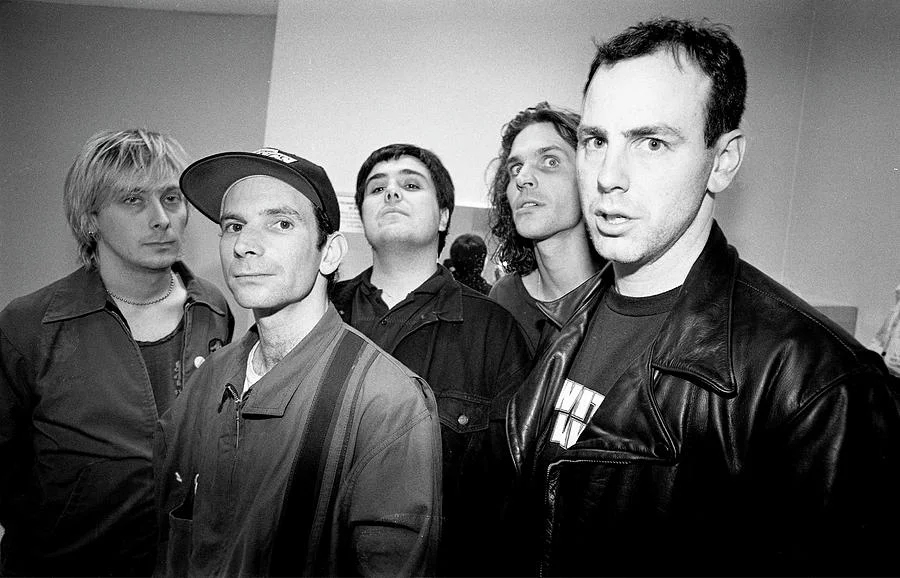
Bad Religion band photo
Formed1980Los Angeles, CA
Studio Albums18
Active1980–present44+ years
Best AlbumSuffer1988
Start WithInfected

Who Are Bad Religion?

Bad Religion are an American punk rock band formed in Los Angeles, California in 1980 by Greg Graffin (vocals) and Brett Gurewitz (guitar), who were both teenagers at the time. Alongside Jay Bentley on bass and various drummers, the core of Graffin and Gurewitz has defined the band's identity across more than four decades and eighteen studio albums. Brian Baker, formerly of Minor Threat, joined as second guitarist in 1994 and has been part of the lineup ever since.

The band are one of the founding acts of melodic hardcore — the specific fusion of hardcore punk's speed and aggression with melodic guitar leads, complex vocal harmonies, and intellectually substantive lyrics that would become the template for a generation of subsequent bands. Graffin's academic background — he holds a PhD in zoology from Cornell University and has taught at both Cornell and UCLA — informs the band's lyrical approach in ways that are unusual in any rock genre. The vocabulary is denser, the references are broader, and the intellectual engagement with the subjects of the songs is more sustained than virtually any punk contemporary.

Epitaph Records & the Melodic Punk Foundation

Brett Gurewitz founded Epitaph Records in 1980 as a vehicle for releasing Bad Religion's music. The label went on to become one of the most important independent punk labels in history — releasing records by The Offspring, Rancid, Pennywise, NOFX (early records), Social Distortion, and many others. Gurewitz's dual role as Bad Religion's co-creative engine and label founder positioned the band at the centre of the melodic punk ecosystem that defined the early 1990s.

The band's influence on the generation of punk acts that emerged in the early-to-mid 1990s — including The Offspring, Green Day, and NOFX — is widely acknowledged. The specific elements they pioneered on Suffer and No Control: the dual-guitar interplay, the three-part vocal harmonies, the breakneck tempo maintained through melodically coherent chord progressions, became the template that those bands built upon.

New to Bad Religion?

Start with "Infected" — the most immediately accessible track from their commercial peak and still the most compelling single entry point. Then Stranger Than Fiction (1994) as a full album. Suffer (1988) is the essential historical listen once the commercial-era records are familiar.

Members

GG
Greg Graffin
Vocals · 1980–present
The band's vocalist and primary lyricist across their entire career. Graffin holds a PhD in zoology from Cornell University, has taught courses at Cornell and UCLA, and has written books on evolution and philosophy. His academic background is directly reflected in the band's lyrical approach — denser vocabulary, broader intellectual references, and more sustained engagement with the subjects of the songs than virtually any punk contemporary. He also maintains a successful solo career.
BG
Brett Gurewitz
Guitar · 1980–1994, 2001–present
Co-founder, guitarist, and the songwriter most responsible for the band's melodic guitar framework. Gurewitz founded Epitaph Records in 1980 as a vehicle for the band's music; the label became one of the most important independent punk labels in the world. He departed in 1994 following personal struggles, returned in 2001, and has been part of the lineup since. His songwriting partnership with Graffin is the creative core of the band's best material.
JB
Jay Bentley
Bass · 1980–present
The band's bassist across their entire career, Bentley's melodic bass playing is a primary contributor to the dense harmonic texture that distinguishes Bad Religion from most punk contemporaries. His bass lines function as active melodic voices rather than pure rhythmic support, contributing to the three-dimensional quality of the band's best recordings.
BB
Brian Baker
Guitar · 1994–present
Formerly of Minor Threat and Dag Nasty, Baker joined as second guitarist in 1994 when Brett Gurewitz departed and has been a permanent member since Gurewitz's return in 2001 established the full five-piece lineup. Baker's role as the second guitar voice allows Gurewitz to focus on lead and rhythm duties without losing harmonic density in the arrangements.

Band History

1980
Greg Graffin and Brett Gurewitz form Bad Religion in Los Angeles. Gurewitz simultaneously founds Epitaph Records as the vehicle for releasing the band's music. Both are teenagers.
1981
Self-titled debut EP released on Epitaph. The band begin developing their sound within the Los Angeles hardcore circuit, establishing the dual-guitar melodic approach that will define their later work.
1982
How Could Hell Be Any Worse? released — the first full album, establishing the melodic hardcore template.
1983
Into the Unknown released — a dramatic experimental detour into keyboards and progressive rock that is immediately rejected by their hardcore audience. The album is recalled by Gurewitz and represents the low point of the band's early career.
1985
The band return to their hardcore roots with Back to the Known EP. Gurewitz returns after a period away and the classic melodic hardcore sound is reestablished.
1988
Suffer released on Epitaph — the album that defines modern melodic punk and establishes the template that an entire generation of bands will build on. Twenty-one minutes, fifteen tracks, the most important record in the band's catalogue and one of the most important in punk history.
1989
No Control released — widely regarded as the peer of Suffer and the second essential document of the band's creative peak. Another fifteen tracks in under twenty-five minutes.
1990
Against the Grain released — slightly longer and more varied than the two preceding records, and beloved by fans for tracks including "Sinister Rouge" and "Operation Rescue."
1992
Generator released. The band continue their prolific output while Brett Gurewitz oversees the rapid expansion of Epitaph Records, which signs The Offspring and Rancid during this period.
1993
Recipe for Hate released on Epitaph — their most commercially successful Epitaph record, featuring a guest appearance by Eddie Vedder on "Dept. of False Hopes."
1994
Stranger Than Fiction released on Atlantic Records — the commercial breakthrough and the album most new listeners encounter first. Brett Gurewitz departs due to personal struggles; Brian Baker joins. "Infected," "21st Century (Digital Boy)," and "Stranger Than Fiction" reach mainstream rock radio.
1995–2000
The Gray Race, No Substance, and The New America released on Atlantic and Dragnet Records — a period of sustained output without Gurewitz, viewed as a slight dip from the peak but containing strong individual tracks.
2001
Brett Gurewitz rejoins. The Process of Belief released on Epitaph — widely regarded as the best post-reunion record and a significant return to form.
2019
Age of Unreason released — one of the strongest late-career records, addressing the political climate of the Trump era with characteristic precision and urgency.

Discography

1988
Suffer
Do What You Want, Suffer, What Can You Do. 21 minutes, 15 tracks. The album that defined modern melodic punk. Historically essential.
Essential
1994
Stranger Than Fiction
Infected, 21st Century (Digital Boy), Stranger Than Fiction, Leave Mine to Me. The commercial breakthrough and the correct first album for new listeners.
Essential
1989
No Control
No Control, Change of Ideas, Automatic Man. The peer of Suffer — another essential peak-era document.
Essential
2002
The Process of Belief
Kyoto Now!, Sorrow, The Defense. The best post-reunion record and a genuine return to form.
Great
1990
Against the Grain
Sinister Rouge, Operation Rescue, Anesthesia. Slightly longer than its predecessors — beloved by dedicated fans.
Great
2019
Age of Unreason
Chaos from Within, Lose Your Head, My Sanity. A strong late-career political record addressing the contemporary moment with characteristic precision.
Great

Bad Religion Trivia Quiz

Five questions — how many can you get right?

Best Songs by Mood

Not sure where to begin? Use this as your entry point.

First song ever
Infected
Most historically significant
Suffer
Most anthemic
21st Century (Digital Boy)
Most political
American Jesus
Most melodic
Stranger Than Fiction
Most intense
No Control
Best post-reunion
Sorrow
Best deep cut
Sowing the Seeds of Utopia

Bad Religion FAQ

When did Bad Religion form?
Bad Religion formed in Los Angeles, California in 1980, when Greg Graffin and Brett Gurewitz were both teenagers. They are one of the founding acts of melodic hardcore punk and one of the longest-running bands in the genre, with over eighteen studio albums released across more than four decades.
Does Greg Graffin really have a PhD?
Yes. Greg Graffin holds a PhD in zoology from Cornell University. He has also taught courses at both Cornell and UCLA, written books on evolution and philosophy, and maintained a parallel academic career alongside Bad Religion for much of the band's history. His academic background directly informs the band's lyrical approach — the vocabulary is denser, the references broader, and the intellectual engagement more sustained than in virtually any other punk band.
What is the best Bad Religion album to start with?
Stranger Than Fiction (1994) is the most accessible starting point — the commercial breakthrough that contains "Infected" and the album most new listeners encounter first. Suffer (1988) is the most historically important album and the one that defined modern melodic punk, but requires more engagement with the genre to fully appreciate. No Control (1989) is the essential companion to Suffer and equally important historically.
What is Epitaph Records?
Epitaph Records is an independent punk record label founded by Brett Gurewitz in 1980 as a vehicle for releasing Bad Religion's music. It became one of the most important independent music labels in the world during the 1990s melodic punk boom, releasing records by The Offspring, Rancid, Pennywise, Social Distortion, and many others. The label remains independently owned and operated by Gurewitz.
Why did Brett Gurewitz leave Bad Religion in 1994?
Brett Gurewitz departed Bad Religion in 1994 following personal struggles with substance abuse. He returned to the band in 2001 and has been a member since. His absence during the period of the Atlantic Records albums (1994–2000) is generally viewed as a creative factor in those records feeling slightly less fully realised than the Epitaph-era work, though the band continued to release strong material in his absence.
Why is Suffer considered such an important album?
Suffer (1988) is considered important because it defined the specific template of modern melodic punk: the combination of hardcore speed, melodic guitar leads running above the rhythm parts, three-part vocal harmonies, and lyrics with intellectual substance. Released at twenty-one minutes across fifteen tracks, it demonstrated that punk could be simultaneously fast, melodic, and lyrically ambitious. Every melodic punk band of the 1990s — Green Day, The Offspring, NOFX — was directly influenced by what this album established.

See Also