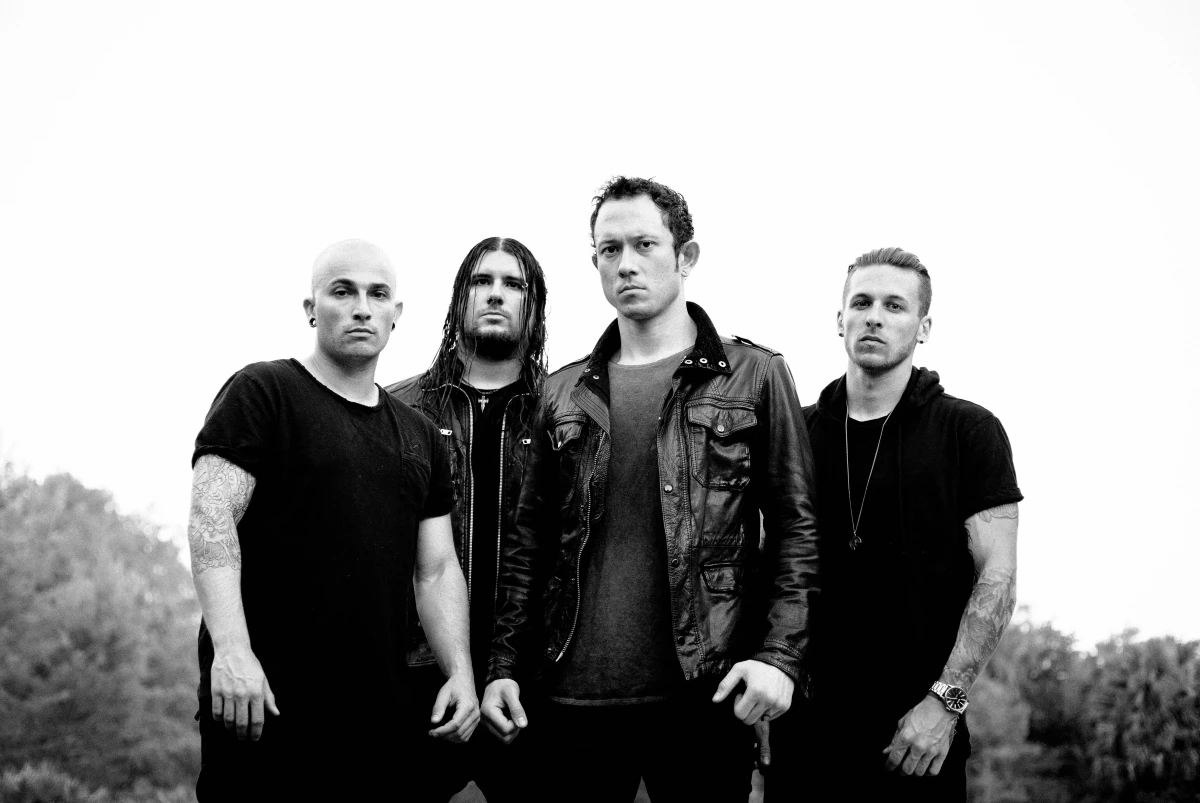
△ Back to Trivium
△ Ranked Songs · Trivium · Heavy Metal · Orlando, FL

Trivium Best Songs Ranked — The Definitive Guide

Trivium have one of heavy metal's most genuinely varied and most rewarding catalogues — Matt Heafy's twin-guitar attack with Corey Beaulieu spanning metalcore, thrash, progressive metal and melodic hard rock across eleven albums, with a creative renaissance in the 2017 era that stands alongside the 2008 masterwork. This guide ranks the 10 best Trivium songs and explains the stories behind them.

Trivium performing live — Matt Heafy on stage
△ JUMP TO SONG

What Makes a Great Trivium Song?

A great Trivium song balances two things that are harder to combine than they sound: genuine technical ambition and genuine emotional accessibility. Heafy and Beaulieu's twin-guitar arrangements are among the most technically accomplished in contemporary metal, and at their best they are also melodically and emotionally direct enough to connect without requiring specialist knowledge of the genre. The best Trivium songs do both simultaneously — the technical complexity serves the emotional content rather than substituting for it.

Trivium formed in Orlando, Florida in 1999. The breakthrough came with Ascendancy (2005), establishing the metalcore sound that Shogun (2008) then dramatically expanded into progressive territory. The catalogue has moved between metalcore, thrash, progressive metal and melodic hard rock — sometimes within the same album — with a creative restlessness that has tested fan loyalty but also prevented the stagnation that afflicts bands who repeat a successful formula indefinitely.

This ranking places Shogun first — the creative summit by clear consensus — while including the finest material from across the full catalogue, from Ascendancy to the renaissance of The Sin and the Sentence.

Top 10 Trivium Songs Ranked

01

Shogun 11:19

Album: Shogun · 2008
Shogun

Shogun is Trivium's most compositionally ambitious piece and the track that most fully demonstrates what the band can achieve when technical ability, melodic intelligence and thematic ambition are all operating simultaneously at their highest. The eleven-minute title track closes the album that bears its name and functions as the culmination of everything the preceding tracks have established — the Japanese imagery, the progressive song structures, the twin-guitar arrangements, the alternation between Heafy's aggressive screaming and his most melodically developed clean singing.

The song moves through multiple distinct sections across its runtime with a compositional logic that makes the length feel earned: each transition is motivated, each new section develops rather than simply repeats, and the building of tension toward the final section's release is handled with a patience and a precision that elevate the piece beyond what progressive metal ambition alone can produce. The guitar interplay between Heafy and Beaulieu in the extended instrumental passages is the finest example of their twin-guitar capability on record.

Song Meaning

Shogun draws on Japanese history and mythology — the shogun as a figure of supreme military authority who nevertheless remains subject to forces beyond their control. The lyric uses this framework to explore power, mortality and the inevitable limits of even absolute authority: how every conqueror is eventually conquered, how every ascent contains the seed of its own decline. Matt Heafy's Japanese heritage (born in Iwakuni, Japan) gives the cultural references a personal resonance that makes the thematic content feel inhabited rather than borrowed.

Why #1: the creative summit of the Trivium catalogue and the clearest demonstration of everything the band is capable of — eleven minutes that earn every second through compositional logic, emotional range and the Heafy/Beaulieu twin-guitar partnership at its absolute peak.
02

Pull Harder on the Strings of Your Martyr

Album: Ascendancy · 2005
Ascendancy

Pull Harder on the Strings of Your Martyr is Trivium's most famous song and the track most likely to be a new listener's first encounter with the band — the lead single from Ascendancy, the album that broke them internationally, and the piece that most immediately established the specific Trivium quality in the metalcore landscape of 2005. The opening riff is one of the finest in the genre's mid-2000s revival, the alternation between screaming and clean vocal is managed with a confidence and a precision unusual for a band so young, and the chorus is immediately anthemic.

The song remains the definitive statement of what Trivium sounded like at their metalcore peak — the raw version of the capability that Shogun would subsequently develop into something more elaborate. Placed second here rather than first because the songs above it is more fully realised, which is a measure of the catalogue's depth rather than any failing in this track.

Song Meaning

About the experience of being controlled or exploited by someone who uses your loyalty against you — the "martyr" being the narrator, whose willingness to sacrifice themselves for the relationship is being taken advantage of rather than honoured. The string-pulling imagery describes the specific feeling of being manipulated by someone you love, made to perform your own suffering for their benefit. Heafy has described it as one of the most personally significant early Trivium lyrics.

Why #2: the most famous Trivium song and the essential entry point — the metalcore peak that announced the band and remains the immediate gateway into the full catalogue.
03

Torn Between Scylla and Charybdis 7:37

Album: Shogun · 2008
Shogun

Torn Between Scylla and Charybdis is the most immediately and physically overwhelming track on Shogun — the piece that demonstrates the album's heaviness most directly, before the progressive complexity of the title track is fully engaged. The opening riff is one of the finest Heafy and Beaulieu have written together, the tempo is among the fastest on the album and the alternation between the aggressive verses and the melodic chorus is handled with the confidence and precision of musicians who have fully internalised both registers.

The classical mythological reference of the title — Scylla and Charybdis being the two sea monsters of Greek mythology between which Odysseus must navigate, giving rise to the expression "between a rock and a hard place" — suits the song's themes of impossible choice and inevitable suffering. The lyric uses the framework to describe a relationship or situation in which every available option causes damage.

Why #3: the most physically overwhelming Shogun track — the album's heaviness at its most immediate, the Heafy/Beaulieu twin-guitar attack at its most ferocious.
04

The Sin and the Sentence

Album: The Sin and the Sentence · 2017
The Sin and the Sentence

The Sin and the Sentence is the finest track on the renaissance album — the title track that most completely delivers on the promise of the lineup change and the creative recalibration that followed the more melodically oriented middle-period albums. Alex Bent's drumming is immediately transformative from the first bars: the precision, the physicality and the technical capability he brings to the arrangement give the song a rhythmic energy that the surrounding era lacked. The riff is one of Heafy and Beaulieu's strongest of the decade, and the dynamic between the aggressive sections and the melodic chorus is the most convincingly balanced on any post-Shogun Trivium track.

The song announced a new chapter in Trivium's creative history — proof that the band could reinvigorate themselves with a lineup change rather than simply continuing with diminishing returns. For listeners who had been disappointed by the middle-period albums, this was the track that brought them back.

Why #4: the renaissance statement — the track that announced Trivium's reinvigoration and demonstrated that the creative capability of the Shogun era was still accessible.
05

In Waves

Album: In Waves · 2011
In Waves

In Waves is the finest track on the album of the same name and the song that best represents the melodic direction of the 2011–2015 period at its strongest. The chorus is the most immediately anthemic Trivium have written outside the Ascendancy era — a melody of genuine quality that functions simultaneously as a hard rock radio track and as a piece that rewards the full album's listening context. The production is the most polished of any Trivium record to that point, and the guitar work, while less aggressively heavy than the surrounding catalogue, demonstrates the melodic intelligence that makes the best Trivium material work at a different tempo.

For listeners who want to understand the full range of what Trivium does across their albums, this is the track that most clearly demonstrates their ability to write in a melodic hard rock register without becoming generic. The quality of the songwriting is independent of the production polish.

Why #5: the finest melodic Trivium track and the strongest song from the more accessible middle period — the hard rock radio sensibility at its most genuinely accomplished.
06

Dying in Your Arms

Album: Ascendancy · 2005
Ascendancy

Dying in Your Arms is the most melodically direct and most immediately emotionally accessible track on Ascendancy — the song that demonstrates the melodic capability that exists beneath the heavier material and that would become more prominent on subsequent albums. The clean vocal melody in the chorus is one of Heafy's finest of the debut era, the production gives the song a warmth that the surrounding metalcore tracks do not always prioritise, and the emotional content — the vulnerability of loving someone so completely that their loss would be equivalent to your own death — is handled with a sincerity that the more aggressive surrounding material occasionally obscures.

It is also the Trivium track most frequently cited by fans as the one that first demonstrated Heafy's clean vocal capability before the subsequent albums made it more central, and the one most likely to connect with listeners who encounter Ascendancy primarily through the heavier lead singles.

Why #6: the most melodically direct Ascendancy track — where Heafy's clean vocal capability is first fully demonstrated and the emotional vulnerability beneath the metalcore heaviness is most openly expressed.
07

Into the Mouth of Hell We March 8:52

Album: Shogun · 2008
Shogun

Into the Mouth of Hell We March is the most martial and most cinematically conceived track on Shogun — a piece that uses the imagery of warfare and descent into chaos to create an almost narrative sense of motion through its near-nine-minute runtime. The song opens with an acoustic passage of unusual delicacy before the full arrangement arrives with proportional force, and the contrast between those opening moments and what follows is among the most dramatically effective dynamic gestures on the album.

The extended guitar solo section — one of the most ambitious on the album — demonstrates the Heafy/Beaulieu interplay at its most melodically developed, and the song's final section, building to a climax of considerable intensity, earns the grandeur of its conclusion through the patient development of everything that precedes it.

Why #7: the most cinematically conceived Shogun track — acoustic delicacy giving way to martial force, the album's most dramatic dynamic contrast and one of its finest extended guitar passages.
08

A Gunshot to the Head of Trepidation

Album: Ascendancy · 2005
Ascendancy

A Gunshot to the Head of Trepidation is the most energetically relentless track on Ascendancy and the one that most directly demonstrates the thrash metal influences beneath the metalcore production. The riff is among the finest on the debut album, the tempo is the most sustained of any full-length track, and the song's refusal to provide any significant dynamic relief gives it a momentum and a physicality that the more melodically varied surrounding tracks do not achieve. For listeners who come to Trivium from a thrash metal background rather than a metalcore one, this is the most natural entry point on Ascendancy.

The title's specific violence — a gunshot to trepidation, to fear, killing the fear rather than surrendering to it — reflects a lyrical directness and a black humour that runs through much of the early Trivium catalogue and that is occasionally overlooked in discussions focused on the musical content.

Why #8: the most thrash-direct Ascendancy track — the debut's maximum velocity and maximum riff quality, the best entry for listeners coming from a thrash metal background.
09

Beyond Oblivion

Album: The Sin and the Sentence · 2017
The Sin and the Sentence

Beyond Oblivion is the most melodically developed track on The Sin and the Sentence and the song that most clearly demonstrates how the renaissance album combined the aggression of the earlier records with the melodic ambition of the middle period — achieving what neither era alone had fully managed. The chorus is among the finest Trivium have written in any era, the guitar work integrates the twin-guitar heaviness of the Shogun period with the melodic clarity of the In Waves era, and Heafy's vocal performance is the most emotionally varied on the album.

For listeners who want to understand what the 2017 creative renaissance achieved relative to both the earlier and middle periods of the catalogue, this is the track that most clearly demonstrates the synthesis — where the previous eras are not abandoned but integrated into something more fully realised than either alone.

Why #9: the most melodically developed Sin and the Sentence track — where the renaissance's synthesis of the earlier and middle eras is most fully achieved.
10

Strife

Album: Vengeance Falls · 2013
Vengeance Falls

Strife is the finest track on Vengeance Falls and the best argument for the most commercially oriented Trivium album's reassessment. The song is the most immediately impactful on the album — the heaviest and most energetically direct — and demonstrates that the David Draiman production approach, while bringing a more polished and radio-oriented sound to the surrounding material, did not prevent Trivium from writing genuinely strong songs. The riff has a groove that the cleaner production actually serves rather than compromises, and the chorus is one of the most anthemic on any middle-period album.

Its inclusion in this ranking reflects an honest assessment of the full catalogue: the Vengeance Falls era is the weakest creative period, but it contains this track, and this track deserves acknowledgment. The best song from a flawed album is still the best song.

Why #10: the essential Vengeance Falls track and the best case for the most commercially oriented Trivium album — the heaviest and most immediate moment on a polished record.

Best Trivium Songs for Beginners

New to Trivium? These six tracks build from the most immediately accessible toward the full progressive complexity of the catalogue.

Pull Harder on the Strings of Your MartyrStart here — the most famous Trivium track and the clearest entry point into the metalcore sound that launched the band.
Dying in Your ArmsThe most emotionally direct — the melodic capability beneath the heavier material, Heafy's clean vocal at its most immediately accessible.
The Sin and the SentenceThe best recent-era entry point — the renaissance track that shows the current lineup's capability.
In WavesThe melodic peak — for listeners who want the hard rock accessibility before the progressive complexity.
Torn Between Scylla and CharybdisOnce the shorter material is familiar — the Shogun album's most physically immediate track.
ShogunThe summit — eleven minutes approached after everything else has prepared the listener for the full ambition.

Best Trivium Albums to Hear Next

2005
Ascendancy

The best starting album. Contains Pull Harder on the Strings of Your Martyr, Dying in Your Arms, A Gunshot to the Head of Trepidation and Like Light to the Flies. The metalcore breakthrough and the essential foundation for everything that followed.

2008
Shogun

The creative masterwork. Contains Shogun, Torn Between Scylla and Charybdis, Into the Mouth of Hell We March and He Who Spawned the Furies. The essential second album and the clearest demonstration of what Trivium can achieve at their most ambitious.

2017
The Sin and the Sentence

The renaissance. Contains The Sin and the Sentence, Beyond Oblivion, Sever the Hand and The Wretchedness Inside. The best recent-era album and the clearest demonstration of what the Alex Bent lineup can produce.

2021
In the Court of the Dragon

The strongest late-career album. Contains the title track, The Shadow of the Abattoir and Feast of Fire. Continues the Sin and the Sentence direction with consistent quality.

2011
In Waves

Contains In Waves, Black and Dusk Dismantled. The most melodic Trivium album and the right step for listeners who want the accessible hard rock direction after the debut and Shogun.

Honourable Mentions

  • Like Light to the Flies (Ascendancy, 2005) — the debut's most melodically developed track and the clearest preview of the direction Shogun would eventually take
  • He Who Spawned the Furies (Shogun, 2008) — the most direct and most physically immediate Shogun track, the bridge between the debut era's metalcore and the album's progressive ambitions
  • Sever the Hand (The Sin and the Sentence, 2017) — the most aggressively immediate track on the renaissance album and the best demonstration of Alex Bent's drumming impact
  • In the Court of the Dragon (In the Court of the Dragon, 2021) — the title track from the most recent era and the strongest single piece from the 2021 album
  • Anthem (We Are the Fire) (The Crusade, 2006) — the best track from the controversial thrash-influenced album and the most melodically immediate moment of that divisive era
  • Black (In Waves, 2011) — the most emotionally direct In Waves track and the closest the melodic era comes to the emotional intensity of the debut

Trivium Songs: FAQ

What is Trivium's best song?
Shogun is placed first as the most compositionally ambitious and most fully realised piece — the eleven-minute progressive epic that is the creative summit of the catalogue. Pull Harder on the Strings of Your Martyr is the most famous and the essential entry point.
What does Pull Harder on the Strings of Your Martyr mean?
About being controlled by someone who uses your loyalty against you — the narrator as a martyr whose sacrifice is being exploited. The string-pulling imagery describes the specific feeling of being manipulated by someone you love. One of Heafy's most personally significant early lyrics.
What is Shogun about?
Draws on Japanese history and mythology — the shogun as a figure of supreme military authority who is ultimately subject to forces beyond their control. Uses this framework to explore power, mortality and the inevitable limits of absolute authority. Heafy's Japanese heritage (born in Iwakuni, Japan) gives the cultural references personal resonance.
Who is Matt Heafy?
Matthew K. Heafy (born 26 January 1986, Iwakuni, Japan) is Trivium's founder, lead vocalist and lead guitarist — the band's creative centre across all eleven albums. Known for his extraordinary vocal range (metalcore screaming to operatically influenced clean singing), his technical guitar ability and his direct fan engagement through Twitch streaming.
What is the best Trivium album to start with?
Ascendancy (2005) is the best starting album. Shogun (2008) is the creative peak and the essential second album. The Sin and the Sentence (2017) is the best recent-era starting point.
Is Trivium still active?
Yes. Trivium released In the Court of the Dragon in 2021 and continue to tour internationally. The current lineup of Matt Heafy, Corey Beaulieu, Paolo Gregoletto and Alex Bent has been stable since 2016.
What genre is Trivium?
Primarily heavy metal — crossing between metalcore (Ascendancy era), thrash metal (The Crusade), progressive metal (Shogun) and melodic hard rock (In Waves, Silence in the Snow). They resist simple genre categorisation and have moved between these approaches across eleven albums.
Why is The Crusade controversial?
The Crusade (2006) dramatically reduced the screaming vocals that fans of the metalcore debut expected, moving toward a cleaner heavy metal approach influenced by Metallica. Many fans felt this was a betrayal of the Ascendancy sound; others welcomed the direction. The album is now generally reassessed as better than its 2006 reception suggested, though it remains the most divisive Trivium record.

Explore More Metal Guides