← Back to Faith No More
Ranked Songs · Faith No More · Alternative Metal / Art Rock · San Francisco, CA

Faith No More Best Songs Ranked — The Definitive Guide

From the funk-metal song that made alternative radio genuinely strange to a Commodores soul cover delivered with total sincerity, Faith No More's catalogue spans more emotional and sonic territory than any similar-sized discography in rock. These are the 10 essential tracks.

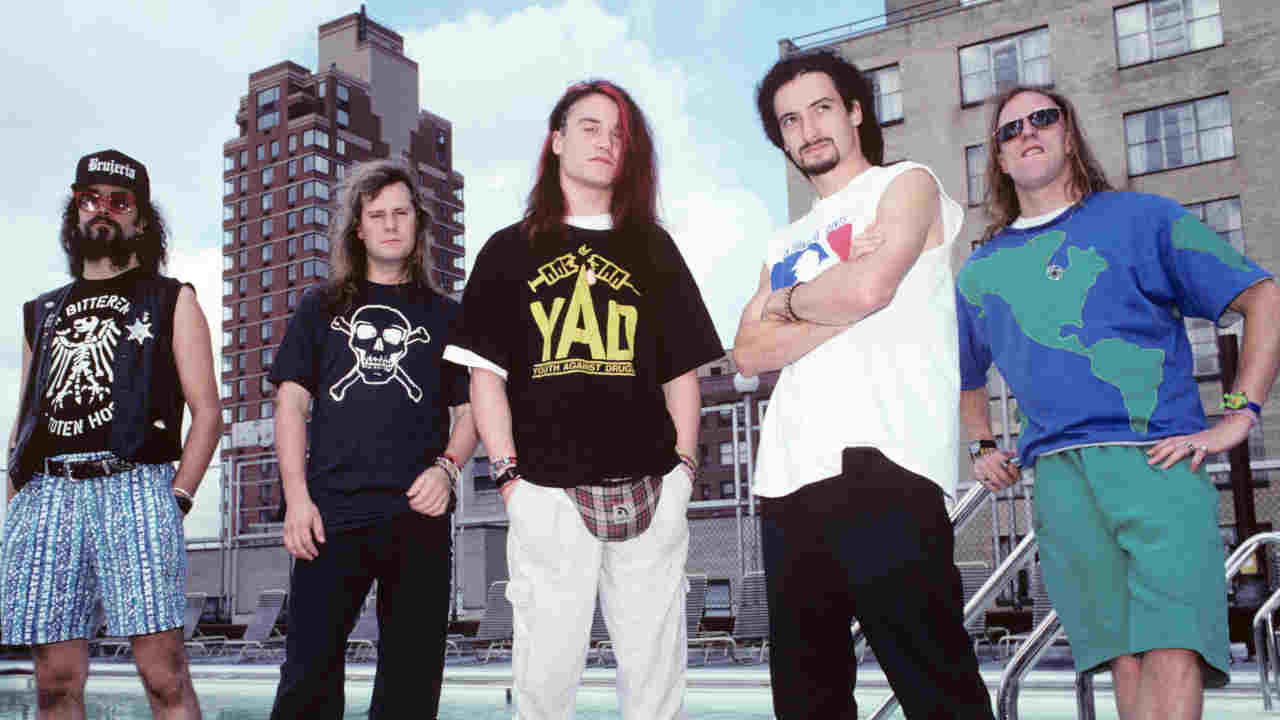
Faith No More performing live
Jump to Song

What Makes a Great Faith No More Song?

A great Faith No More song refuses to be what you expect of it. The genre shifts are not random eclecticism but controlled deployments — moments where the band leans into a different musical idiom not because it is fashionable but because it serves the specific emotional or satirical goal of the track. The result is music that is simultaneously unpredictable and coherent, strange and accessible, darkly funny and emotionally affecting.

Mike Patton's vocal is the through-line that makes the diversity work. Where another vocalist might struggle to move between a death metal rasp and a Broadway show tune delivery without losing credibility, Patton makes both feel like natural expressions of the same sensibility. This ranking draws from The Real Thing (1989), Angel Dust (1992), and Album of the Year (1997).

Top 10 Faith No More Songs Ranked

01

Epic

Album: The Real Thing · 1989
The Real Thing

"Epic" is Faith No More's most famous track and the song most responsible for the band's commercial breakthrough — a track that reached number nine on the US Billboard Hot 100, received significant MTV play, and introduced alternative metal to a mainstream audience that had no particular framework for what they were hearing. The combination of Bottum's synthesiser figure, Gould's bass groove, Bordin's polyrhythmic drumming, and Patton's delivery — moving between rapping, melodic singing, and aggressive shouting within the same performance — was unlike anything on mainstream rock radio in 1989. It remains the correct first listen for any new fan.

Why #1: the most widely known Faith No More track and the song that introduced alternative metal to a mainstream audience — the correct first listen.
02

Midlife Crisis

Album: Angel Dust · 1992
Angel Dust

"Midlife Crisis" is the best and most fully representative track on Angel Dust — the lead single that most surprised listeners who had loved The Real Thing and the best single demonstration of what the masterpiece album was attempting. The keyboard figure is hypnotic and slightly menacing; the verse is restrained almost to the point of quietness; and the chorus arrives with a controlled intensity that is more unsettling than conventional rock aggression. Patton's vocal is at its most precisely placed, and the production by Matt Wallace captures the deliberate discomfort that the band wanted the album to generate. One of the most original singles to receive mainstream rock radio airplay in the 1990s.

Why #2: the most representative Angel Dust track and the song that most successfully demonstrates what the masterpiece album was attempting — hypnotic, controlled, and deliberately unsettling.
03

A Small Victory

Album: Angel Dust · 1992
Angel Dust

"A Small Victory" is the most melodically beautiful track on Angel Dust and the song that most clearly demonstrates Patton's capacity for emotional directness alongside the more abrasive or satirical material. The orchestral arrangement — strings building through the track — gives it a sweep unusual in alternative metal, and the melody is one of the most immediately affecting in the Faith No More catalogue. The song demonstrates that the band's range on Angel Dust extended to genuine beauty as well as discomfort and aggression, and it is the track most likely to be cited by listeners who came to Faith No More through harder music as the moment they understood what the band was capable of emotionally.

Why #3: the most melodically beautiful Faith No More track — demonstrates that Angel Dust's range extends to genuine emotional beauty alongside its more provocative qualities.
04

Falling to Pieces

Album: The Real Thing · 1989
The Real Thing

"Falling to Pieces" is the most melodically generous track on The Real Thing and the song that most clearly demonstrates the band's capacity for pop melody within a hard rock framework. Patton's vocal is at its most openly melodic — less aggressive than the surrounding material, more straightforwardly expressive — and the arrangement is generous with hooks in a way that the more angular material isn't. It received significant radio play alongside "Epic" and remains one of the most accessible entry points into the catalogue. The correct first track for listeners whose background is primarily in melodic rock rather than metal.

Why #4: the most melodically generous Real Thing track — the most accessible entry point for listeners whose background is primarily in melodic rock.
05

RV

Album: Angel Dust · 1992
Angel Dust

"RV" is the most darkly comedic track in the Faith No More catalogue — a song that takes the perspective of a middle-aged American man contentedly inhabiting a completely unremarkable existence, delivered with a Patton vocal performance that is simultaneously sincere and devastating. The satire is pointed but not cruel: the portrait of a person who has reduced their ambitions to the point where a recreational vehicle represents the summit of aspiration is rendered with enough empathy that it functions as social observation rather than simple mockery. The arrangement is country-inflected and deliberately modest — the musical equivalent of the lyric's perspective. One of the most unexpected and most memorable tracks on Angel Dust.

Why #5: the most darkly comedic Faith No More track — a devastating portrait of contentment rendered with unexpected empathy and the most surprising arrangement on Angel Dust.
06

From Out of Nowhere

Album: The Real Thing · 1989
The Real Thing

"From Out of Nowhere" opens The Real Thing with the most immediate and energetic statement on the album — a track that announces Patton's presence with a performance of full commitment within his first thirty seconds on a Faith No More record. The song is hooky, fast, and immediately accessible in a way that the more angular surrounding material occasionally isn't, and it functions as the perfect introduction to both the album and to the band's Patton-era sound. The keyboard figure running through the verse is one of Bottum's most immediately recognisable contributions to the catalogue.

Why #6: the most immediate Real Thing opener — Patton's arrival statement, hooky and energetic, with one of Bottum's most recognisable keyboard figures.
07

Smaller and Smaller

Album: Angel Dust · 1992
Angel Dust

"Smaller and Smaller" is the most genuinely unsettling track on Angel Dust — a song built on textures and dynamics that create discomfort rather than aggression, with Patton's vocal shifting between registers and styles in a way that prevents the listener from settling into any single emotional response. The track begins with a repeated ascending figure and builds through an arrangement that becomes progressively more agitated and compressed — the "smaller and smaller" of the title literalised in the music's narrowing space. It demonstrates the band's ability to create unease through structural means rather than simply through volume or distortion.

Why #7: the most genuinely unsettling Angel Dust track — creates discomfort through structure and vocal instability rather than volume, demonstrating the album's most distinctive quality.
08

Ashes to Ashes

Album: Album of the Year · 1997
Album of the Year

"Ashes to Ashes" is the strongest track on Album of the Year and the best later-period Faith No More song outside the two essential albums. The production is more straightforward than Angel Dust but the melody is one of the most affecting in the catalogue — Patton's vocal sits at the top of its range in a way that gives the track an exposed, slightly fragile quality that the heavier surrounding material doesn't achieve. The song demonstrates that the band could write compellingly melodic material without requiring the stylistic complexity that characterised their best work, and it is the correct direction for listeners who want to explore beyond the essential albums.

Why #8: the strongest Album of the Year track — exposed, melodic, and the best argument for exploring beyond the two essential albums.
09

Easy

B-side / Angel Dust bonus track · 1992 · The Commodores cover
Angel Dust

"Easy" is a note-for-note cover of the 1977 Commodores soul ballad, delivered by Patton as a completely sincere straight soul performance — no irony, no post-modern distance, no winking at the audience. The decision to include it on Angel Dust (it appears as a bonus track or B-side depending on the release format) was deliberately provocative — placing a moment of genuine warmth and musical straightforwardness at the end of an album designed to discomfort. It is among the most effective demonstrations in the catalogue of Patton's ability to inhabit any style with total commitment, and its sincerity is what makes it work: a cynical version would have been merely funny, but a sincere one is actually moving.

Cover Note

"Easy" was originally recorded by The Commodores and released in 1977, written by Lionel Richie. Faith No More's cover is a faithful soul rendition that requires Patton to sustain a clean, warm tone without any of the aggression or range-demonstration that characterises his other recorded performances — which makes it, paradoxically, one of his most impressive vocal moments.

Why #9: the most unexpected and most moving moment in the catalogue — a sincere soul cover that demonstrates Patton's complete stylistic range through its deliberate restraint.
10

Surprise! You're Dead!

Album: The Real Thing · 1989
The Real Thing

"Surprise! You're Dead!" closes this ranking as the most aggressive track in the Faith No More catalogue — a forty-second blast of thrash-adjacent speed and Patton vocal extremity that demonstrates the heavier end of the band's range with complete conviction. The song has no conventional structure, no chorus, no melodic hook, and no concession to accessibility — it simply arrives at full force and departs before the listener has fully registered what happened. Its inclusion here is an argument that the band's range extended to genuine metal extremity as well as everything else, and that the extremity is as carefully deployed as the soul cover or the country pastiche that surround it on the album.

Why #10: the most aggressive Faith No More track — forty seconds of thrash-adjacent extremity that demonstrates the full lower boundary of the band's range.

Best Faith No More Songs for Beginners

EpicStart here — the most widely known track and the correct first listen.
Falling to PiecesFor melodic rock — the most accessible Real Thing track.
Midlife CrisisFor Angel Dust — the lead single and most representative track on the masterpiece.
A Small VictoryFor beauty — the most melodically affecting track on the masterpiece album.
EasyFor range — a sincere Commodores soul cover that demonstrates Patton's full versatility.
RVFor dark comedy — the most sardonic and unexpected track on Angel Dust.

Best Faith No More Albums to Hear Next

1989
The Real Thing

The accessible starting album. Contains Epic, Falling to Pieces, From Out of Nowhere, and Surprise! You're Dead! The commercial breakthrough — start here.

1992
Angel Dust

The masterpiece. Contains Midlife Crisis, A Small Victory, RV, Smaller and Smaller, and Easy. Strange, ambitious, and unlike anything else — best approached after The Real Thing.

1997
Album of the Year

The later-career record. Contains Ashes to Ashes and Last Cup of Sorrow. More straightforward than Angel Dust but with strong individual tracks — the best third listen.

Faith No More Songs: FAQ

What is Faith No More's best song?
Epic — the most widely known and immediately accessible track. Midlife Crisis is the most representative of what makes the band essential. A Small Victory is the most emotionally affecting. RV is the most sardonic and surprising.
What is Epic about?
"Epic" doesn't have a definitive interpretation. Patton has been deliberately evasive about the lyric's subject, and the text is abstract enough to support multiple readings. The most common interpretations position it as a song about control and power, about the limits of self-knowledge, or as a more general expression of frustrated desire. The famous closing line — "what is it?" — functions as the song's central question rather than its answer. The ambiguity is likely deliberate and is part of what has kept the song interesting across three decades.
Is Easy a cover version?
Yes — "Easy" is a cover of the 1977 Commodores soul ballad written by Lionel Richie. Faith No More's version is a note-for-note soul rendition delivered by Patton with total sincerity, appearing on Angel Dust as a B-side or bonus track depending on the release format. Its inclusion was partly deliberate provocation — a moment of genuine warmth placed at the end of an abrasive record — and it has become one of the most memorable and most discussed moments in the Faith No More catalogue.
What is Angel Dust about?
Angel Dust (1992) doesn't have a single conceptual framework. It is better understood as a stylistic statement — a record designed to demonstrate the full breadth of the band's range while simultaneously refusing the accessibility that had made The Real Thing successful. The album includes heavy metal, soul, country pastiche, orchestral pop, industrial noise, and psychedelia, held together by Patton's vocal and the band's consistent aesthetic sensibility. The title refers both to PCP and to a broader sense of unease and disorientation that runs through the record.
Is Surprise! You're Dead! really only 40 seconds long?
The track runs approximately one minute and twenty seconds in most versions — the forty-second figure is an approximation. It is however one of the shortest tracks in the Faith No More catalogue and functions as a concentrated burst of speed and aggression rather than a conventionally structured song. It appeared on The Real Thing and has been a consistent live highlight for its sheer physical impact within its brief duration.

Explore More