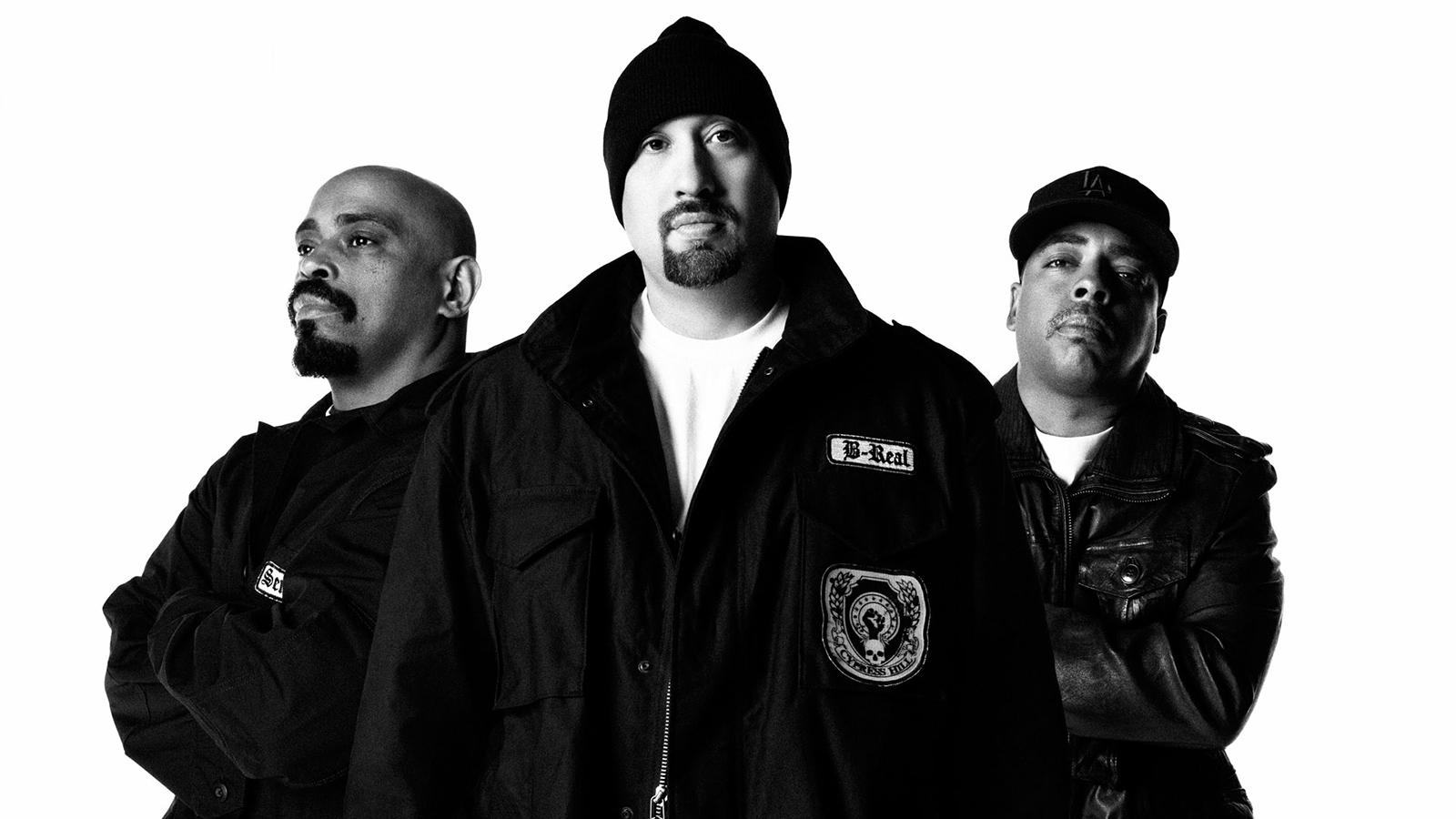
What Makes a Great Cypress Hill Song?
A great Cypress Hill song is built on a paradox: the beats feel
heavy and suffocating, like a cloud of smoke in a room with no
windows, but the music is irresistibly compelling — something
about the combination of DJ Muggs' sample-heavy production,
B-Real's nasal upper-register delivery and Sen Dog's gruffer, more
aggressive interjections creates a sound that is both threatening
and hypnotic.
Cypress Hill formed in South Gate, California in 1988 — B-Real
(Louis Freese) and Sen Dog (Senen Reyes) were childhood friends
who linked up with DJ Muggs (Lawrence Muggerud) after he was
dismissed from 7A3, a New York rap duo. The South Gate-to-New-York
connection gave Muggs a production sensibility that drew on East
Coast boom-bap precision while the vocal perspectives were
entirely rooted in the West Coast — the result was something that
felt genuinely new in 1991 and has not been precisely replicated
since.
Their best songs share three qualities: Muggs' beats have a
psychedelic darkness that goes beyond what most hip-hop producers
were doing at the time; the lyrics are specific enough to feel
lived-in rather than generic; and B-Real's voice — that
deliberately affected nasal tone, which he developed to make
himself sound more distinctive — is one of the most immediately
recognisable instruments in rap. This ranking covers the songs
that best bring those elements together.
Top 10 Cypress Hill Songs Ranked
Insane in the Brain is the definitive Cypress Hill
track and one of the most recognisable hip-hop songs ever
recorded. The opening horn sample — a flute loop from Syl
Johnson's Different Strokes — is immediately iconic,
the beat is dense and hypnotic, and B-Real's nasal delivery is
at its most distinct and confident. The hook is the kind that
embeds itself in the brain on first listen and stays for
decades.
What makes it stand above the band's other huge moments is how
well everything works together. The production creates a haze
of paranoia and defiance, the vocal performance is perfectly
calibrated — aggressive enough to match the subject matter,
weird enough to feel genuinely unhinged — and the overall
texture of the track is unlike anything else in hip-hop. It
crossed over to rock audiences through MTV and became a
genuinely crossover cultural moment in 1993, appearing in film
soundtracks, video games and commercial culture for the
following three decades.
Muggs has cited his desire to make beats that felt cinematic
and claustrophobic simultaneously, and
Insane in the Brain is the purest realisation of that
ambition. It still sounds ahead of its time more than thirty
years after release.
Song Meaning
Insane in the Brain is a defiant declaration of
outsider identity. B-Real has described it as embracing the
label of "crazy" or "dangerous" that mainstream society
places on people from his background — rather than seeking
to disprove or escape the perception, the song turns it into
a source of pride and strength. The rambling, associative
lyric style also mirrors the altered-state consciousness of
being high, with the stream-of-consciousness delivery
feeling less like a composed rap verse and more like
unfiltered thought. The title's playful self-diagnosis —
insane in the membrane — is both a boast and a rejection of
conformity.
Why #1: the most iconic Cypress Hill track by
every measure — the hook, the beat, the vocal performance and
the cultural reach are all without equal in the catalogue.
How I Could Just Kill a Man is the song that put
Cypress Hill on the map and remains one of the most important
tracks in early 1990s West Coast hip-hop. The beat is built
around a soul sample loop that Muggs transforms into something
slow, heavy and deeply menacing — the production has a weight
that most contemporaries simply did not achieve — and B-Real's
delivery is precise and threatening without tipping into
pantomime aggression.
The song was also notable for crossing genre lines early: it
was famously covered by Rage Against the Machine, who brought
it to a rock audience before Cypress Hill themselves had fully
crossed over. That cover introduced the original to listeners
who would not have encountered it, and in doing so
demonstrated how naturally the track's energy translated to a
live band context. The original is still the definitive
version, but the Rage cover stands as evidence of the song's
unusual versatility.
Song Meaning
How I Could Just Kill a Man is a street-level
narrative about the conditions and pressures that make
violence feel like a logical response. It is documentary
rather than glorification — the speaker describes the
specific circumstances (disrespect, threat, accumulated
injustice) that push people from the speaker's environment
toward violent action, and the song's power comes from the
specificity and matter-of-factness of that description.
B-Real has said it was written from real experiences in
South Gate, and the emotional flatness of the delivery is
what makes the violence feel more disturbing than any amount
of performative aggression would.
Why #2: the song that established Cypress
Hill as a major force — and one of the most vivid and honest
street narratives in West Coast rap history.
Hits from the Bong is the definitive stoner rap
anthem and the track that most fully established Cypress
Hill's identity as the first major hip-hop group to make
cannabis the central subject and aesthetic of their entire
project — not a side note or a recurring reference but the
literal reason the music sounds the way it does.
Muggs' beat samples Dusty Springfield's
Son of a Preacher Man and transforms it into
something simultaneously hazy and heavy — the production
mirrors the mental state the lyrics describe in a way that is
both technically impressive and genuinely funny. The song's
genius is that it is not a parody or a novelty track; it is a
completely seriously constructed piece of music about an
activity that was not considered a serious subject in 1993,
and the seriousness of the craft is what makes it work rather
than becoming absurd.
Why #3: the song that defined an entire
cultural identity and influenced a generation of hip-hop
artists — nobody had done cannabis as a full aesthetic before
Cypress Hill.
Hand on the Pump is the debut album's most aggressive
and focused track and one of the best examples of the group's
early South Gate street perspective at its most direct. The
beat is stripped and urgent, with a bass loop that drives the
track forward with a relentlessness that most of the album's
more psychedelic production does not attempt. Sen Dog's
contributions here are particularly strong — the dual vocal
attack with B-Real creates a genuine sense of two distinct
voices representing the same neighbourhood.
It shows Cypress Hill before the cannabis mythology fully took
hold — closer to the rawer, more aggressive West Coast
tradition that was developing around them, but already with
the distinctive production fingerprint that set Muggs apart
from his contemporaries. For listeners who want to understand
the debut before Black Sunday refined and expanded
the sound, this is the essential starting track.
Why #4: the debut's most urgent track and the
best showcase for the early, rawer Cypress Hill sound before
the cannabis mystique became the dominant identity.
Jump Around is included here because it is impossible
to discuss DJ Muggs' work without acknowledging the biggest
song he ever produced — and Muggs' production is as central to
the Cypress Hill sound as B-Real's voice. The track was
recorded for House of Pain, the Irish-American rap group
fronted by Everlast, but the production is entirely Muggs: the
same dark, sample-heavy approach, the same bass weight, the
same ability to make a single loop feel like it contains an
entire world.
The horn sample from Bob & Earl's
Harlem Shuffle transformed into one of the most
instantly recognisable productions in all of hip-hop, and the
song became a stadium and sporting event fixture that remains
culturally ubiquitous more than thirty years later. Muggs
produced it while simultaneously working on the Cypress Hill
debut, and the sonic family resemblance is unmistakable to
anyone who listens to both records back to back.
Why #5: the biggest song Muggs ever produced
— its inclusion here reflects that his production identity is
inseparable from understanding what makes Cypress Hill great.
Latin Lingo is the most culturally specific track on
the debut and one of the most important in the full Cypress
Hill catalogue for understanding their identity. B-Real and
Sen Dog are both of Latino heritage — B-Real is Mexican-Cuban,
Sen Dog is Cuban — and Latin Lingo is the track where
that identity is foregrounded most directly, blending English
and Spanish in a code-switching lyric style that reflected the
bilingual reality of South Gate's Latino community.
It was not the first rap track to incorporate Spanish, but it
was among the most influential in normalising bilingual
rapping as a stylistic choice rather than a novelty, and its
influence on the Latinx hip-hop that followed — from Chicano
rap to the broader Spanish-language rap explosion decades
later — is significant. The track also has a looseness and
warmth that some of the darker album material does not, which
gives it a different emotional quality within the catalogue.
Song Meaning
Latin Lingo is a celebration and assertion of
Latino identity within hip-hop — at the time a genre still
largely perceived as Black rather than Latinx. The
code-switching between English and Spanish throughout the
track is not just a stylistic device but a political one:
this is who we are, this is where we come from, and we are
bringing our full cultural identity into this space. It was
a significant gesture in 1991 when Latino identity within
mainstream hip-hop was largely invisible.
Why #6: culturally essential and one of the
most influential tracks in the history of Latinx hip-hop — the
group's identity most directly stated.
I Wanna Get High does exactly what its title promises
and does it with more musical craft than the simplicity of the
premise suggests. The beat is built around a sample from The
Meters' Handclapping Song, transformed through Muggs'
production into something that feels genuinely stoned — slow,
circular, hypnotically repetitive in a way that mirrors the
experience it describes.
B-Real's performance is at its most relaxed here — the urgency
of the street narratives gives way to something closer to
pleasure, and the change in emotional register demonstrates
how wide the range of the Black Sunday album actually
is. It was also significant as a cannabis advocacy track in a
period when hip-hop's engagement with weed was still primarily
comedic or incidental rather than the full-on cultural
position Cypress Hill was staking out.
Why #7: the most purely pleasurable cannabis
track in the catalogue — where the production most perfectly
mirrors the state it describes.
Throw Your Set in the Air is the most accessible
track from Temples of Boom — the group's third and
heaviest album — and one of the best examples of Cypress Hill
bridging the gap between their hip-hop foundation and the
rock/metal audience they were increasingly engaging with
through Lollapalooza and their collaborations with bands like
Sonic Youth and Pearl Jam.
The beat has a harder, more metallic quality than the debut
albums, with production that anticipates the rap-rock
crossover era more directly than anything on
Black Sunday. It works as both a hip-hop track and as
something a rock crowd can respond to physically, which is
what made it such an effective live moment on the Lollapalooza
1995 stage alongside Pearl Jam.
Why #8: the best track from the Temples of
Boom era and the most effective bridge between the hip-hop
foundation and the rock-crossover direction.
Rise Up is the strongest track from the band's later
career and the best argument that the connection between
Cypress Hill and rock music was always more than
opportunistic. The Tom Morello feature — his guitar work
running through the track in a way that feels integrated
rather than grafted on — makes the rap-rock fusion feel
natural, which is a difficult thing to achieve. Morello and
B-Real had collaborated enough by this point that the
relationship comes through in the performance.
The track also has a political directness — a call to action
against systemic oppression — that situates it within a
lineage of protest music rather than pure street reportage,
showing a different dimension of what Cypress Hill can do when
they engage explicitly with power rather than simply
describing the streets where power's absence is felt most
acutely.
Why #9: the best later-era Cypress Hill track
and the most convincing realisation of their rock crossover —
Morello's presence makes the fusion feel earned.
Checkmate rounds out this ranking as one of the most
technically impressive tracks in the Cypress Hill catalogue
and a strong argument for Cypress Hill IV as an
underrated album. B-Real's lyric density here is at its peak —
the internal rhyme schemes are more complex than anything on
the earlier albums, and the chess metaphor that runs through
the track is deployed with genuine consistency rather than as
a dropped concept.
It shows a side of the group that the cannabis mythology and
street narratives can occasionally obscure: B-Real is a
technically skilled rapper who put genuine craft into his
writing, and Checkmate makes that most visible. For
listeners who have moved through the big hits and want to
understand the full depth of the catalogue, this is an
essential destination.
Why #10: the best argument for B-Real as a
genuinely technical rapper — the most lyrically intricate
track in the catalogue, from an underrated album.
Best Cypress Hill Songs for Beginners
New to Cypress Hill? These six tracks cover the different sides of
the group — the iconic hooks, the street narratives, the cannabis
mystique and the Latin cultural identity — without requiring any
prior knowledge of the catalogue.
Insane in the Brain
Start here — the most iconic Cypress Hill track and the one
that best encapsulates what makes the group unique.
How I Could Just Kill a Man
The debut single and one of the most important tracks in West
Coast rap history — where it all began.
Hits from the Bong
The defining cannabis anthem — where the production and
subject matter fuse most completely.
Latin Lingo
The most culturally specific track and an essential piece of
Latinx hip-hop history — their identity most directly
stated.
Hand on the Pump
The debut's most driving track — the rawer, more aggressive
South Gate street perspective before the mythology took
hold.
I Wanna Get High
The most relaxed and pleasurable entry point — Muggs'
production at its most hypnotic, B-Real at his most at
ease.
DJ Muggs: The Sound Behind Cypress Hill
DJ Muggs (Lawrence Muggerud) is one of the most important
producers in West Coast hip-hop history, and understanding his
role is essential to understanding why Cypress Hill sound the way
they do. Muggs was born in Queens, New York, and his production
approach drew on the sample-heavy East Coast boom-bap tradition,
but the darkness he brought to those techniques — the psychedelic
heaviness, the way his beats feel simultaneously slow and crushing
— was something that evolved through his time in South Gate
alongside B-Real and Sen Dog.
His signature techniques include building productions around long,
looped soul and funk samples that he transforms beyond recognition
through chopping, filtering and layering; using sub-bass
frequencies to give tracks a physical weight that early hip-hop
production rarely achieved; and creating what he has described as
"movie beats" — productions that feel like soundtracks to films
that exist only in the listener's head. The darkness of
Temples of Boom's production, in particular, represents a
high watermark of menacing hip-hop production that has rarely been
equalled.
🎚
Key Muggs productions beyond Cypress Hill:
Jump Around (House of Pain, 1992),
Muggs Presents the Soul Assassins (various artists,
1997), and production work with GZA/Genius, Ice Cube and Dr. Dre
projects that extended his influence across the full spectrum of
1990s hip-hop.
Cypress Hill and Latinx Hip-Hop
Cypress Hill's significance to Latinx hip-hop history is
substantial and sometimes underacknowledged. In 1991, when the
group released their debut, Latino artists were largely invisible
in mainstream hip-hop despite the genre's deep roots in Latinx
communities in New York and California. B-Real and Sen Dog were
among the first hip-hop acts to bring a explicitly Latino identity
— the bilingual code-switching of Latin Lingo, the South
Gate cultural references, the Cuban-Mexican heritage — into a
major commercial hip-hop context.
The influence on subsequent Chicano rap artists — Kid Frost,
Lighter Shade of Brown, and the entire South Gate and East LA rap
scene that developed through the 1990s and 2000s — is direct and
acknowledged. Beyond Chicano rap, their willingness to bring
cultural specificity into hip-hop gave permission for other Latinx
artists across the country to do the same, and the bilingual
tradition they helped normalise runs through contemporary Latin
trap, reggaeton and the broader Spanish-language rap boom that has
dominated global music in the 2020s.
Cypress Hill and Rap Rock
Cypress Hill's relationship with rock music was one of the most
genuine and musically productive of any hip-hop act in the 1990s.
Where many rap-rock crossovers felt like marketing exercises,
Cypress Hill's connection to the rock world grew organically from
shared cultural space: the Lollapalooza festival stages where they
performed alongside Sonic Youth (1992) and Pearl Jam (1995), the
way Muggs' heavy, sample-based production naturally appealed to
listeners who liked distorted guitars, and the fact that B-Real
and Sen Dog had grown up in a South Gate environment where rock
and rap were not seen as distinct cultures.
The Temples of Boom album (1995) is the fullest
realisation of this convergence — the production is heavy enough
to sit alongside grunge and alternative metal without any
adjustment, and the energy of the live shows from that period
(documented on the live album Still Smokin') shows a band
who were genuinely comfortable and effective in a rock festival
context.
Their influence on the rap-rock and nu-metal genres that emerged
in the late 1990s — Rage Against the Machine's cover of
How I Could Just Kill a Man, Limp Bizkit's production
aesthetic, the entire lane that bands like Korn opened up — is
widely acknowledged within the music industry even if it is not
always credited in mainstream narratives about the genre's
origins. Cypress Hill were doing rap-rock before it had a name.
Best Cypress Hill Albums to Hear Next
1993
Black Sunday
The best starting album for new listeners. Contains
Insane in the Brain, Hits from the Bong,
I Wanna Get High and Lick a Shot. Debuted
at number one on the Billboard 200 — one of the first
hip-hop albums to do so — and is widely regarded as a high
point of early 1990s West Coast rap production.
1991
Cypress Hill
The debut album and the rawer, more aggressive foundation.
Contains How I Could Just Kill a Man,
Hand on the Pump, Latin Lingo and
The Phuncky Feel One. Essential for understanding
where the group came from and how the Muggs production sound
developed from the very beginning.
1995
Cypress Hill III: Temples of Boom
The darkest and heaviest Cypress Hill album — Muggs'
production at its most cinematic and menacing. Contains
Throw Your Set in the Air, Illusions and
Spark Another Owl. The album that best shows the
rap-rock crossover and the full psychedelic range of what
the group could do.
1998
Cypress Hill IV
The most underrated Cypress Hill album. Contains
Checkmate, From tha Ground and
Clash of the Titans. Shows B-Real's lyrical craft
at its most technically ambitious and demonstrates the
group's ability to evolve beyond the formula that made them
famous.
2022
Back in Black
The most recent Cypress Hill studio album, their first in
over a decade. Features production from Muggs alongside
newer collaborators and shows the core trio — B-Real, Sen
Dog, Muggs — still capable of making credible hip-hop in
their fourth decade together.
Honourable Mentions
Cypress Hill have a rich catalogue that stretches across eight
studio albums and multiple compilations, and this top 10 leaves
out several tracks with serious fan followings. Strong honourable
mentions include:
-
The Phuncky Feel One (1991) — the debut's most
musically adventurous track, showing Muggs' funk influences most
clearly
-
Lick a Shot (Black Sunday, 1993) — the heaviest
beat on the album and a fan favourite for the most aggressive
side of the group
-
Illusions (Temples of Boom, 1995) — the most
psychedelic and atmospheric track in the catalogue, built around
a ghostly guitar sample
-
Rock Superstar (Skull & Bones, 2000) — the
most self-aware song about the rap-rock crossover and their
place within it
-
Dr. Greenthumb (Skull & Bones, 2000) —
their most comedic cannabis track, deploying a character concept
that became a recurring identity
-
Tequila Sunrise (IV, 1998) — a gentler, more
melodic track that shows B-Real's range beyond aggression
-
Lightning Strikes (Temples of Boom, 1995) — the
closing track that ends the album at its most cinematic and
eerie
Cypress Hill: Band History
Cypress Hill formed in South Gate, California in 1988. B-Real
(Louis Freese) and Sen Dog (Senen Reyes) had been friends since
childhood — both the children of Cuban immigrants, they grew up
together on the working-class streets of South Gate, a city
immediately south of Los Angeles that is predominantly Latino and
working-class. DJ Muggs (Lawrence Muggerud) joined after his
previous group, the New York-based rap duo 7A3, disbanded. The
cross-pollination of New York production sensibility and West
Coast lyrical perspective was key to what made their sound new.
Their self-titled debut in 1991 was released on Ruffhouse Records
and Columbia, and made an immediate impact on the hip-hop
community even before it reached mainstream audiences.
How I Could Just Kill a Man and
Hand on the Pump established the group's credentials both
as serious lyricists and as architects of a new, darker West Coast
sound that sat alongside — but was distinct from — the G-funk that
Dr. Dre and Snoop Dogg were simultaneously developing at Death
Row.
Black Sunday (1993) debuted at number one on the
Billboard 200, making Cypress Hill one of the first hip-hop groups
to achieve that chart position and bringing them to a genuinely
mainstream audience. The same year, they performed at Lollapalooza
alongside Primus, Alice in Chains and Arrested Development — a
lineup that illustrated how naturally they sat at the intersection
of rock and hip-hop culture.
Temples of Boom (1995) marked a creative peak that was
not commercially matched — the album's darkness alienated some of
the mainstream audience that Black Sunday had attracted,
but its reputation among serious hip-hop listeners has grown
consistently in the decades since. The late 1990s and 2000s
brought a series of albums — Cypress Hill IV (1998),
Skull & Bones (2000), Stoned Raiders (2001)
— of variable quality as the group navigated the changing
landscape of hip-hop after the golden era. Through it all,
B-Real's voice and Muggs' production remained the constant that
connected each phase of the career.
Cypress Hill have been consistent advocates for cannabis
legalisation throughout their career — B-Real in particular has
been a public figure in the cannabis business, opening a
dispensary chain called Dr. Greenthumb — and their cultural
influence on the normalisation of cannabis in American popular
culture is significant and acknowledged. The group released
Back in Black in 2022, their first studio album since
Rise Up (2010), and continue to tour internationally into
the 2020s.
Are Cypress Hill Touring?
Cypress Hill remain active live performers, known for shows that
combine the energy of their classic catalogue with genuine stage
presence built over three decades of touring. They are fixtures at
hip-hop festivals and have regularly appeared on rock and
alternative festival lineups that reflect their crossover appeal.
For current touring dates and festival appearances, visit the
RockHeardle
Tours page.
Cypress Hill Songs: Frequently Asked Questions
What is Cypress Hill's best song?
Insane in the Brain is widely considered Cypress Hill's
best and most iconic song. The horn sample, Muggs' production
and B-Real's delivery have made it one of the most recognisable
hip-hop tracks ever recorded, and it remains culturally
ubiquitous more than thirty years after its 1993 release on
Black Sunday.
What does Insane in the Brain mean?
Insane in the Brain is a defiant declaration of
outsider identity — B-Real embraces the "crazy" or "dangerous"
label that society places on people from his background, turning
it into a badge of pride rather than a stigma. The rambling
lyric style also mirrors the altered-state experience of being
high. B-Real has said the song is about refusing to be defined
by others' expectations.
What does How I Could Just Kill a Man mean?
How I Could Just Kill a Man is a documentary street
narrative about the specific conditions — disrespect, poverty,
accumulated threat — that make violence feel like a logical
response in the speaker's environment. B-Real has said it was
written from real experience in South Gate. The song is not a
glorification of violence but an honest account of the pressures
that produce it.
Where are Cypress Hill from?
Cypress Hill are from South Gate, California, a working-class
Latino city in Los Angeles County. The group takes its name from
Cypress Avenue in South Gate, near where B-Real and Sen Dog grew
up. They formed in 1988 and became one of the most important
acts in early 1990s West Coast hip-hop.
Who are the members of Cypress Hill?
Cypress Hill's core members are B-Real (Louis Freese), the
primary rapper known for his high-pitched nasal delivery; Sen
Dog (Senen Reyes), the co-rapper and B-Real's childhood friend;
DJ Muggs (Lawrence Muggerud), the producer responsible for the
group's signature dark, psychedelic sound; and Eric Bobo, who
joined as a percussionist in the 1990s. B-Real and Sen Dog are
both of Cuban heritage.
Who is B-Real from Cypress Hill?
B-Real (Louis Freese, born 1970) is the primary vocalist of
Cypress Hill, known for the distinctive high-pitched nasal
delivery he developed as a deliberate stylistic choice to stand
out. He is of Mexican and Cuban heritage and grew up in South
Gate, California. He is also a prominent cannabis advocate and
entrepreneur, operating the Dr. Greenthumb dispensary chain.
Did Cypress Hill produce Jump Around?
No — Jump Around was performed by House of Pain, a
separate group fronted by Everlast. However, it was produced by
DJ Muggs of Cypress Hill, using the same dark, sample-heavy
production approach he applied to the Cypress Hill albums. The
sonic family resemblance between Jump Around and
Cypress Hill's work is unmistakable and both were recorded
around the same time.
What is the best Cypress Hill album to start with?
Black Sunday (1993) is the best starting point for new
listeners, containing Insane in the Brain,
Hits from the Bong and I Wanna Get High. The
debut Cypress Hill (1991) is the best entry point for
listeners who want the rawer, more aggressive version of the
sound. Temples of Boom (1995) is essential for fans who
want the heaviest and darkest material.
Is Cypress Hill still active?
Yes. Cypress Hill remain active and released
Back in Black in 2022, their first studio album in over
a decade. The core lineup of B-Real, Sen Dog and DJ Muggs has
continued to tour and record into the 2020s.
What genre is Cypress Hill?
Cypress Hill are primarily a hip-hop group, specifically
associated with West Coast hip-hop and Chicano rap. Their sound
incorporates elements of boom-bap, funk, soul sampling and
psychedelic production. Their crossover work with rock acts and
their influence on rap-rock and nu-metal also mean they are
often cited in those genre histories, though hip-hop remains
their primary category.
Explore More Rock & Hip-Hop Guides