← Back to Bands
Band Guide · BABYMETAL · Kawaii Metal · Tokyo

BABYMETALBand Guide

Founded 2010 · Tokyo, Japan · Kawaii Metal

BABYMETAL are the Japanese group that created kawaii metal — a genre that shouldn't exist and does, combining idol pop choreography and J-pop vocal performance with technically accomplished heavy metal production at arena scale. They have headlined Wembley Arena, toured with Metallica and Guns N' Roses, and built one of the most devoted fanbases in modern metal without anyone in the western rock world quite being able to explain how they did it.
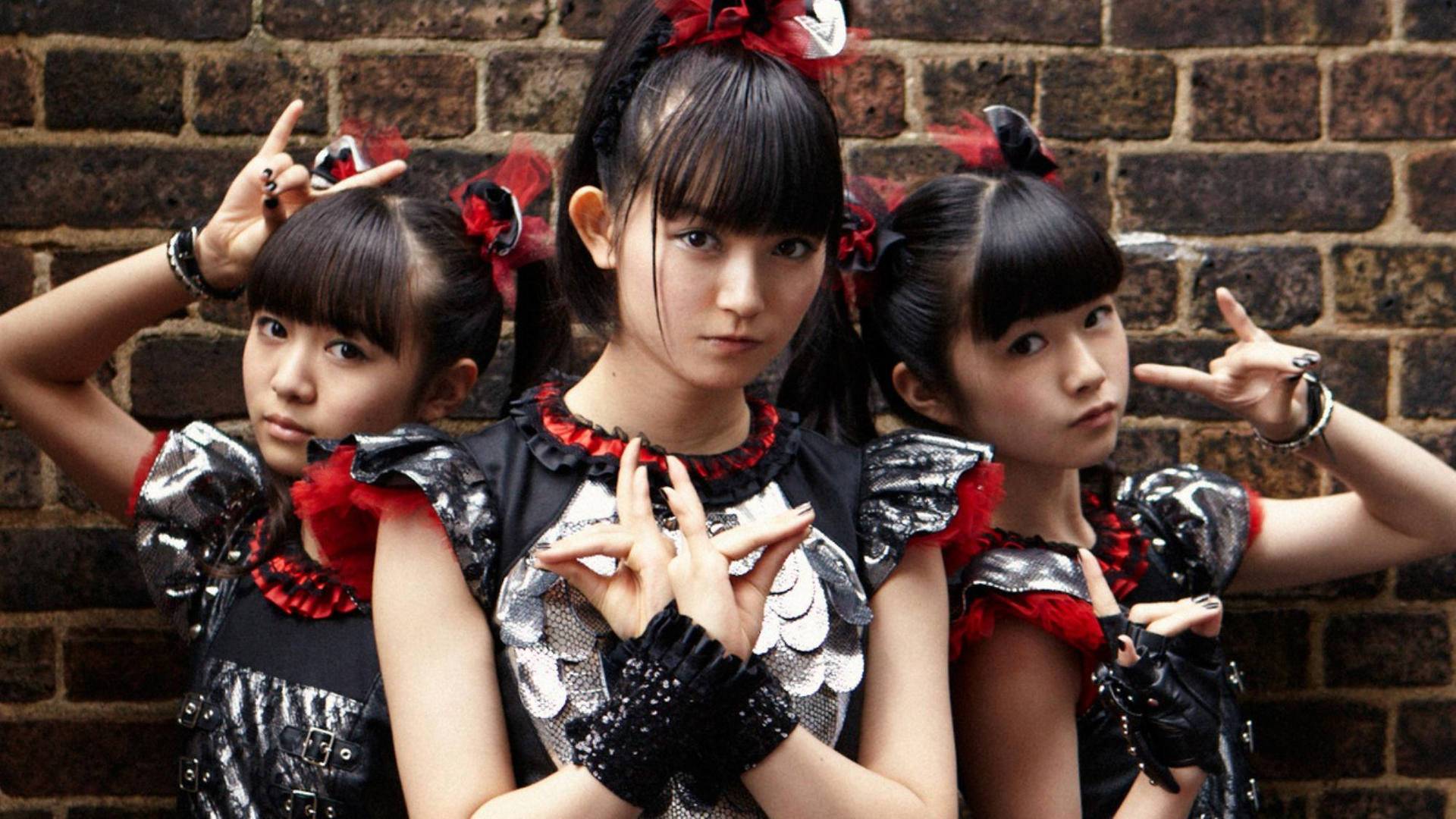
BABYMETAL performing live
Founded2010Tokyo, Japan
Studio Albums4
Genre CreatedKawaii Metal
Best AlbumMetal Resistance2016
Start WithGimme Chocolate!!

Who Are BABYMETAL?

BABYMETAL are a Japanese musical group formed in Tokyo in 2010 under the Amuse talent agency, conceived as a sub-unit of the idol group Sakura Gakuin. The original trio — Su-metal (Suzuka Nakamoto), Moametal (Moa Kikuchi) and Yuimetal (Yui Mizuno) — were teenagers when the project began, performing choreographed dance routines over metal music written and produced by the musician and producer Mikio Fujioka and a rotating cast of session musicians known collectively as the Kami Band.

The concept was initially received with scepticism by both the metal community — who questioned whether idol performers constituted a legitimate metal act — and the J-pop world, who found the metal production incongruous. What happened instead was that the music turned out to be genuinely excellent on its own terms: the arrangements were technically accomplished heavy metal rather than a superficial aesthetic borrowing, the performances were precise and energetic, and Su-metal's vocal ability proved to be substantial enough to carry material that required real singing rather than idol-pop approximation.

New to BABYMETAL?

Start with Gimme Chocolate!! — the viral video that introduced most western fans to the band and the clearest single demonstration of the kawaii metal proposition. Then Karate for the heavier side, and Road of Resistance for the fullest expression of the arena metal ambition.

What Is Kawaii Metal?

Kawaii metal — a term BABYMETAL themselves coined and popularised — is the fusion of Japanese idol pop performance aesthetics with heavy metal music production. "Kawaii" is the Japanese concept of cuteness, and its application to metal is deliberately paradoxical: the sweetness and innocence of kawaii culture placed against the aggression and heaviness of metal creates a tension that the best BABYMETAL tracks exploit rather than resolve.

Why It Works

The success of kawaii metal is not ironic — it doesn't work because the juxtaposition is funny. It works because the contrast between the visual and vocal presentation (choreographed idol performance, high-register J-pop vocal) and the sonic backdrop (technically accomplished metal, real drums, real guitars at high volume) creates a specific emotional dynamic that neither element produces alone. The sweetness makes the heaviness heavier; the heaviness makes the sweetness more affecting. The Kami Band's musicianship is not decorative — it is the foundation the whole project requires.

Since BABYMETAL's success, several other groups have attempted variations on the formula, but none have matched the commercial or critical impact of the originators — partly because the Kami Band's production quality is genuinely high, and partly because Su-metal's vocal ability is not replicable by casual casting from the idol talent pool.

Members

SU
Su-metal
Lead Vocals · Suzuka Nakamoto
Born 20 December 1997, Hiroshima. The creative and vocal centre of BABYMETAL — a singer whose range and control genuinely surprised the metal world, which had expected idol-calibre singing over metal production and received something considerably more capable. Her vocal sits in a clean, clear soprano that handles both the melodic J-pop passages and the more demanding metal arrangements with equal precision. As BABYMETAL has aged she has become the group's primary face and the increasingly dominant creative presence. Her performance at Wembley Arena in 2016 is frequently cited as one of the finest live vocal performances in recent metal history.
MO
Moametal
Vocals · Dance · Moa Kikuchi
Born 4 July 1999, Aichi. The remaining original member alongside Su-metal following Yuimetal's departure in 2018. Moametal's role in the group is more focused on performance and choreography than lead vocal work — her stage presence and the precision of her movement are central to the group's live identity. In the period since Yuimetal's departure the group has operated as a duo for some projects and has incorporated rotating additional performers for others, with Moametal as the consistent second presence alongside Su-metal.
YU
Yuimetal (2010–2018)
Vocals · Dance · Yui Mizuno
Born 20 June 1999, Hiroshima. Original member and the third presence in the original trio alongside Su-metal and Moametal. Yuimetal was absent from several shows in 2018 due to health issues before her departure from the group was announced in October 2018. She has not performed with BABYMETAL since. Her presence as the third visual element in the original trio's choreography and formation is central to the classic-era BABYMETAL identity.
KB
The Kami Band
Live Band · Production
The rotating cast of session musicians who perform live with BABYMETAL — "Kami" meaning "god" in Japanese, the name signifying the musicians as divine instruments of the Fox God mythology that the BABYMETAL lore is built around. The Kami Band's technical proficiency is essential to the group's credibility in metal contexts — they play real metal, at full technical standard, without electronic shortcuts, which is what gives BABYMETAL's live show its authority. Guitarist Mikio Fujioka, who was central to the early arrangements, died in 2017 after a fall, and the group has honoured his memory in subsequent performances.

Band History

2010
BABYMETAL formed as a sub-unit of Sakura Gakuin under Amuse talent agency. The initial concept is straightforwardly experimental — place idol performers in a metal context and see what happens. The founding trio are in their early teens. The early material is more overtly comedic and more explicitly a genre experiment than the later work would be.
2012
Headbangeeerrr!! and early single releases build a following in Japan. The group graduates from Sakura Gakuin and begins operating as an independent unit. Su-metal's vocal ability becomes increasingly evident as the material develops.
2013
Gimme Chocolate!! released — the track that will go viral the following year and introduce BABYMETAL to a global metal audience. The video — shot with full metal production values, choreographed precisely, and featuring a riff that any genuine metal fan will recognise as the real thing — is the clearest statement of the kawaii metal proposition.
2014
Self-titled debut album released internationally. Gimme Chocolate!! goes viral on YouTube, the video reaching tens of millions of views and introducing BABYMETAL to western metal audiences who had no prior context for the group. The reaction is polarised — significant scepticism from traditional metal fans, genuine enthusiasm from others, and near-universal acknowledgment that the music is more accomplished than the concept suggested. The band performs at Sonisphere UK, Download Festival and other major European rock festivals to largely positive responses.
2015
Extensive western touring including support slots with Metallica, Red Hot Chili Peppers and others. The live show proves to be the most effective argument for BABYMETAL's legitimacy — the Kami Band's technical proficiency and the precision of the choreography, combined with Su-metal's vocal capability, converts a significant portion of the metal audience that had been sceptical.
2016
Metal Resistance released — the creative peak and the most fully realised BABYMETAL album. Contains Road of Resistance (co-written by DragonForce), Karate and The One. The group headline Wembley Arena — an extraordinary achievement for any act, let alone one that had been operating for six years and originated from the Japanese idol industry. The Wembley show is the defining BABYMETAL live performance.
2017
Extensive touring continues. The death of Kami Band guitarist Mikio Fujioka in December 2017 is a significant loss for the group — he was central to the arrangements that defined the BABYMETAL sound and the tribute performances that followed demonstrated the genuine affection and respect the group and their fanbase had for him.
2018
Yuimetal's departure announced in October. The group continues as a duo with rotating additional performers known as the Avengers. Metal Galaxy is announced.
2019
Metal Galaxy released — the most sonically ambitious BABYMETAL album, incorporating global influences alongside the established kawaii metal formula. Contains Elevator Girl, PA PA YA!! and Night Night Burn!. More varied than Metal Resistance and more adventurous, though less concentrated.
2023
The Other One released — the fourth full-length album, leaning into heavier and more experimental territory. The most guitar-forward and most sonically dark BABYMETAL record, demonstrating continued development rather than formula repetition.

Discography

2014
BABYMETAL
Self-titled debut. Gimme Chocolate!!, Headbangeeerrr!!, Iine! The album that introduced kawaii metal to the world. Start with this.
Essential
2016
Metal Resistance
The creative peak. Road of Resistance, Karate, Meta Taro, The One. The most fully realised BABYMETAL album. Wembley Arena era.
Essential
2019
Metal Galaxy
Most ambitious album. Elevator Girl, PA PA YA!!, Night Night Burn! Global influences, more varied and more sonically adventurous.
Great
2023
The Other One
Most sonically dark album. Heavier and more experimental. Monochrome, Divine Attack, Metalizm. The most guitar-forward record.
Great

The BABYMETAL Sound

BABYMETAL's sound is built on a genuine tension between two traditions that have no natural relationship: Japanese idol pop, with its emphasis on choreographed performance, sweet vocal presentation and clean melodic lines, and heavy metal, with its emphasis on technical guitar work, aggressive production, physical drum performance and volume. The production — by Mikio Fujioka and subsequent collaborators — makes no compromise toward making the metal more palatable for pop audiences or the pop more credible for metal audiences. Both elements operate at full intensity simultaneously.

Su-metal's voice is the element that makes the fusion work at the highest level. A soprano of genuine ability rather than idol-calibre approximation, she can handle both the melodic J-pop passages and the more demanding metal arrangements without reducing either to something easier. The Kami Band's playing provides the metal authority that the arrangements require — live and technically accomplished, not electronic or programmatic.

Kawaii Metal Heavy Metal Power Metal J-Pop Progressive Metal

See Also