BABYMETALBand Guide
Founded 2010 · Tokyo, Japan · Kawaii Metal
BABYMETAL are the Japanese group that created kawaii metal — a genre that shouldn't exist and does, combining idol pop choreography and J-pop vocal performance with technically accomplished heavy metal production at arena scale. They have headlined Wembley Arena, toured with Metallica and Guns N' Roses, and built one of the most devoted fanbases in modern metal without anyone in the western rock world quite being able to explain how they did it.
Who Are BABYMETAL?
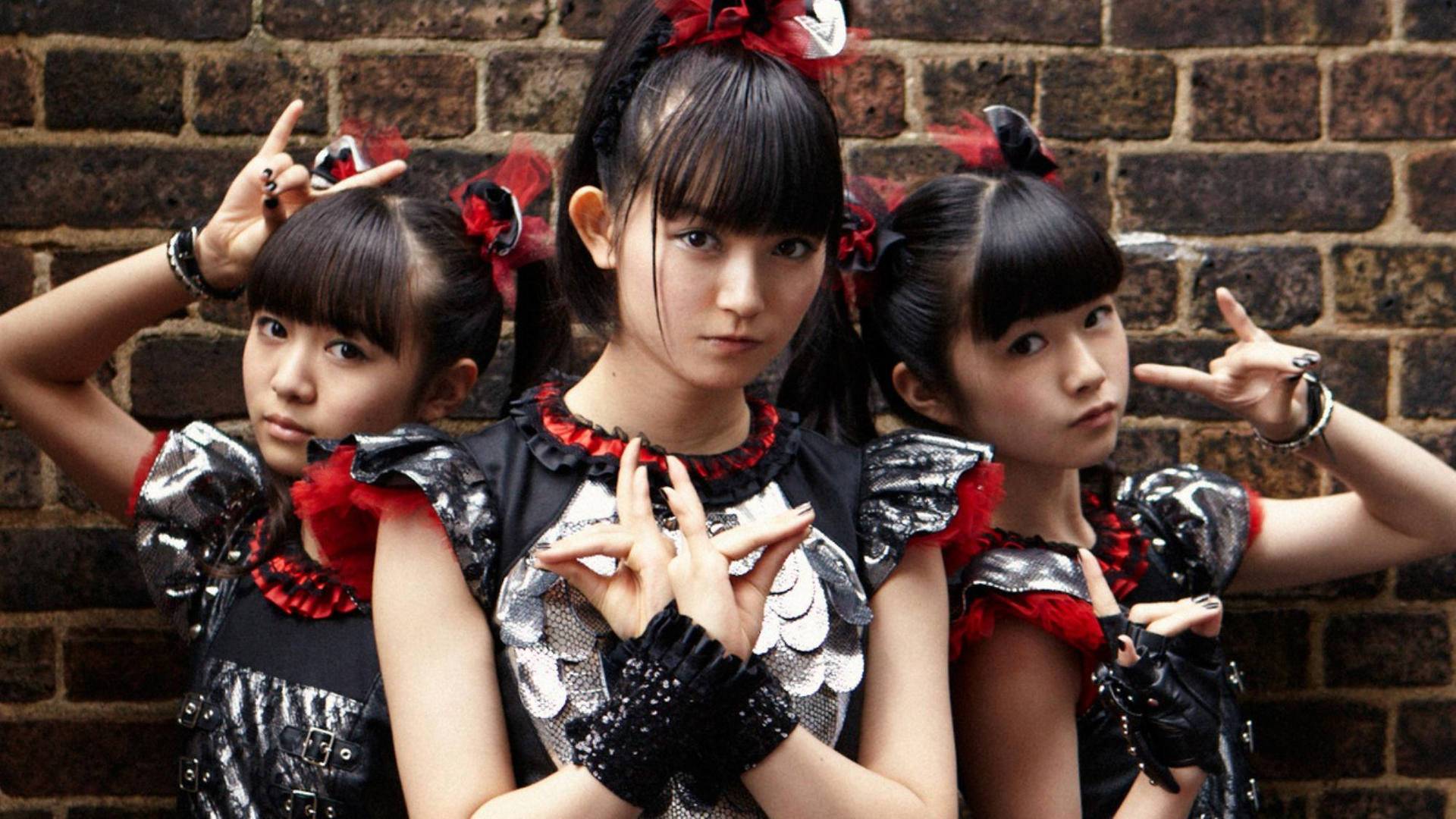
BABYMETAL are a Japanese musical group formed in Tokyo in 2010 under the Amuse talent agency, conceived as a sub-unit of the idol group Sakura Gakuin. The original trio — Su-metal (Suzuka Nakamoto), Moametal (Moa Kikuchi) and Yuimetal (Yui Mizuno) — were teenagers when the project began, performing choreographed dance routines over metal music written and produced by the musician and producer Mikio Fujioka and a rotating cast of session musicians known collectively as the Kami Band.
The concept was initially received with scepticism by both the metal community — who questioned whether idol performers constituted a legitimate metal act — and the J-pop world, who found the metal production incongruous. What happened instead was that the music turned out to be genuinely excellent on its own terms: the arrangements were technically accomplished heavy metal rather than a superficial aesthetic borrowing, the performances were precise and energetic, and Su-metal's vocal ability proved to be substantial enough to carry material that required real singing rather than idol-pop approximation.
Start with Gimme Chocolate!! — the viral video that introduced most western fans to the band and the clearest single demonstration of the kawaii metal proposition. Then Karate for the heavier side, and Road of Resistance for the fullest expression of the arena metal ambition.
What Is Kawaii Metal?
Kawaii metal — a term BABYMETAL themselves coined and popularised — is the fusion of Japanese idol pop performance aesthetics with heavy metal music production. "Kawaii" is the Japanese concept of cuteness, and its application to metal is deliberately paradoxical: the sweetness and innocence of kawaii culture placed against the aggression and heaviness of metal creates a tension that the best BABYMETAL tracks exploit rather than resolve.
The success of kawaii metal is not ironic — it doesn't work because the juxtaposition is funny. It works because the contrast between the visual and vocal presentation (choreographed idol performance, high-register J-pop vocal) and the sonic backdrop (technically accomplished metal, real drums, real guitars at high volume) creates a specific emotional dynamic that neither element produces alone. The sweetness makes the heaviness heavier; the heaviness makes the sweetness more affecting. The Kami Band's musicianship is not decorative — it is the foundation the whole project requires.
Since BABYMETAL's success, several other groups have attempted variations on the formula, but none have matched the commercial or critical impact of the originators — partly because the Kami Band's production quality is genuinely high, and partly because Su-metal's vocal ability is not replicable by casual casting from the idol talent pool.
Members
Band History
Discography
The BABYMETAL Sound
BABYMETAL's sound is built on a genuine tension between two traditions that have no natural relationship: Japanese idol pop, with its emphasis on choreographed performance, sweet vocal presentation and clean melodic lines, and heavy metal, with its emphasis on technical guitar work, aggressive production, physical drum performance and volume. The production — by Mikio Fujioka and subsequent collaborators — makes no compromise toward making the metal more palatable for pop audiences or the pop more credible for metal audiences. Both elements operate at full intensity simultaneously.
Su-metal's voice is the element that makes the fusion work at the highest level. A soprano of genuine ability rather than idol-calibre approximation, she can handle both the melodic J-pop passages and the more demanding metal arrangements without reducing either to something easier. The Kami Band's playing provides the metal authority that the arrangements require — live and technically accomplished, not electronic or programmatic.