◉ Back to Audioslave
◉ Ranked Songs · Audioslave · Hard Rock · Los Angeles

Audioslave Best Songs Ranked — The Definitive Guide

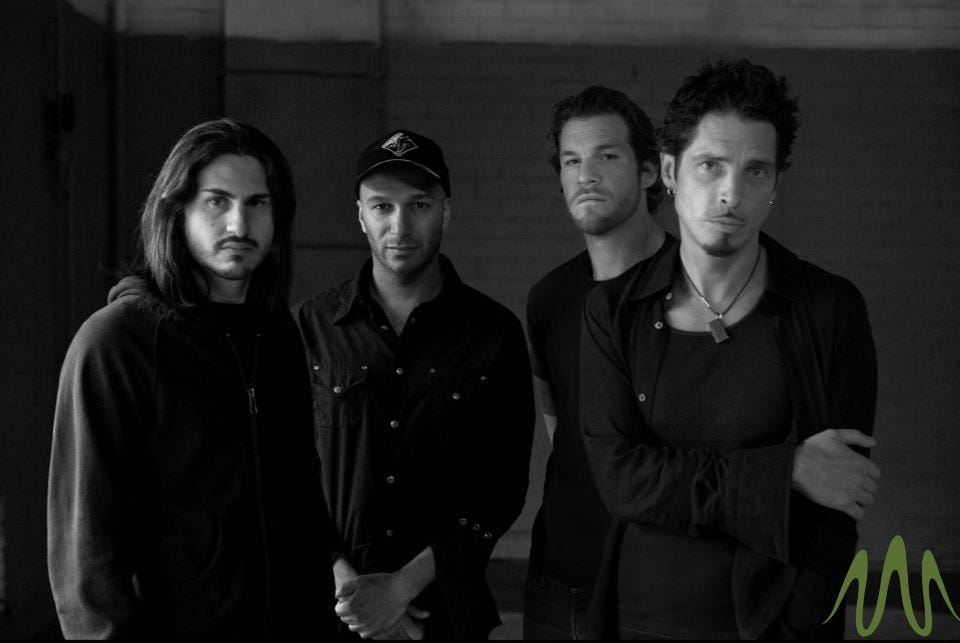
Audioslave made three albums of hard rock that put Chris Cornell's extraordinary voice over Tom Morello, Tim Commerford and Brad Wilk's post-RATM rhythm attack — producing music that was simultaneously arena-ready and genuinely heavy. This guide ranks the 10 essential tracks and explains what the lyrics mean.

Audioslave performing live
◉ Jump to Song

What Makes a Great Audioslave Song?

A great Audioslave song does something that neither Soundgarden nor RATM fully managed in their respective contexts: it puts a voice of extraordinary range and emotional precision over a rhythm section of genuine heaviness without either element overwhelming the other. Chris Cornell's four-octave tenor could have made any competent band sound better. What Morello, Commerford and Wilk gave him was something more specific — a bottom end heavy enough to give the emotional intensity somewhere to land, and guitar textures varied enough to give the voice room to move.

Audioslave formed in Los Angeles in 2001 and released three albums between 2002 and 2006 before dissolving following Cornell's departure. Cornell died in 2017, making the three albums a finite document. Their best songs carry an additional weight for listeners who hear them now with the knowledge of what followed — particularly Like a Stone, whose content about mortality and waiting acquired a specific resonance after 2017 that it did not carry when it was recorded.

Top 10 Audioslave Songs Ranked

01

Like a Stone

Album: Audioslave · 2002
Audioslave

Like a Stone is Audioslave's most emotionally resonant song and the one most people name first — a track that places Cornell's voice in its most tender and most plaintive register over an arrangement that builds from acoustic delicacy to full-band force with complete emotional logic. The song demonstrates what the Audioslave combination uniquely enabled: a rock arrangement heavy enough to carry emotional weight at scale, with a vocalist whose range could inhabit the quiet passages and the loud ones with equal conviction.

The song won the Grammy Award for Best Hard Rock Performance in 2004 and remains the most played Audioslave track by a significant margin. Since Cornell's death in 2017, the song has taken on a second layer of meaning for listeners who find the lyric's content about waiting for death and seeking a sign from the afterlife newly resonant in ways it could not have been intended to carry. It is one of the most beautiful songs in the post-grunge hard rock canon.

Song Meaning

Like a Stone is a meditation on mortality — the narrator waiting in a house for death to arrive, addressing a divine or afterlife presence whose existence they cannot confirm. Cornell described the song as being about facing mortality and the uncertainty of what lies beyond it. The imagery is domestic and patient rather than dramatic: waiting, hoping for a sign, "in your house I long to be." Many listeners found the song took on new resonance after Cornell's death in 2017, the lyric acquiring an unintended autobiographical dimension.

Why #1: the most emotionally resonant Audioslave song and the clearest demonstration of what Cornell's voice over the RATM rhythm section could uniquely achieve — the Grammy winner that still sounds exceptional twenty years on.
02

Cochise

Album: Audioslave · 2002
Audioslave

Cochise opens the self-titled debut and is the most energetically immediate Audioslave track — the song that most directly carries the RATM rhythm section's aggression into the new context, with Cornell's voice matching rather than tempering it. The opening Morello guitar figure — a controlled feedback squeal that descends into the main riff — is one of his finest moments on the Audioslave recordings, demonstrating the toggle-switch and feedback techniques from RATM adapted to a more traditional hard rock structure.

For listeners approaching Audioslave from a heavier background, Cochise is the most natural entry point — it sits closer to the RATM end of the spectrum than most of the surrounding catalogue, while Cornell's melody demonstrates immediately what the new combination adds.

Song Meaning

Cochise references the 19th-century Chiricahua Apache leader who led his people's resistance against US Army attempts at forced relocation — one of the most celebrated figures in Native American resistance history. Cornell uses Cochise as a symbol of principled, committed defiance against overwhelming force: the song is about standing ground regardless of the odds, aligning with the spirit of resistance rather than making a detailed historical argument. The energy of the arrangement matches the reference perfectly.

Why #2: the debut opener and the most energetically immediate Audioslave track — the RATM aggression most directly translated into the new context, with the Cochise resistance symbolism matching the music's commitment.
03

Be Yourself

Album: Out of Exile · 2005
Out of Exile

Be Yourself is the most immediately accessible Audioslave single and the track most likely to be a new listener's first encounter with the band through mainstream radio or streaming. The arrangement is the most pop-oriented in the catalogue — the riff is melodic and immediately memorable, the chorus is built for maximum singalong and Cornell's vocal sits at the centre of his range rather than at its extremes. The song demonstrates the more commercial direction of Out of Exile relative to the debut, and it is the most effective expression of that direction.

The lyric is a direct encouragement to authenticity — among the most direct messages Cornell wrote in any context — and its simplicity suits the arrangement. It was one of the band's biggest commercial successes and remains one of the most-recognised Audioslave tracks.

Song Meaning

Be Yourself is a straightforward exhortation to live authentically — to resist external pressure to conform and instead inhabit one's own identity with complete conviction. The message is deliberately simple: "To be yourself is all that you can do." The chorus takes a potentially platitudinous sentiment and, through Cornell's delivery, gives it the force of a genuine conviction. It is among the least complex lyrics Cornell wrote, and the directness is the point.

Why #3: the most accessible Audioslave single and the most direct lyrical statement Cornell wrote in this context — the commercial peak of the catalogue delivered with complete conviction.
04

Show Me How to Live

Album: Audioslave · 2002
Audioslave

Show Me How to Live is the heaviest track on the debut and the Audioslave song that sits closest to hard rock at its most physically overwhelming — the riff is one of Morello's most direct and most powerful on the album, and Cornell's vocal in the chorus has a full-force aggression that the more melodically developed surrounding tracks occasionally trade for nuance. The song demonstrates that Audioslave could produce genuine heavy rock rather than simply arena-accessible hard rock.

The lyric addresses spiritual searching — a plea for guidance from a divine or supernatural source, expressed with the urgency of someone who genuinely needs the answer rather than someone exploring the question philosophically. Cornell's engagement with spirituality and mortality as lyrical subjects across the Audioslave catalogue was consistent and felt personally invested rather than abstractly thematic.

Why #4: the heaviest debut track and the clearest demonstration that Audioslave could produce genuinely heavy rock — Morello's most direct riff on the album and Cornell's most aggressive vocal delivery.
05

Doesn't Remind Me

Album: Out of Exile · 2005
Out of Exile

Doesn't Remind Me is the most melodically graceful Audioslave track — a mid-tempo song built around one of Cornell's most sustained and most open-throated vocal performances on the second album. The arrangement gives him maximum space, the guitar is restrained and atmospheric rather than riff-dominant, and the result is a track that demonstrates his pure melodic capability more fully than the heavier surrounding material allows.

The lyric addresses the desire for experiences that provide relief from painful memories — seeking out things that don't remind you of what you've lost. It is among Cornell's most emotionally specific writing in the Audioslave context, moving away from the more abstract spiritual and political content of surrounding tracks toward something more personal and more directly expressed.

Why #5: the most melodically graceful Audioslave track — Cornell's vocal at its most openly beautiful over an arrangement that gives him maximum space, the personal lyric among his most specific writing.
06

Exploder

Album: Audioslave · 2002
Audioslave

Exploder is the most groove-oriented track on the debut — the song that most directly shows Tim Commerford's bass in a melodic rather than purely supportive role, with a descending bass figure that drives the verse independently of the guitar. The track sits at the intersection of the funk-metal foundation the RATM players brought with them and the more blues-influenced hard rock direction that Cornell steered the band toward, which makes it one of the most interesting documents of the band's specific chemistry.

Why #6: the most groove-oriented debut track — Commerford's bass at its most independently melodic, the most direct expression of the RATM-meets-Cornell chemistry at the foundation level.
07

Your Time Has Come

Album: Out of Exile · 2005
Out of Exile

Your Time Has Come opens Out of Exile and is the album's most immediate and most energetically direct track — the song that best demonstrates the second album's more accessible direction without sacrificing the weight that the debut established as the band's baseline. Cornell's vocal in the chorus is among his most anthemic on the record, and Morello's guitar work in the solo section is a more melodically developed version of the techniques that defined the debut's heavier arrangements.

Why #7: the Out of Exile opener and its most energetically direct track — where the second album's more accessible direction and the debut's weight are most successfully balanced.
08

Original Fire

Album: Revelations · 2006
Revelations

Original Fire is the finest track on Revelations and the best argument for reassessing the most divisive Audioslave album. The riff is the most blues-influenced Morello produced for Audioslave, the arrangement has a swagger that the more polished second album occasionally smoothed away, and Cornell's vocal has the raw, confident quality of someone inhabiting the material rather than working toward it. The song demonstrates that the third album's turn toward classic rock influences was not a creative retreat but a genuine expansion.

Why #8: the finest Revelations track and the best case for the third album's reassessment — Morello's most blues-influenced riff and Cornell at his most raw and confident on the record.
09

Revelations

Album: Revelations · 2006
Revelations

Revelations is the most atmospheric and most spiritually open track on the final album — a song that moves away from the hard rock aggression of the earlier catalogue toward something more meditative, closer to Cornell's solo work in its emotional register than to the RATM-influenced heavier material. The arrangement builds patiently, Morello's guitar is used for texture rather than riffing, and Cornell's vocal finds a quality of openness and vulnerability that the heavier surrounding tracks do not always permit.

Why #9: the most spiritually open Audioslave track — where Cornell's vocal finds its most vulnerable register and the arrangement moves furthest from the RATM-adjacent heaviness toward something more meditative.
10

Shape of Things to Come

Album: Revelations · 2006
Revelations

Shape of Things to Come closes this ranking as the most politically direct Audioslave track and the one that most clearly reflects Morello's continuing engagement with political content outside the RATM context. The lyric addresses systemic inequality with a directness unusual in the Audioslave catalogue, and the arrangement has the urgency of the debut material rather than the more polished approach of the second album. As a final studio statement before the band's dissolution, it is an appropriate closing note — Cornell and Morello's respective political and spiritual sensibilities finding common ground in a track that uses both.

Why #10: the most politically direct Audioslave track — Morello's RATM sensibility and Cornell's spiritual voice finding common ground, a fitting final studio statement before the dissolution.

Best Audioslave Songs for Beginners

Like a StoneStart here — the most emotionally complete Audioslave track and the Grammy winner that introduced most listeners to the band.
Be YourselfThe most accessible single — pop-oriented by Audioslave standards, Cornell's most direct lyric and the best radio entry point.
CochiseFor heavier rock listeners — the most energetically immediate track, the RATM aggression most directly translated into the new context.
Doesn't Remind MeFor Cornell's vocal — the most melodically open performance on the second album, maximum range in a restrained arrangement.
Show Me How to LiveThe heaviest debut track — for listeners who want to know what the full RATM rhythm section sounds like behind Cornell at maximum aggression.
Original FireThe best entry to the third album — blues-influenced, raw, demonstrating what the final record does differently from the first two.

Best Audioslave Albums to Hear Next

2002
Audioslave

The best starting album and the most consistent of the three. Contains Like a Stone, Cochise, Show Me How to Live and Exploder. Produced by Rick Rubin. The clearest expression of what the Audioslave combination uniquely enabled.

2005
Out of Exile

Number one Billboard debut. Contains Be Yourself, Doesn't Remind Me and Your Time Has Come. More melodically polished than the debut — the right second album for most listeners.

2006
Revelations

The most blues-influenced and most divisive album. Contains Original Fire, Revelations and Shape of Things to Come. Worth approaching after the first two albums have established context.

Audioslave Songs: FAQ

What is Audioslave's best song?
Like a Stone — the Grammy winner, the most emotionally resonant track and the fullest demonstration of what Cornell's voice over the RATM rhythm section uniquely achieves. Cochise is the most energetically immediate entry point for heavier rock listeners.
What does Like a Stone mean?
A meditation on mortality — the narrator waiting for death, addressing a divine presence whose existence they cannot confirm. Cornell described it as being about facing mortality and the uncertainty of what follows. Many listeners found the song acquired new resonance after Cornell's death in 2017.
What does Cochise mean?
References the 19th-century Chiricahua Apache leader who led his people's resistance against forced US Army relocation. Cornell uses Cochise as a symbol of principled defiance against overwhelming force — the spirit of resistance rather than a historical argument. The arrangement's energy matches the reference.
What does Be Yourself mean?
A direct exhortation to authenticity — resist external pressure to conform, inhabit your own identity with complete conviction. Among the simplest lyrics Cornell wrote in any context, and the directness is the point. "To be yourself is all that you can do."
What is the best Audioslave album to start with?
The self-titled debut (2002) — the most consistent of the three albums, containing Like a Stone, Cochise and Show Me How to Live. Out of Exile (2005) is the right second album.
Why did Audioslave break up?
Cornell announced his departure in February 2007 citing "irresolvable personality conflicts." The specific nature of the conflicts was not publicly detailed. Morello, Commerford and Wilk eventually returned to Rage Against the Machine; Cornell returned to Soundgarden. Cornell died in May 2017, making any reunion impossible.

Explore More